

Misconception Behind the Welfare of Healthcare Workers
-
News
-
7 minutes ago
This article was translated by AI. Read the original article on Kompas.com. See Original
"You have to have our cost structure, brand, market, and network," he added.
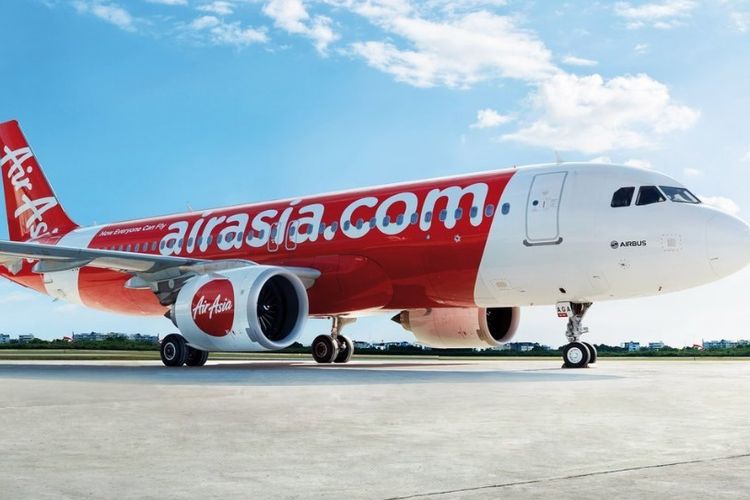
To cope with cost pressures, AirAsia is aggressively restructuring.
The airline has cut poorly performing routes, returned 25 older aircraft to lessors, and renegotiated contracts with vendors.
These efforts aim to reduce operational costs.
Fernandes confirmed no AirAsia aircraft have been repossessed or forcibly returned by lessors.
Regarding its fleet, AirAsia is accelerating the deployment of A321LR and A321XLR aircraft.
This strategy aims to replace the more fuel-inefficient A330 planes.
AirAsia is also preparing an announcement related to Airbus within the next month.
Fernandes said the announcement will concern the airline’s growth and strategy.
"We anticipate a quite exciting announcement with Airbus in the coming month regarding our growth and strategy," Fernandes said.
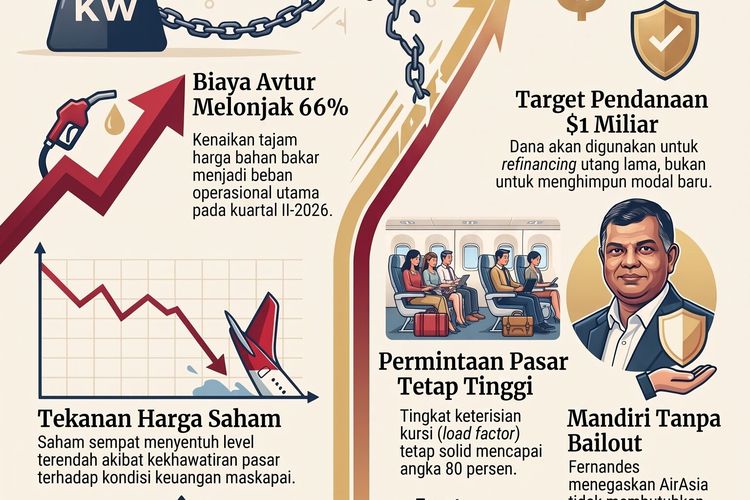
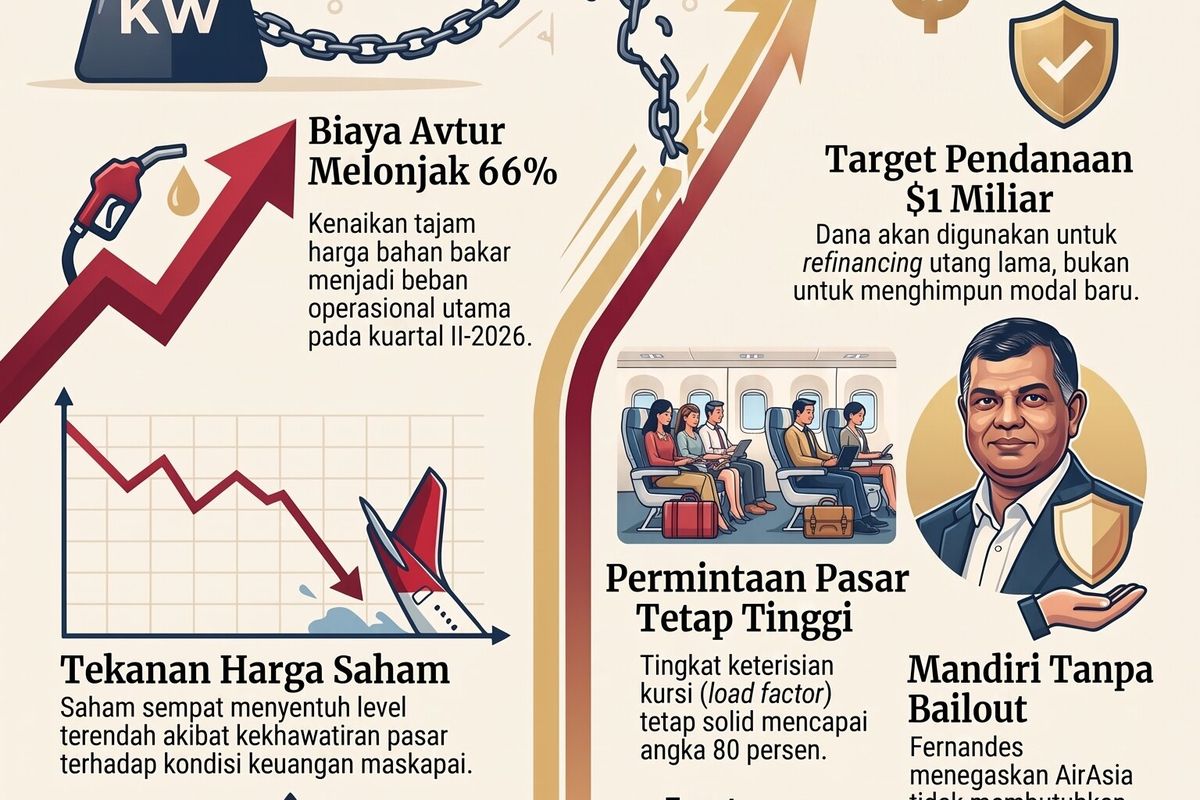
Despite fuel price pressures and funding needs, Fernandes said AirAsia’s flight demand remains strong.
The airline’s load factor reached 80 percent in the third quarter of 2026.
The load factor measures the percentage of available seats filled with passengers.
Fernandes also mentioned strong booking trends for the fourth quarter of 2026.
He expressed optimism about AirAsia’s operations in Indonesia, the Philippines, and Thailand.
These remarks coincided with AirAsia’s efforts to adjust airfares in response to rising fuel costs.
AirAsia’s situation is under scrutiny by the Malaysian government due to its dominant domestic market share.
Reuters reported that the Malaysian government asked Malaysia Airlines and Batik Air whether they could absorb AirAsia’s domestic market share.
Sources told Reuters that this inquiry is part of scenario planning.
Separately, Malaysia’s Ministry of Finance has appointed consultants to assess AirAsia’s funding needs.
Fernandes reiterated that the airline has strong liquidity and is preparing debt refinancing.
He also firmly stated that AirAsia does not require a government bailout or rescue.
During the briefing, Fernandes noted that the second quarter of 2026 was the toughest for the airline due to rising jet fuel costs.
However, he expects conditions to improve as fares adjust and cost management strategies bear fruit.
AirAsia continues restructuring, including cutting underperforming routes, returning older aircraft, and renegotiating vendor contracts.
The airline targets funding exceeding 1 billion US dollars, primarily to refinance existing debt.