

Malang Student Dies, Legislator Calls for Fundamental Reforms in Child Protection
-
News
-
5 minutes ago
This article was translated by AI. Read the original article on Kompas.com. See Original
WHEN traffic accidents occur on the road, our attention is almost always directed towards the drivers involved.
Are the drivers drowsy, speeding, failing to maintain distance, or not concentrating while operating their vehicles?
Such questions are indeed crucial. After all, drivers are the ones directly controlling the vehicle and deciding on actions in various situations on the road.
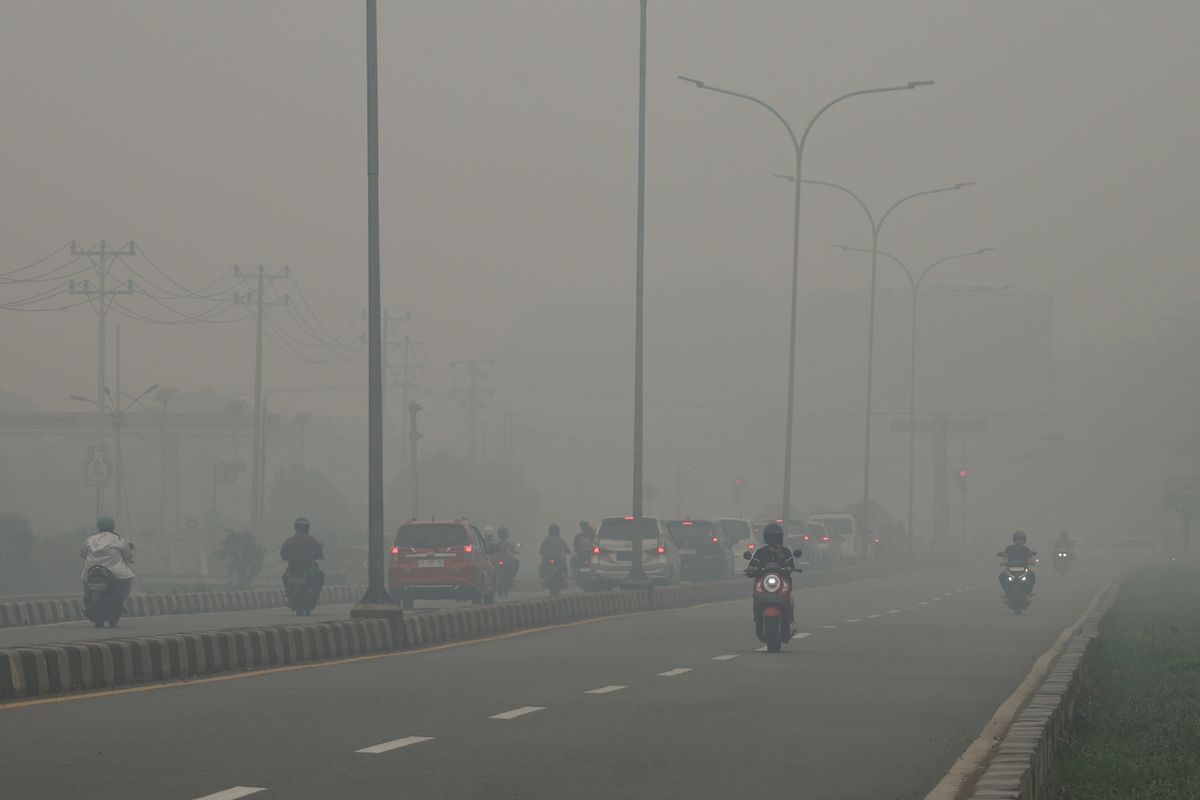
However, what if the accident occurs because the driver lost visibility due to extremely thick haze? Should the responsibility still lie entirely with the driver? What about the entities that caused the haze in the first place?
Furthermore, what about the responsibility of the government or road operators who allow vehicles to continue using the roads under conditions that are already hazardous to safety?
This question is essential because traffic safety is not solely the driver's responsibility. There is a system at play behind it.
For instance, there are roads that need to be ensured safe, environments that must be controlled, hazard information that should be communicated, and personnel who are obligated to take action when public safety is threatened.
Unfortunately, when accidents occur, the resolution of the issue often deviates towards the driver rather than exploring all the contributing factors to that accident.
Under Law No. 22 of 2009 concerning Traffic and Road Transport, drivers do indeed have legal responsibilities for accidents caused by their negligence.
Article 234 regulates the responsibilities of drivers, vehicle owners, and/or public transportation companies for losses arising from driver negligence.
Thus, when someone continues to speed despite extremely limited visibility due to thick haze, there is reason to examine the possibility of their negligence.
Drivers ought to adjust their speed, maintain a safe distance, or even halt their journey when conditions are unsuitable for travel.
However, such provisions should not be interpreted as implying that every accident involving motor vehicles is automatically the driver's fault.
The law still requires proof concerning actions, elements of fault, cause-and-effect relationships, and the circumstances surrounding the incident.
In fact, Article 229 paragraph (5) of the Traffic and Road Transport Law explicitly acknowledges that accidents can be caused by road users' negligence, unroadworthy vehicles, as well as road and/or environmental unsuitability.
This means that the law actually provides room to view accidents as a broader issue than simply human error in operating vehicles.
This provision needs to gain greater attention in handling traffic accidents in Indonesia.
One can easily picture a vehicle traversing a road under normal conditions, with the driver focused, the vehicle in good condition, and speed relatively controlled.
However, when a vehicle enters an area engulfed in haze, visibility suddenly drops, rendering the driver unable to see the vehicle ahead adequately. An accident then occurs.
In such situations, investigations certainly should extend beyond merely questioning the driver's actions moments before the collision.
We also need to know the origin of the haze, how long the condition has persisted, whether there had been prior public reports, and what actions the road management authorities took.