

Bullying in Malang, Minister PPPA: No Child Should Lose Their Life Due to Violence
-
News
-
2 minutes ago
This article was translated by AI. Read the original article on Kompas.com. See Original
I believe that one of the fundamental issues in managing transportation safety is the entrenched paradigm that a road, once built and passable by vehicles, is considered to have fulfilled its service function.
In reality, a safe road is not merely one with a good surface, compliant geometry, and available equipment. Roads must also be managed according to changing risks that occur continuously.
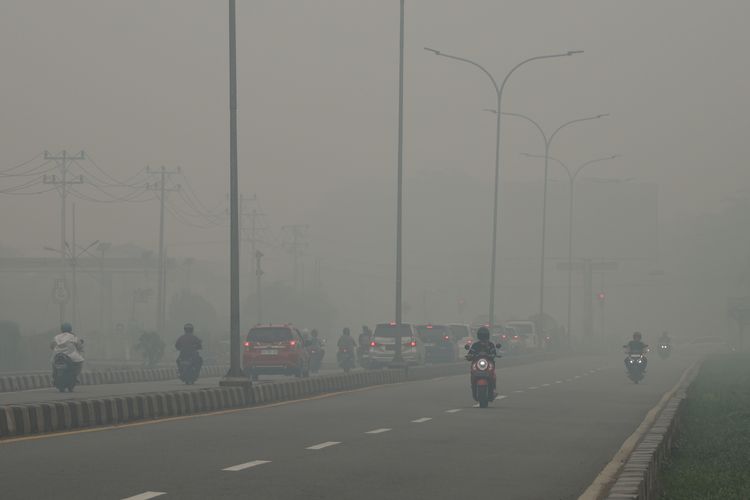
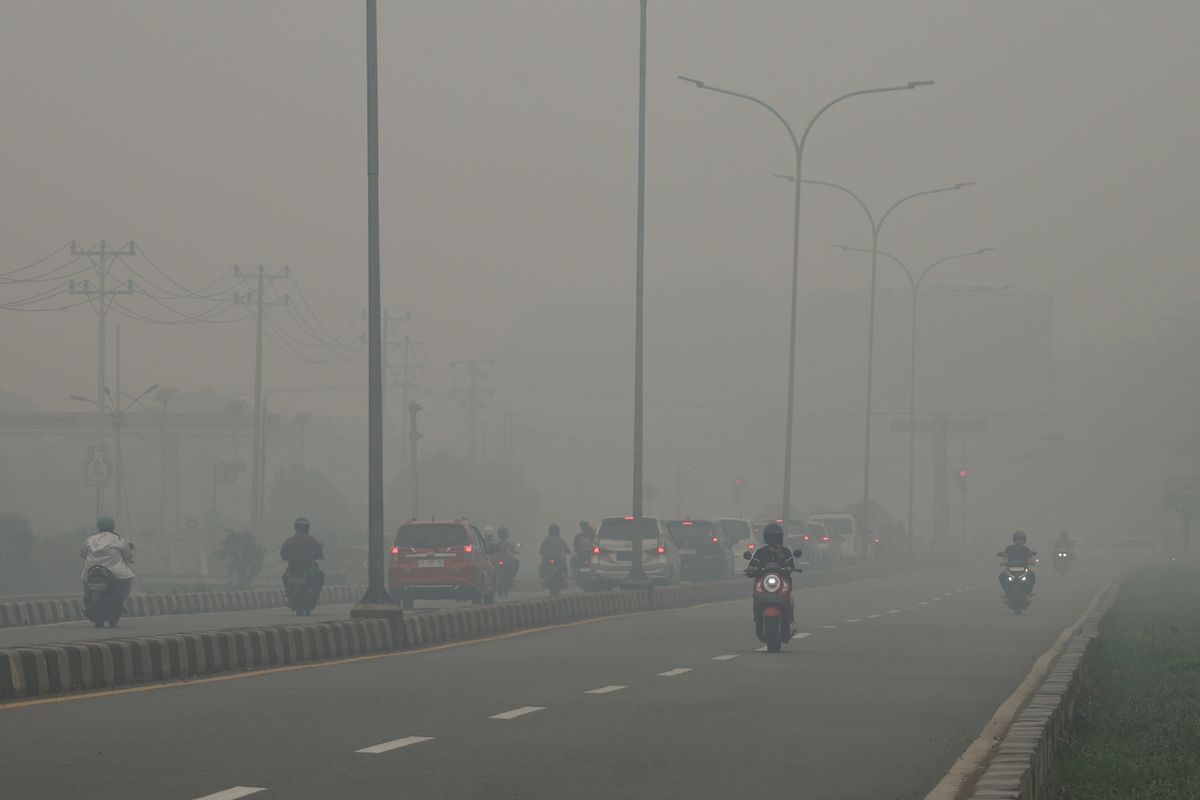
Haze, water pooling, landslides, fallen trees, oil spills, or various other disturbances can convert roads that were previously safe into extremely dangerous ones.
Such changing conditions necessitate a response from the operators and managers of the road.
Article 238 of the Traffic and Road Transport Law stipulates that it is the government's obligation to provide or rectify traffic regulations, facilities, and infrastructure that lead to accidents, and to allocate budgets for prevention and response.
Indeed, this article does not mean that the government is automatically liable for compensation for every accident that occurs.
However, this provision demonstrates that the state has a responsibility to develop a system for accident prevention and management.
In the context of haze, that responsibility should translate into tangible actions.
When visibility decreases to a dangerous level, road managers must be able to provide early warnings, control vehicle speed, manage traffic movement, and if necessary, enforce temporary road closures in coordination with the relevant authorities.
The issue then becomes whether our road management system has sufficient responsive mechanisms to address such conditions?
On highways, for instance, we have various traffic monitoring facilities, surveillance cameras, patrol vehicles, and operational control centers.
These facilities should not merely function to monitor congestion and accidents once they have occurred, but also to detect potential hazards before accidents take place.
If visibility impairment is known about but necessary protective actions are neglected, then the possibility of negligence on the part of the road managers should also be examined.
Of course, determining legal responsibility must still be based on applicable obligations, evidence of negligence, and the relationship between that negligence and the accident.
With this line of thinking, road safety is no longer viewed solely as a driver issue but rather as a responsibility of managing the transportation system as a whole.
Another dimension that we also need to consider is that haze affecting visibility is not always a natural phenomenon.
In many situations, haze can stem from human activities, including land burning, business area fires, or other activities that cause air pollution.
If the source of the disturbance arises from unlawful human actions, why should the responsibility stop solely at environmental issues? Aren't the impacts of such actions also dangerous for road users' safety?
Law No. 32 of 2009 on Environmental Protection and Management provides a basis for accountability for pollution and environmental damage.
Article 87 regulates the obligation to compensate and/or take certain actions if unlawful acts causing pollution or environmental destruction result in losses.
With this basis, it is indeed possible for those responsible for air pollution to be held accountable for the losses experienced by accident victims.
























