

Bullying in Malang, Minister PPPA: No Child Should Lose Their Life Due to Violence
-
News
-
2 minutes ago
This article was translated by AI. Read the original article on Kompas.com. See Original
WHEN traffic accidents occur on the road, our attention is almost always directed towards the drivers involved.
Are the drivers drowsy, speeding, failing to maintain distance, or not concentrating while operating their vehicles?
Such questions are indeed crucial. After all, drivers are the ones directly controlling the vehicle and deciding on actions in various situations on the road.
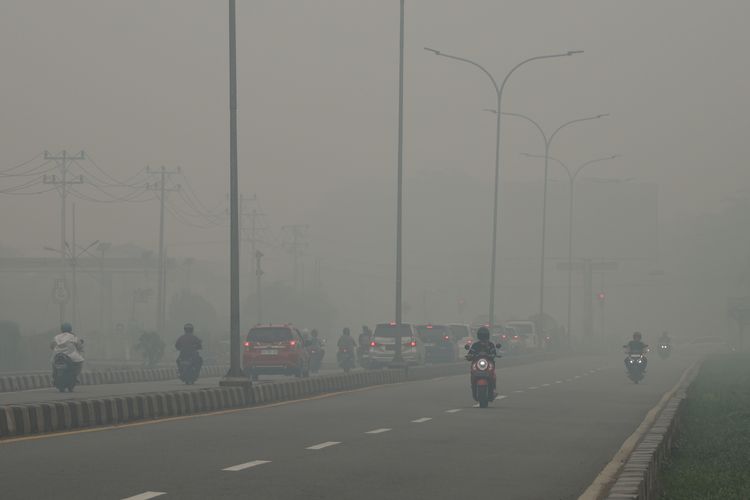
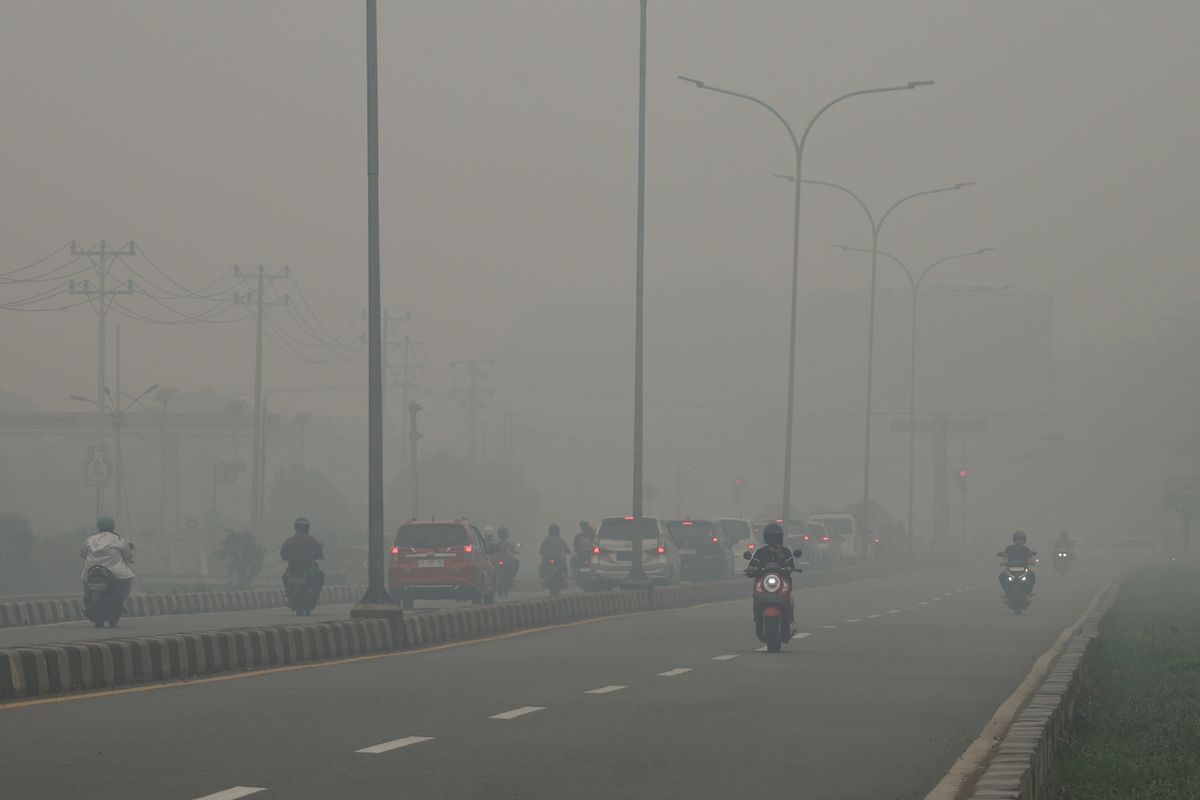
However, what if the accident occurs because the driver lost visibility due to extremely thick haze? Should the responsibility still lie entirely with the driver? What about the entities that caused the haze in the first place?
Furthermore, what about the responsibility of the government or road operators who allow vehicles to continue using the roads under conditions that are already hazardous to safety?
This question is essential because traffic safety is not solely the driver's responsibility. There is a system at play behind it.
For instance, there are roads that need to be ensured safe, environments that must be controlled, hazard information that should be communicated, and personnel who are obligated to take action when public safety is threatened.
Unfortunately, when accidents occur, the resolution of the issue often deviates towards the driver rather than exploring all the contributing factors to that accident.
Under Law No. 22 of 2009 concerning Traffic and Road Transport, drivers do indeed have legal responsibilities for accidents caused by their negligence.
Article 234 regulates the responsibilities of drivers, vehicle owners, and/or public transportation companies for losses arising from driver negligence.
Thus, when someone continues to speed despite extremely limited visibility due to thick haze, there is reason to examine the possibility of their negligence.
Drivers ought to adjust their speed, maintain a safe distance, or even halt their journey when conditions are unsuitable for travel.
However, such provisions should not be interpreted as implying that every accident involving motor vehicles is automatically the driver's fault.
The law still requires proof concerning actions, elements of fault, cause-and-effect relationships, and the circumstances surrounding the incident.
In fact, Article 229 paragraph (5) of the Traffic and Road Transport Law explicitly acknowledges that accidents can be caused by road users' negligence, unroadworthy vehicles, as well as road and/or environmental unsuitability.
This means that the law actually provides room to view accidents as a broader issue than simply human error in operating vehicles.
This provision needs to gain greater attention in handling traffic accidents in Indonesia.
One can easily picture a vehicle traversing a road under normal conditions, with the driver focused, the vehicle in good condition, and speed relatively controlled.
However, when a vehicle enters an area engulfed in haze, visibility suddenly drops, rendering the driver unable to see the vehicle ahead adequately. An accident then occurs.
In such situations, investigations certainly should extend beyond merely questioning the driver's actions moments before the collision.
We also need to know the origin of the haze, how long the condition has persisted, whether there had been prior public reports, and what actions the road management authorities took.
I believe that one of the fundamental issues in managing transportation safety is the entrenched paradigm that a road, once built and passable by vehicles, is considered to have fulfilled its service function.
In reality, a safe road is not merely one with a good surface, compliant geometry, and available equipment. Roads must also be managed according to changing risks that occur continuously.
Haze, water pooling, landslides, fallen trees, oil spills, or various other disturbances can convert roads that were previously safe into extremely dangerous ones.
Such changing conditions necessitate a response from the operators and managers of the road.
Article 238 of the Traffic and Road Transport Law stipulates that it is the government's obligation to provide or rectify traffic regulations, facilities, and infrastructure that lead to accidents, and to allocate budgets for prevention and response.
Indeed, this article does not mean that the government is automatically liable for compensation for every accident that occurs.
However, this provision demonstrates that the state has a responsibility to develop a system for accident prevention and management.
In the context of haze, that responsibility should translate into tangible actions.
When visibility decreases to a dangerous level, road managers must be able to provide early warnings, control vehicle speed, manage traffic movement, and if necessary, enforce temporary road closures in coordination with the relevant authorities.
The issue then becomes whether our road management system has sufficient responsive mechanisms to address such conditions?
On highways, for instance, we have various traffic monitoring facilities, surveillance cameras, patrol vehicles, and operational control centers.
These facilities should not merely function to monitor congestion and accidents once they have occurred, but also to detect potential hazards before accidents take place.
If visibility impairment is known about but necessary protective actions are neglected, then the possibility of negligence on the part of the road managers should also be examined.
Of course, determining legal responsibility must still be based on applicable obligations, evidence of negligence, and the relationship between that negligence and the accident.
With this line of thinking, road safety is no longer viewed solely as a driver issue but rather as a responsibility of managing the transportation system as a whole.
Another dimension that we also need to consider is that haze affecting visibility is not always a natural phenomenon.
In many situations, haze can stem from human activities, including land burning, business area fires, or other activities that cause air pollution.
If the source of the disturbance arises from unlawful human actions, why should the responsibility stop solely at environmental issues? Aren't the impacts of such actions also dangerous for road users' safety?
Law No. 32 of 2009 on Environmental Protection and Management provides a basis for accountability for pollution and environmental damage.
Article 87 regulates the obligation to compensate and/or take certain actions if unlawful acts causing pollution or environmental destruction result in losses.
With this basis, it is indeed possible for those responsible for air pollution to be held accountable for the losses experienced by accident victims.
However, the relationship between the source of haze, visibility impairment, and the accident must be legally substantiated.
This proof is not straightforward. It requires knowledge of the haze's source, its movement toward the road, the intensity of visibility disturbance, and its contribution to the accident.
For this reason, accident investigations should not stop at examining the vehicles and the drivers.
This is where the importance of linking traffic accident investigations with environmental investigation capabilities comes into play.
These two fields, which have often operated independently, can actually support each other in finding more comprehensive explanations for the causes of accidents.
It is time for Indonesia to strengthen accident investigation approaches that do not merely seek to assign blame, but also to understand why an accident can occur and why the safety system failed to prevent it.
When accidents happen due to haze, at least three dimensions need to be simultaneously examined: the driver's actions in response to visibility disturbances, the road management actions in anticipating and controlling risks, and the potential responsibility of those causing the haze.
None of these need to be proven guilty. However, all three should be part of the examination process when relevant initial evidence exists.
With this approach, we can distinguish between accidents primarily caused by driver negligence and accidents influenced by failures in road safety management or actions of other parties.
Moreover, investigation findings should be used to improve the system. If a road corridor repeatedly experiences haze disturbances, then risk mapping, response procedures, inter-agency communication mechanisms, and clear operational decisions must be established.
We should never wait for a location to be labeled dangerous after an accident results in casualties.
I believe the central issue lies here. We too often treat accidents as events that need to be resolved after they occur, rather than as risks that require prior management to prevent them from escalating into tragedies.
While holding drivers accountable is certainly a valid part of law enforcement, making them the sole party responsible for the consequences of an accident, without examining other contributing factors, is a perspective that needs correction.
Traffic safety is the outcome of interactions among humans, vehicles, roads, environments, and management systems.
When one component fails to function, the risk of accidents increases. When multiple components fail simultaneously, the consequences can become much more severe.
Therefore, law enforcement must encompass all parties that have proven to contribute to the occurrence of accidents, based on the nature of their faults and responsibilities.
This approach is not designed to absolve drivers of their obligations, but rather to ensure that safety isn't placed solely on one party.
Ultimately, the measure of success for a transportation safety system should not be how many drivers can be held guilty after an accident occurs.
The measure should be how effectively the state, road managers, communities, and all involved parties can prevent such accidents from happening in the first place.
Because when haze obscures a driver's vision, it should not also obscure our ability to see all the causes and responsibilities behind an accident. It should be that way.
























