

Bullying in Malang, Minister PPPA: No Child Should Lose Their Life Due to Violence
-
News
-
2 minutes ago
This article was translated by AI. Read the original article on Kompas.com. See Original
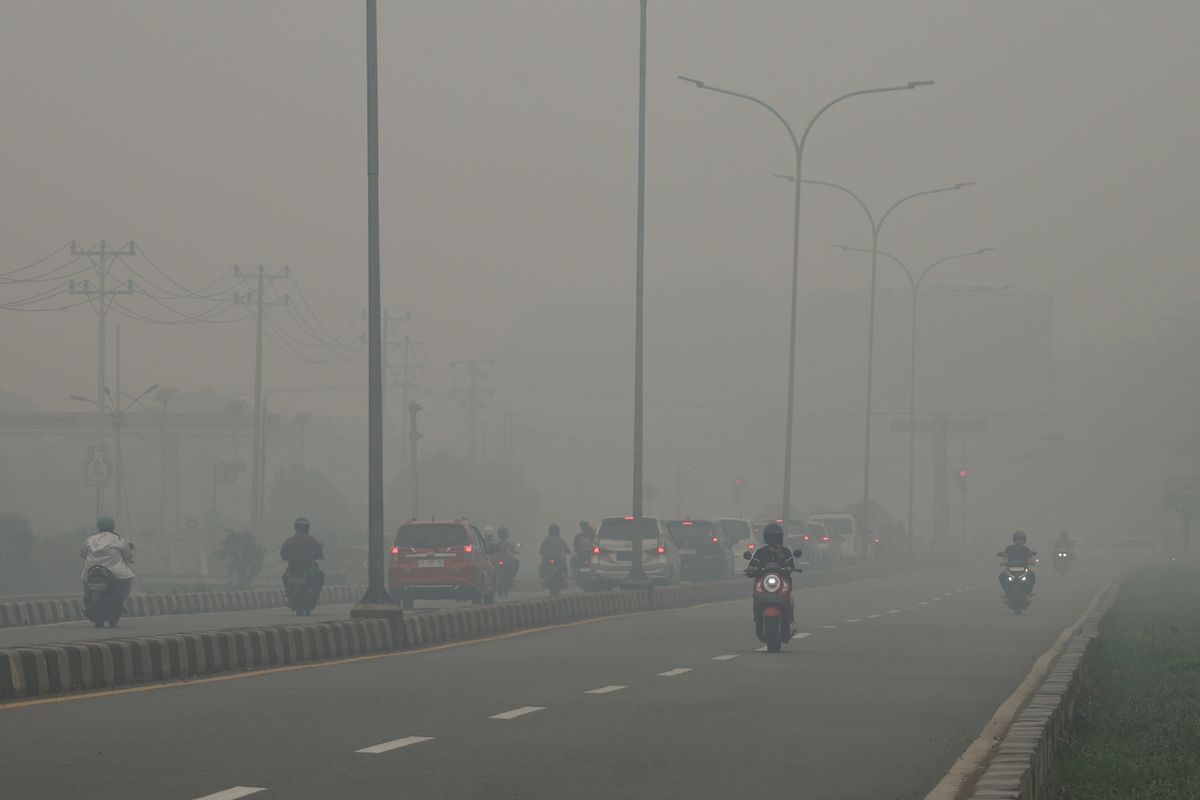
However, the relationship between the source of haze, visibility impairment, and the accident must be legally substantiated.
This proof is not straightforward. It requires knowledge of the haze's source, its movement toward the road, the intensity of visibility disturbance, and its contribution to the accident.
For this reason, accident investigations should not stop at examining the vehicles and the drivers.
This is where the importance of linking traffic accident investigations with environmental investigation capabilities comes into play.
These two fields, which have often operated independently, can actually support each other in finding more comprehensive explanations for the causes of accidents.
It is time for Indonesia to strengthen accident investigation approaches that do not merely seek to assign blame, but also to understand why an accident can occur and why the safety system failed to prevent it.
When accidents happen due to haze, at least three dimensions need to be simultaneously examined: the driver's actions in response to visibility disturbances, the road management actions in anticipating and controlling risks, and the potential responsibility of those causing the haze.
None of these need to be proven guilty. However, all three should be part of the examination process when relevant initial evidence exists.
With this approach, we can distinguish between accidents primarily caused by driver negligence and accidents influenced by failures in road safety management or actions of other parties.
Moreover, investigation findings should be used to improve the system. If a road corridor repeatedly experiences haze disturbances, then risk mapping, response procedures, inter-agency communication mechanisms, and clear operational decisions must be established.
We should never wait for a location to be labeled dangerous after an accident results in casualties.
I believe the central issue lies here. We too often treat accidents as events that need to be resolved after they occur, rather than as risks that require prior management to prevent them from escalating into tragedies.
While holding drivers accountable is certainly a valid part of law enforcement, making them the sole party responsible for the consequences of an accident, without examining other contributing factors, is a perspective that needs correction.
Traffic safety is the outcome of interactions among humans, vehicles, roads, environments, and management systems.
When one component fails to function, the risk of accidents increases. When multiple components fail simultaneously, the consequences can become much more severe.
Therefore, law enforcement must encompass all parties that have proven to contribute to the occurrence of accidents, based on the nature of their faults and responsibilities.
This approach is not designed to absolve drivers of their obligations, but rather to ensure that safety isn't placed solely on one party.
Ultimately, the measure of success for a transportation safety system should not be how many drivers can be held guilty after an accident occurs.
The measure should be how effectively the state, road managers, communities, and all involved parties can prevent such accidents from happening in the first place.
Because when haze obscures a driver's vision, it should not also obscure our ability to see all the causes and responsibilities behind an accident. It should be that way.
























