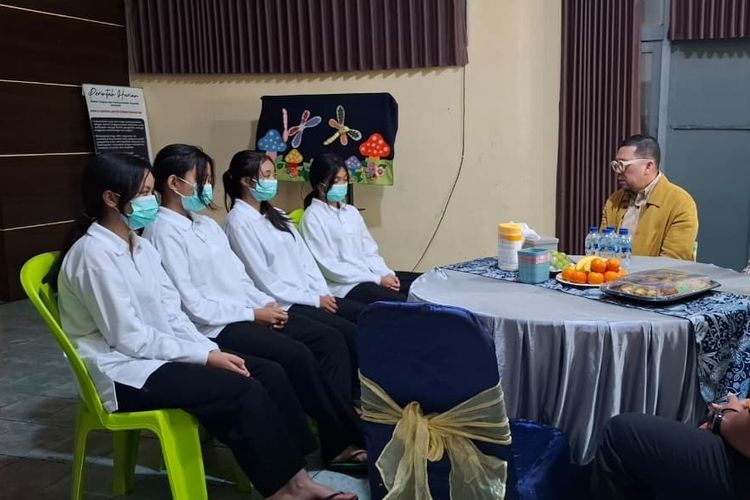
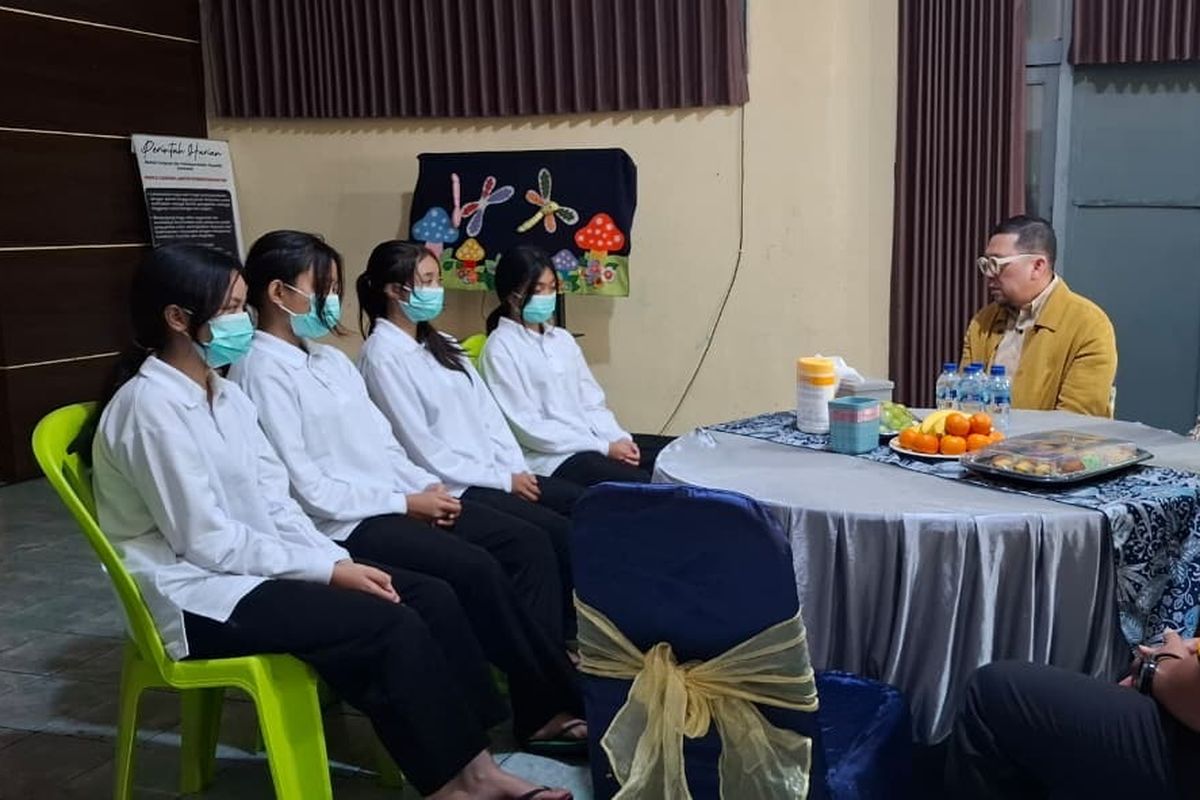
First, most perpetrators in these cases are not under 14 years old, so they cannot be sentenced to prison.
The perpetrator in Pontianak was a high school student (Detik, 2019). The two suspects in Malang are 16 and 17 years old (Ipol, 2026). Legally, they can face prison sentences if proven in court.
At this age, the Child Criminal Justice System Law still opens the door to criminalization, with penalties up to half of that for adults (Article 81 paragraph (2) Law 11/2012).
Diversion only applies to offenses with penalties under 7 years (Article 7 paragraph (2) Law 11/2012).
So, for violence resulting in death, the law does not force us to choose between "imprisoning a child" and "letting them go".
What is demanded is a serious process: thorough evidence collection, a clear delineation of each perpetrator's role, and proportionate penalties.
Second, restorative justice should not be another term for "peace". In Audrey's case, KPPAD Kalbar even had to dispel rumors that the matter would be resolved peacefully (Detik, 2019).
Zehr (1990), a pioneer of restorative justice, positions crime as a violation against people and relationships.
Therefore, its first question is who has been harmed and what their needs are, not how quickly the matter can be settled.
In the end, the measure of justice is not how long the perpetrator is incarcerated. It is whether the victim and their family recover, whether the perpetrator genuinely changes, and whether the negligent institutions also bear the consequences (Harefa, 2026).
Public anger is understandable. However, the mob that stormed the suspect's house to the point of burning cars (JatimTimes, 2026) merely replicated the same logic as the perpetrators: punishing collectively outside the rules.
Braithwaite (1989) distinguishes between stigmatizing shame that ostracizes and condemning behavior while still allowing for the perpetrator's reintegration. He argues that stigmatization pushes perpetrators toward deviant groups.
Anticipating the Future
If patterns have been evident since 2008, prevention strategies can also be formulated. There are five layers that must work in tandem.
First, schools. The violence prevention and mitigation team required by Permendikbudristek 46/2023 must genuinely function, not just exist on paper.
The Olweus bullying prevention program shows that interventions are most effective when carried out simultaneously at the school, class, and individual levels, starting with surveys to map the extent of the problem (Olweus, 1993).
Practical implementation can start with concrete measures: periodic and anonymous school climate surveys, complaint channels that do not require victims to confront perpetrators, and trained counselors capable of recognizing relational aggression among female students, such as ostracism, jibes in groups, and veiled threats (Crick & Grotpeter, 1995).
Schools' responsibilities also extend beyond their gates. A lot of violence in these cases occurs outside school but begins from relations within the school.
Second, families. In the Malang case, it is essential to investigate the family and social environment of the suspects. Have their families been functional or dysfunctional?
Is there a pattern of upbringing or psychological trauma experienced by the suspects that contributes to the violence they commit?
How do parents and families supervise and ensure the healthy and positive growth of their children? Care and parental involvement are the first defenses against delinquency (Hirschi, 1969).
Conversations about managing feelings of jealousy, shame, and conflict with friends need to start at home long before conflicts erupt (Agnew, 1992).
Positive parenting also means being present in children's digital lives. Parents need to agree on gadget usage rules with their children, such as screen time limits, no gadgets in bedrooms at night, and age-appropriate parental controls.
More important than just restrictions, parents need to know what chat groups their children belong to, whose accounts they follow, and with whom they interact online, without making the child feel spied on.
Third, social media and digital platforms. The four cases above demonstrate that social media are not merely dissemination tools but also play roles in shaping the violence itself.
Children are exposed daily to content involving fights, bullying, and insults packaged as entertainment, and algorithms constantly present similar content because it drives clicks.
Perpetually viewing violence gradually leads to acceptance of it as normal, which can even result in imitation and recording for recognition (Bandura, 1977).
The problem is that control over destructive and violent content remains weak across all levels.
The government has established PP Number 17 of 2025 regarding the management of the electronic system in child protection, but the implementation oversight, including age verification and sanctions for negligent platforms, is still lacking.
Social media platforms spread violent videos faster than they remove them, and their reporting systems have yet to favor children.
The environment and society tend to be permissive: watching, laughing, sharing, then forgetting.
The state must enforce the rules firmly, platforms must filter and swiftly remove violent content involving children, and society needs to muster the courage to report it instead of sharing it.
Fourth, the state and law enforcement. Legal processes must be transparent and not conclude with mediation that pressures victims.
Psychological support must be provided for victims, witnesses, and families, and the restitution rights of child victims must truly be pursued (PP 43/2017; Gosita, 1993).
Child offenders need rehabilitative measures whose results are assessed (Harefa, 2026). The criticism from the House of Representatives that the Ministry of Women's Empowerment and Child Protection's programs are not just about socialization (Suara.com, 2026) must be answered with data: how many schools truly have active prevention teams, and how many complaints have been adequately addressed.
Fifth, children's mental health. Behind every offender and victim are children whose mental health needs attention.
The Indonesian National Adolescent Mental Health Survey (I-NAMHS, 2022) found that about one in three Indonesian teenagers experienced a mental health issue in the last twelve months, but only a small fraction accessed services.
Unmanaged anger, jealousy, experiences of violence at home, or repressed trauma can erupt into aggression against peers.
Therefore, the state, schools, families, and society must be genuinely concerned about children's mental health.
The state needs to ensure that counseling and child psychologist services are available and accessible even at the community health center level.
Schools need to conduct early detection as well as provide adequately trained school counselors.
Families need to be sensitive to their children's behavioral changes and not dismiss emotional complaints as mere expressions of being spoiled.
Society must stop stigmatizing children who seek help. Mental health support must be facilitated not only for victims after violence occurs but also for children showing early signs of trouble before they become perpetrators.
One last note for all of us: stop sharing violent videos. Every time we share them, we extend the punishment for the victim (Symonds, 1980) and teach other children that violence is a spectacle that can be imitated (Bandura, 1977).
Lusi in Pati, Audrey in Pontianak, SSR in Karanganyar, and Silvia in Malang are separated by distance and time over 18 years. They are united by one thing: adults around them only act after it is too late.
Silvia was said to have recently earned a scholarship to study in South Korea (tvOnenews, 2026). The future cannot be restored by any punishment.
What we can still save are the next children, both potential victims and potential offenders/Children in Conflict with the Law.
Justice for Silvia is not just about a prison sentence for the four teenage girls. Justice for her means ensuring no more names need to be added to the list of perpetrators of violence among female students.