


PKB Engages 150 OSIS Students from Jabodetabek, Learning Political Awareness from an Early Age
-
News
-
3 minutes ago
This article was translated by AI. Read the original article on Kompas.com. See Original
The state budget (APBN) is not an unlimited funding source. According to the Finance Ministry's publication, as of August 31, 2026, state revenue was recorded at IDR 2,055.6 trillion, while state expenditure reached IDR 2,295.7 trillion, resulting in a deficit of 0.93 percent of GDP.
These figures do not yet indicate a fiscal crisis. However, a controlled deficit does not automatically imply that the government's fiscal space is expansive.
The state must still pay interest on debt, fund subsidies, meet mandatory expenditures, maintain transfers to regions, and provide budgets for priority programs.
Therefore, the government's ability to finance development should be assessed not only through the debt-to-GDP ratio but also through the ratio of interest payments to state revenue, primary balance, debt maturity structure, and spending flexibility.
A country that can still borrow does not necessarily have the capacity to finance all its ambitions.
The situation becomes more serious when looking at the government's debt position.
Data from the Directorate General of Financing and Risk Management of the Finance Ministry recorded government debt as of September 30, 2026, reaching IDR 10,326.93 trillion, with a debt-to-GDP ratio of 40.30 percent.
This ratio is still below the legal limit of 60 percent as stipulated in the State Finance Law.
However, using the legal limit as the sole measure of fiscal health is an analytical mistake.
What matters more is the country's ability to generate revenue to meet its debt obligations without sacrificing productive spending.
This is where the concept of fiscal space becomes relevant. Fiscal space refers to the government’s capacity to increase spending or change expenditure composition without disrupting fiscal sustainability and macroeconomic stability.
As fiscal space becomes tighter, the government must differentiate between spending that generates productivity and spending that primarily yields political prestige.
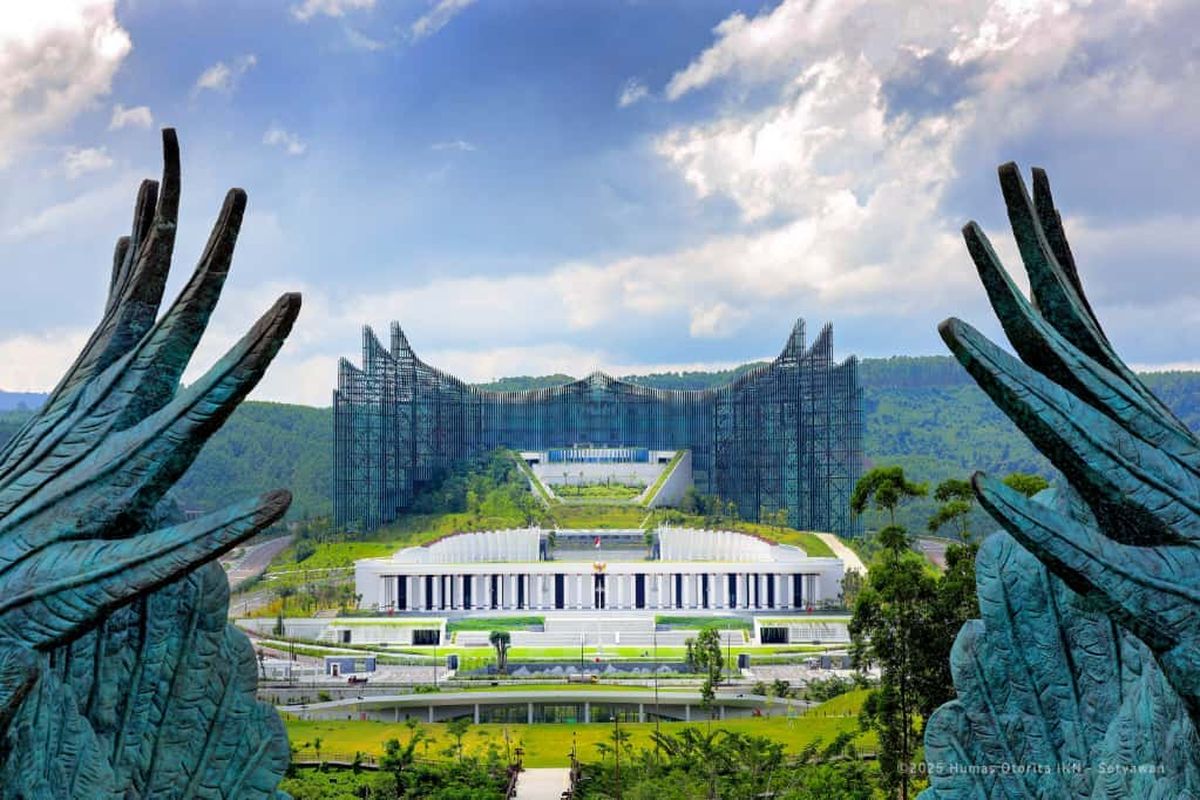
IKN certainly cannot be dismissed outright as a project without economic benefits.
Urban infrastructure, roads, clean water, energy, and connectivity have the potential to create long-term added value.
However, these benefits must be demonstrated through cost-benefit analysis, demand projections, infrastructure utilization rates, and the ability to attract private investment.
If development continues without certainty about economic activity, population growth, and adequate productive investment, Indonesia risks creating cities with expensive infrastructure but low utilization rates.
From a Keynesian economic perspective, government spending can stimulate growth through increased aggregate demand.
However, Keynes never claimed that every government expenditure is automatically productive. Its effectiveness is heavily influenced by the size of the fiscal multiplier.
Infrastructure development that generates connectivity, lowers logistics costs, and boosts industrial productivity has potential for long-term multipliers.
Conversely, spending that does not immediately create sustainable economic activity can yield lower multipliers.






















