
Corruption in Crude Oil Management Costs the State Rp 6.1 Trillion
-
News
-
9 minutes ago
This article was translated by AI. Read the original article on Kompas.com. See Original
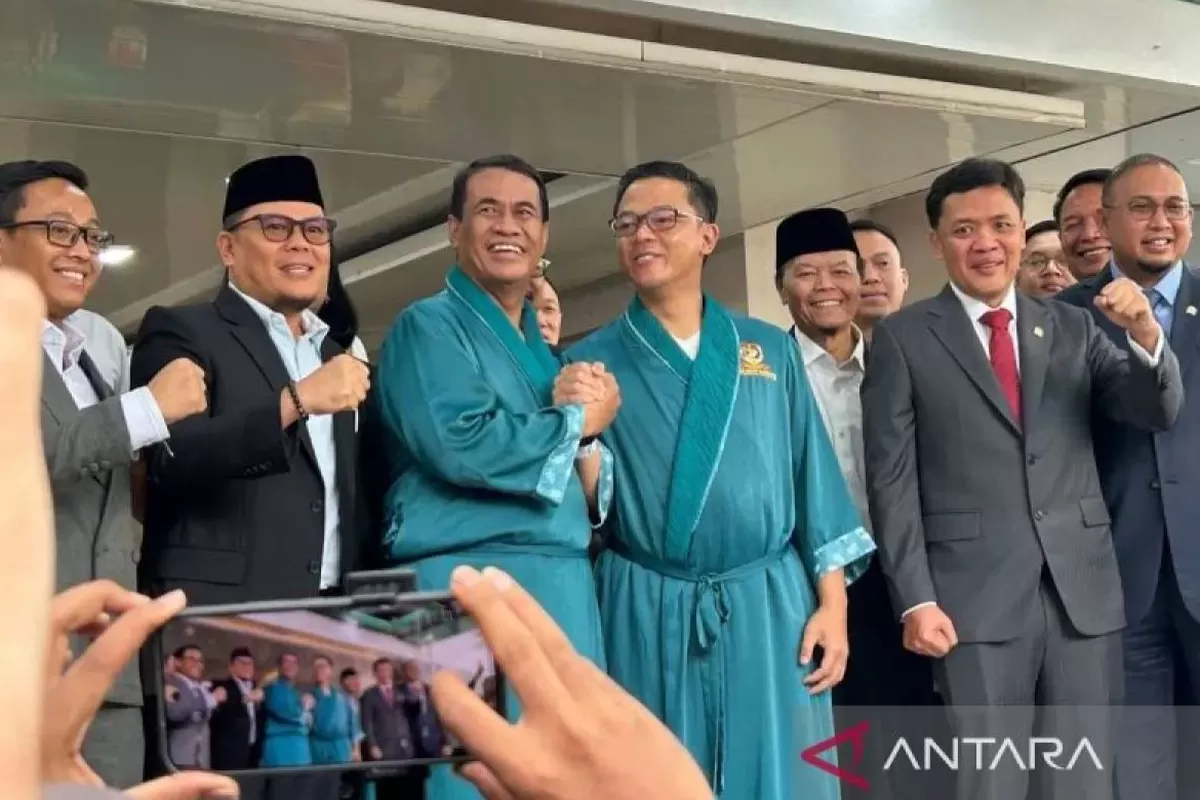
IT TURNS OUT that the MPR is still grappling with the dilemma over how to choose a Vice President.
Although interpretations by prominent figures who shaped the 1945 Constitution amendment have been provided.
Should it be through voting? Is acclamation permissible? Is consensus through deliberation still an option?
Before December 11, 2026, the method of selection must be decided. The method of choosing a vice president is as crucial as who is chosen. An incorrect method can tarnish a rightful name.
However, a constitutionally significant question remains: how to ensure that this process does not devolve into a transaction?
And what is the position of the public if it is the MPR selecting, not the people?
Our Constitution has already paved the way. Article 8, paragraph (2) of the 1945 Constitution states that in the event of a Vice Presidential vacancy, the MPR must hold a session no later than 60 days to elect a Vice President from two candidates proposed by the President.
This clearly means that the MPR is the one making the choice. The one proposing is the President. The public does not vote directly. This is not a re-election.
Many people mistakenly think this is an election mechanism. But in constitutional theory, this is a mechanism to fill a vacancy, not a general election.
The difference is fundamental. In a general election, legitimacy comes directly from the people.
In filling the Vice Presidency, legitimacy derives from two sources: the President's proposal and the MPR's approval as the representative body of the people.
Referring to A.V. Dicey's opinion (1885), this represents parliamentary sovereignty bounded by the constitution.
The MPR has the sovereignty to choose, but that sovereignty is limited: it may only choose from two names proposed by the President, and only within 60 days.
The MPR cannot propose a third name. The President cannot propose just one name.
Both are bound. This is what is referred to as constitutionalism: power constrained by the constitution, not power freely enacted in the name of sovereignty.
However, that does not mean the MPR is free to choose in any manner. The selection process is regulated as well. And it is here that constitutional ethics begin to matter.
Hans Kelsen's concept of Stufenbau and Grundnorm (1960) explains that the legitimacy of state actions is not determined by who is performing them.
What matters is whether the action aligns with higher norms within a tiered normative system.
The MPR's election of the Vice President is legitimate, not because the MPR is choosing. It is legitimate because of the norms above it: the 1945 Constitution, followed by MPR's Rules of Procedure, and then the MPR's own resolution.
This means that if the MPR violates its own procedures, for instance, by forcing acclamation without deliberation, then its decision is legally flawed, even if everyone agrees politically.
Moreover, there is one more layer, referring to Lon L. Fuller (1964), which is morality.
A good law must meet internal morality: rules must be announced, clear, and, most importantly, there must be consistency between the rules announced and the practices implemented.
If the MPR's Rules of Procedure state to deliberate first before voting, but in practice, it is directly acclamation because it has been agreed upon outside the session, then that is a violation of legal morality itself. The law exists, but it is violated by its own makers.
In our tradition, the MPR recognizes two methods of decision-making: deliberation for consensus, and voting if consensus is not reached. This is not merely procedural.