

Corruption in Crude Oil Management Costs the State Rp 6.1 Trillion
-
News
-
9 minutes ago
This article was translated by AI. Read the original article on Kompas.com. See Original
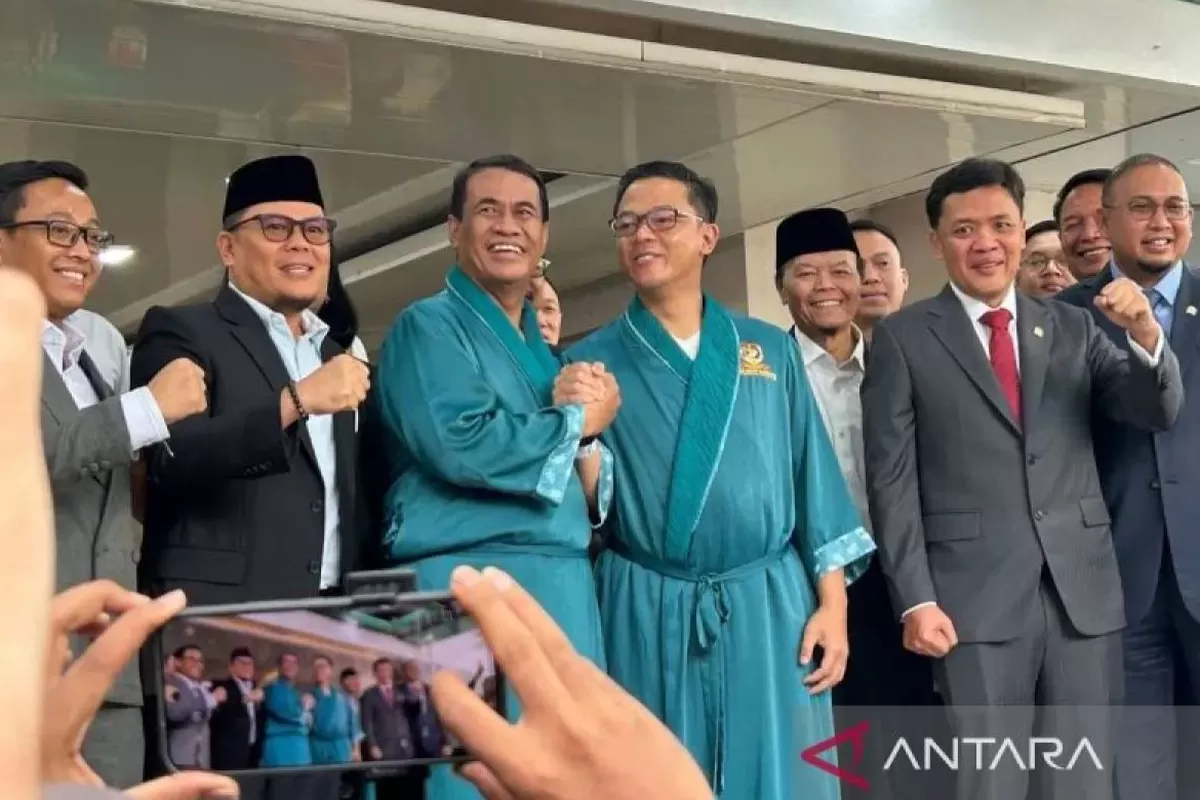
IT TURNS OUT that the MPR is still grappling with the dilemma over how to choose a Vice President.
Although interpretations by prominent figures who shaped the 1945 Constitution amendment have been provided.
Should it be through voting? Is acclamation permissible? Is consensus through deliberation still an option?
Before December 11, 2026, the method of selection must be decided. The method of choosing a vice president is as crucial as who is chosen. An incorrect method can tarnish a rightful name.
However, a constitutionally significant question remains: how to ensure that this process does not devolve into a transaction?
And what is the position of the public if it is the MPR selecting, not the people?
Our Constitution has already paved the way. Article 8, paragraph (2) of the 1945 Constitution states that in the event of a Vice Presidential vacancy, the MPR must hold a session no later than 60 days to elect a Vice President from two candidates proposed by the President.
This clearly means that the MPR is the one making the choice. The one proposing is the President. The public does not vote directly. This is not a re-election.
Many people mistakenly think this is an election mechanism. But in constitutional theory, this is a mechanism to fill a vacancy, not a general election.
The difference is fundamental. In a general election, legitimacy comes directly from the people.
In filling the Vice Presidency, legitimacy derives from two sources: the President's proposal and the MPR's approval as the representative body of the people.
Referring to A.V. Dicey's opinion (1885), this represents parliamentary sovereignty bounded by the constitution.
The MPR has the sovereignty to choose, but that sovereignty is limited: it may only choose from two names proposed by the President, and only within 60 days.
The MPR cannot propose a third name. The President cannot propose just one name.
Both are bound. This is what is referred to as constitutionalism: power constrained by the constitution, not power freely enacted in the name of sovereignty.
However, that does not mean the MPR is free to choose in any manner. The selection process is regulated as well. And it is here that constitutional ethics begin to matter.
Hans Kelsen's concept of Stufenbau and Grundnorm (1960) explains that the legitimacy of state actions is not determined by who is performing them.
What matters is whether the action aligns with higher norms within a tiered normative system.
The MPR's election of the Vice President is legitimate, not because the MPR is choosing. It is legitimate because of the norms above it: the 1945 Constitution, followed by MPR's Rules of Procedure, and then the MPR's own resolution.
This means that if the MPR violates its own procedures, for instance, by forcing acclamation without deliberation, then its decision is legally flawed, even if everyone agrees politically.
Moreover, there is one more layer, referring to Lon L. Fuller (1964), which is morality.
A good law must meet internal morality: rules must be announced, clear, and, most importantly, there must be consistency between the rules announced and the practices implemented.
If the MPR's Rules of Procedure state to deliberate first before voting, but in practice, it is directly acclamation because it has been agreed upon outside the session, then that is a violation of legal morality itself. The law exists, but it is violated by its own makers.
In our tradition, the MPR recognizes two methods of decision-making: deliberation for consensus, and voting if consensus is not reached. This is not merely procedural.
This is the philosophy of Pancasila, the fourth principle: popular sovereignty led by the wisdom of deliberation/representation.
Therefore, acclamation is not inherently forbidden. Acclamation is possible as long as it arises from genuine deliberation, not from a staged deliberation.
The difference is subtle but critical.
Legitimate acclamation is one that emerges because all factions have been given a chance to speak, all objections have been heard, and no one feels compelled.
Illegitimate acclamation is one that arises because the room has been locked before the session starts.
This is where lobbying begins to dictate the outcome, while the session only becomes a ceremony for ratification.
Here, the public ought to ask: is that lobbying normal or not?
In my view, lobbying is normal. It is even necessary. Is it really possible to have no lobbying and consensus in the selection of a Vice President? The MPR is a political institution.
Its members come from parties, although there are Regional Representative Councils (DPD). It is impossible for them to choose without talking to each other.
What is not normal is not the lobbying itself. What is not normal is the content of the lobbying.
Jürgen Habermas in Between Facts and Norms (1992) differentiates between bargaining, the haggling of interests, and deliberation, the exchange of reasons.
Legitimate deliberation is deliberation, not bargaining.
If the lobbying consists of an exchange of reasons: who is better at maintaining stability, who understands the constitution better, who is more capable of inclusivity, then it is deliberation. It is valid.
If the lobbying consists of bargaining: you get a ministerial seat, I get support; you get a project, I get votes, then it is no longer deliberation.
That is a transaction disguised in the language of deliberation.
John Rawls (1971) proposes the principle of the veil of ignorance.
A fair decision is made as if we do not know our own positions.
Fair MPR members are those who choose not because of what their party will gain, but because they envision themselves as ordinary citizens being led by that Vice President.
Rawls also emphasizes public reason. The reasons for choosing a Vice President must be justificatory to all rational citizens, not merely party internal reasons.
The reason "because he is one of us" is not a public reason. The reason "because he can maintain the constitution and stability" is a public reason.
Constitutional ethics demand a simple yet often forgotten principle: power must not be traded. The Vice Presidency is a constitutional office, not a commodity for coalition transactions.
I want to emphasize one thing. Consensus does not mean that everyone must agree under duress.
Consensus implies that everyone is given the opportunity to disagree, but then chooses to agree for the greater national cause.
If there is one faction that remains dissenting, then voting is the constitutional route. Voting is not a failure of deliberation.
Voting is part of deliberation that does not reach consensus. Do not fear voting. What should be feared is a counterfeit consensus.
Therefore, anticipation of transactions must begin with openness.
President Prabowo, when proposing two vice presidential candidates, has already explained why he proposed those names. One of them is their track record.
The MPR needs to convey its reasons for its choice to the public. It is not enough to merely announce who won, but to explain why. What are the constitutional considerations? What are the national considerations?
Factions must boldly express their positions openly. If there is a faction with a differing viewpoint, let that difference be recorded.
Differences of opinion are not disgraceful. What is disgraceful is silencing dissent for the sake of a fake acclamation.
The media and civil society must be granted access to monitor. MPR sessions are not secret sessions. The public has the right to know, assess, and criticize.
Indeed. Constitutionally, the people do not vote directly. However, ethically, the people must not be neglected.
Public participation here does not mean a referendum. Participation means the right to know, the right to speak, and the right to oversee.
The public can express their views through the parties they choose, through civil organizations, through campuses, through the media, and through public opinion. And the MPR is obliged to listen to that.
If the MPR votes without heeding the public pulse, then while legally its choice is valid, its legitimacy will be fragile. A Vice President born from a closed process will always be suspected as a product of transactions, even if it is not.
There are three tests that the public can apply to assess.
Legal tests. Is the MPR following its own procedures? Was there genuine deliberation, or was it directly acclamation?
Constitutional tests. Is the MPR respecting its authority limits? Only choosing from two names, not adding or subtracting.
Ethical tests. Are the reasons for their choice publically justifiable reasons, or are they transaction-based reasons known only to the elite?
If all three tests pass, then whoever is elected, whether by acclamation or voting, will have strong legitimacy.
If any one fails, particularly the ethical test, then the elected Vice President will always be shadowed by suspicion.
In constitutional theory, ethically flawed legitimacy cannot be healed solely by procedural validity.
The constitution has already paved the way for us. Constitutional ethics have already provided us with guidelines. It is now up to the MPR's courage to implement it honestly.
A good vice president is not only determined by who he is, but also by how he is chosen.
Constitutionally meaningful, December 11, 2026, is not just about who becomes Vice President.
December 11 is a test for the MPR: can the MPR still be a dignified deliberative institution, or merely a rubber stamp for elite agreements?