

When Civil Servant Positions Become Contested, The Art of Securing Oneself
-
News
-
7 minutes ago
This article was translated by AI. Read the original article on Kompas.com. See Original
November 25 is commemorated every year as Teachers' Day.
On this occasion, as a token of appreciation, parents or students sometimes give teachers flowers or even poems.
This year marks the 81st anniversary of the celebration, with the Indonesian Teachers' Association (PGRI) adopting the theme “Great Teachers, Strong Indonesia,” emphasizing that teachers are one of the key strengths in building the nation.
However, ahead of this Teachers' Day, there is one question that I cannot ignore: what kind of great teachers are we preparing if the values we teach in class are not always reflected in the significant decisions made outside the classroom?
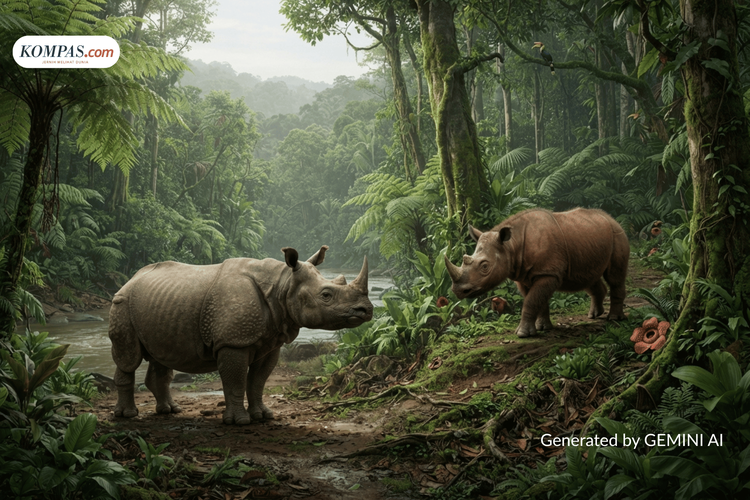
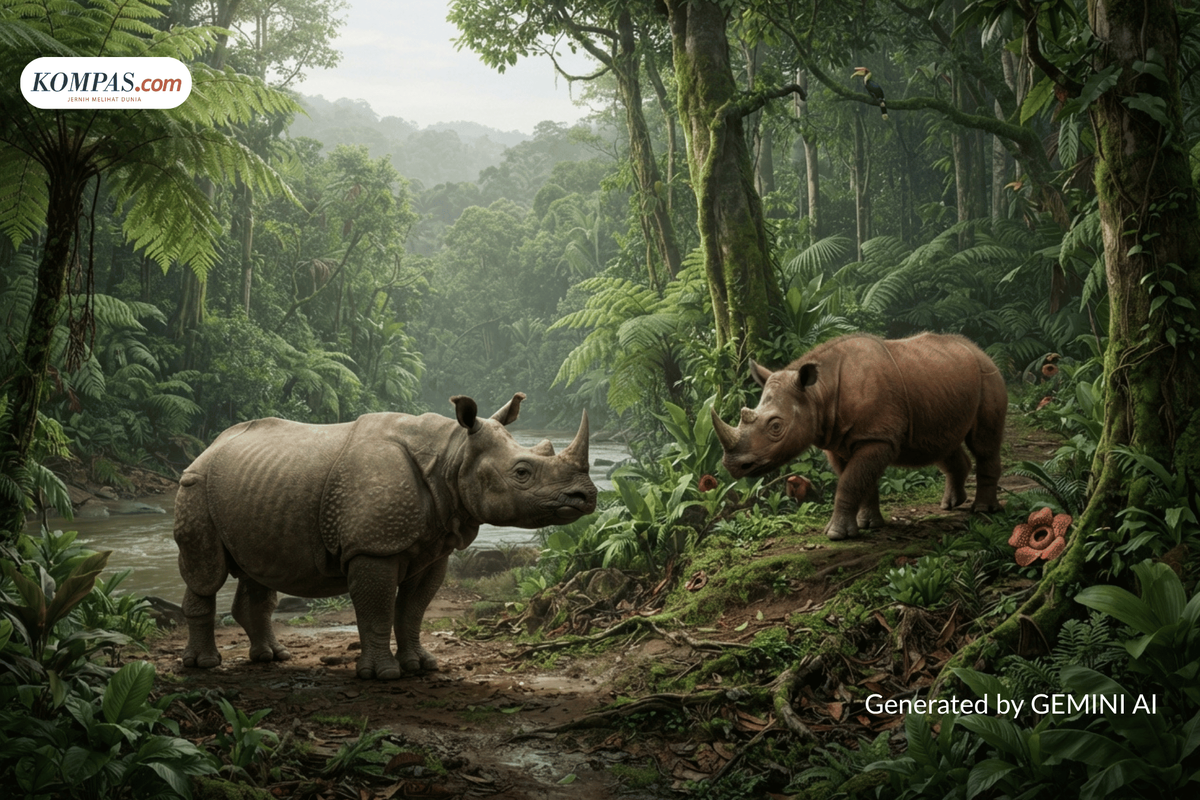
This concern is not without foundation, as during a recent lesson on ecosystems, my focus shifted abruptly when a seventh-grade student raised their hand and posed a question regarding the discourse about relocating the Javan rhino in Ujung Kulon due to the surrounding marine area falling within mining territory.
Honestly, when that question was asked, I, as a teacher, struggled to respond with a calm demeanor.
Not because I believe that mining will actually be operational, but because the question struck at the very core of the teaching profession.
Teachers have a moral obligation to be consistent between what they teach and what they exemplify.
Meanwhile, the facts reveal a starkly different reality with the issuance of the Ministerial Decision (Kepmen) ESDM Number 65.K/MB.01/MEM.B/2026 concerning Mining Areas in Banten Province, enacted on February 12, 2026.
In the accompanying map, the waters surrounding Ujung Kulon are categorized as Mining Business Areas (WUP).
Even though the government argues that some of the marine waters around the national park are not part of Ujung Kulon National Park itself.
However, the justification for designating WUP is a form of land-use planning, not an exploration or exploitation permit.
Moreover, the Ministry of Energy and Mineral Resources mentioned that this process is not new. The designation of these marine territories was previously excluded in Kepmen ESDM Number 1204 of 2014, subsequently included in Kepmen Number 3672 of 2017, and reaffirmed through Kepmen Number 84.K/MB.01/MEM.B/2022.
Kepmen 2026 is said to reassert prior decisions while also refining some stipulations based on proposals from the Banten provincial government.
Despite this, it is reasonable for the public to question and assess that the decision to relocate the Javan rhino from Ujung Kulon National Park to Alas Purwo warrants thorough analysis and reconsideration.
The fundamental question that drove the student to inquire is simple: why does the water surrounding the last home of the rarest wildlife in Java need to be included?
Especially as a science teacher, I was taught a simple lesson: nature does not read administrative maps.
The boundaries of conservation areas indicated on maps do not automatically restrict ecological interactions.