

KPK Requests Klaten Legislators to Return Excess Fees to Klaten Inspectorate
-
News
-
13 minutes ago
This article was translated by AI. Read the original article on Kompas.com. See Original
Waters, ocean currents, organisms, habitats, and ecological processes are interconnected. Lines on paper do not stop ocean currents, sediments, or the movement of living beings.
Ujung Kulon National Park itself spans approximately 120,000 hectares, with more than 44,000 hectares consisting of marine waters.
In other words, land and sea there are one home.
Therefore, activities outside the conservation area must be reevaluated if they pose potential impacts on that area.
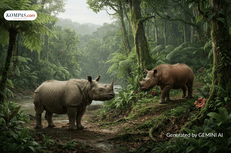
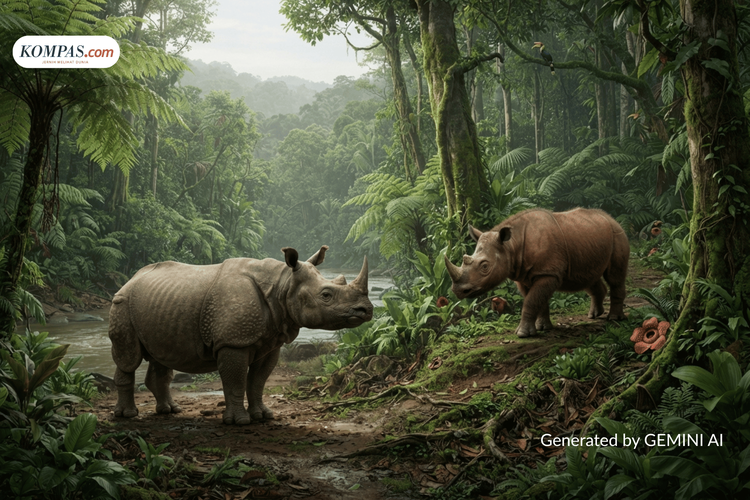
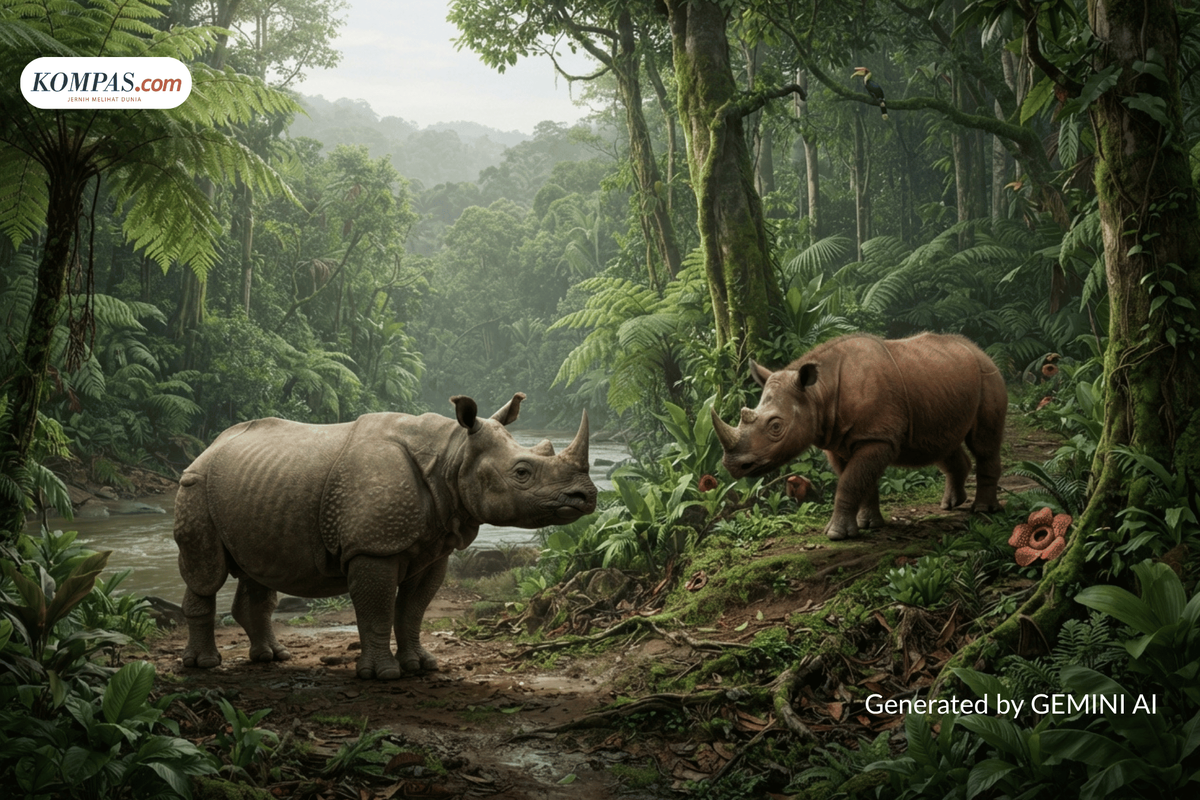
Moreover, that area is inhabited by an extremely fragile creature, the Javan rhino (Rhinoceros sondaicus), which only exists in Ujung Kulon.
Official estimates indicate a population of 87-100 individuals, and reports from the IUCN have mentioned that the figure dropped from 78 down to 50 individuals after 26 were believed to have been killed by poachers.
Even though the precise figures are still debated, the common thread remains: their number is critically low.
The government itself acknowledges that the entire population is concentrated in one area, with the risk of disasters in the Sunda Strait and a breeding rate of about 58.5 percent.
Meanwhile, this year’s Teachers’ Day theme encourages teachers to think about what makes Indonesia strong.
On the other hand, our generation is being presented with various phenomena and information regarding government policies that induce distress.
In fact, Indonesia can only be strong if its generations grow up with intact values, and those values do not stem from lectures, but from exemplary behavior. This is where the irony lies.
Teachers in the classroom continually urge children to memorize that endemic species with small populations are very vulnerable to even the smallest disruptions.
Teachers also ask students to protect the rivers in their villages, not to litter, not to engage in activities that disrupt the balance of nature, and to care for living beings.
In ecotheology, they teach that nature is a trust and humans are stewards tasked with nurturing, not just utilizing.
Thus, when teachers ask students to sort waste or plant trees in schoolyards, they are indeed instilling a belief in the students that those who are knowledgeable and faithful will tread carefully around nature.
Then, how should teachers respond when their students read the news and inquire why that caution doesn’t always seem to be upheld at higher levels of elite power?
We understand that this country needs resources, investments, and jobs, and many families depend on these sectors for survival.
Their needs are real. However, what the government must understand is the significant difference between “not yet permitted” and “definitely safe.”