
KPK Requests Klaten Legislators to Return Excess Fees to Klaten Inspectorate
-
News
-
13 minutes ago
This article was translated by AI. Read the original article on Kompas.com. See Original
For fundamentally, good policies do not stop at asking, “what is permissible administratively?”
Instead, it asks: “What might we lose if we’re wrong, and can we bear the consequences?”
In environmental science, this is the essence of the precautionary principle. It demands that we exercise caution even when evidence of damage is incomplete, especially when what is at stake cannot be restored. Extinction is one of those risks. There’s no study that can bring back a species.
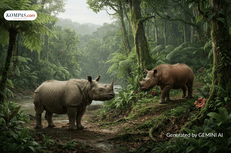
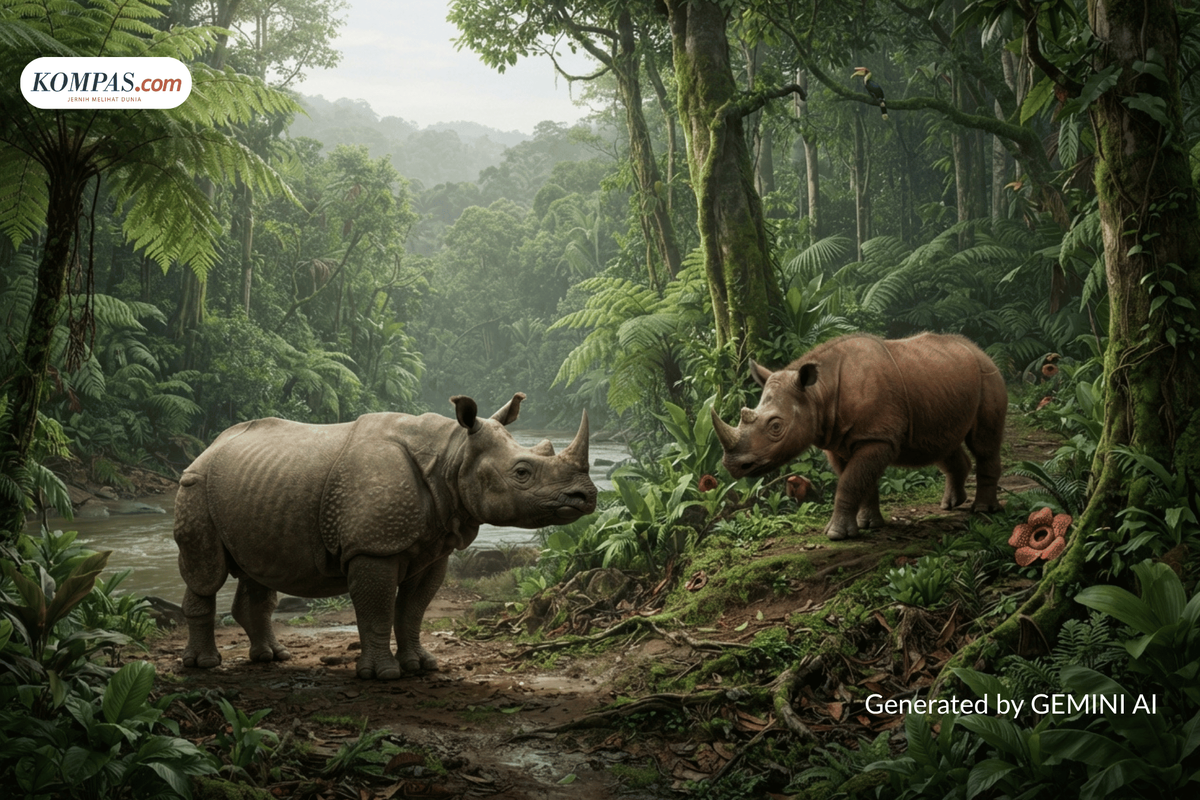
Given the controversy surrounding the relocation of the Javan rhino from Ujung Kulon to Alas Purwo, which has already sparked both support and opposition, the government should clearly demonstrate exemplary behavior.
Not only that, the government should convey to the public the basis of the ecological studies behind the designation of WUP in those waters, including risk assessments related to coastal and marine ecosystems along with their cumulative impacts.
Furthermore, the process has been ongoing for a long time, but we all know that this does not automatically answer whether the studies are still relevant to current conditions.
Secondly, open the door to public participation as widely as possible, starting with involving conservation experts, academics, local communities, and forest guardians before any further steps are taken.
Those living adjacent to these areas possess knowledge that is not always found in policy documents.
Then, if there is indeed no intention to permit mining that endangers Ujung Kulon, affirm firmly and bindingly in writing, not just through press statements.
On this Teachers' Day, educators do not wish to receive flowers, tumpeng, or poems from students that touch their hearts.
But allow me to represent all educators in Indonesia to say that the most anticipated gift is a policy that does not make us appear deceitful before our students.
Because the reality is that students rarely mimic the contents of textbooks; instead, they imitate what adults do.
A student may forget the definition of an ecosystem, but they will remember whether the decision-makers dared to choose nature even when the choice was difficult.
If great teachers, in the belief of the government, can strengthen Indonesia.
But a great teacher is still a human being who cannot work alone.
They need a state that aligns with the values they teach, so when a child asks, they can answer with their heads held high.
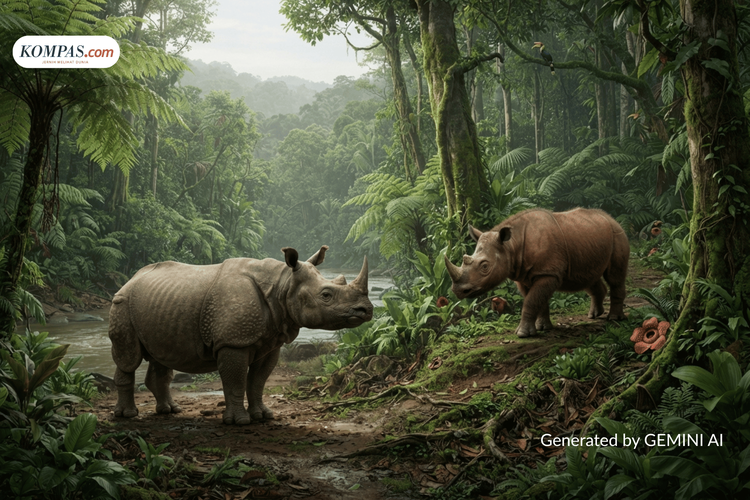
Let us not find ourselves in the future with teachers telling students that there once existed a species of rhino living in the western tip of Java.
Yet, back then, the teachers were only skilled at teaching how to care for it but not strong enough to protect it.