

MPR: Amran Sulaiman's High School Diploma Valid Despite Name Discrepancy
-
News
-
6 minutes ago
This article was translated by AI. Read the original article on Kompas.com. See Original
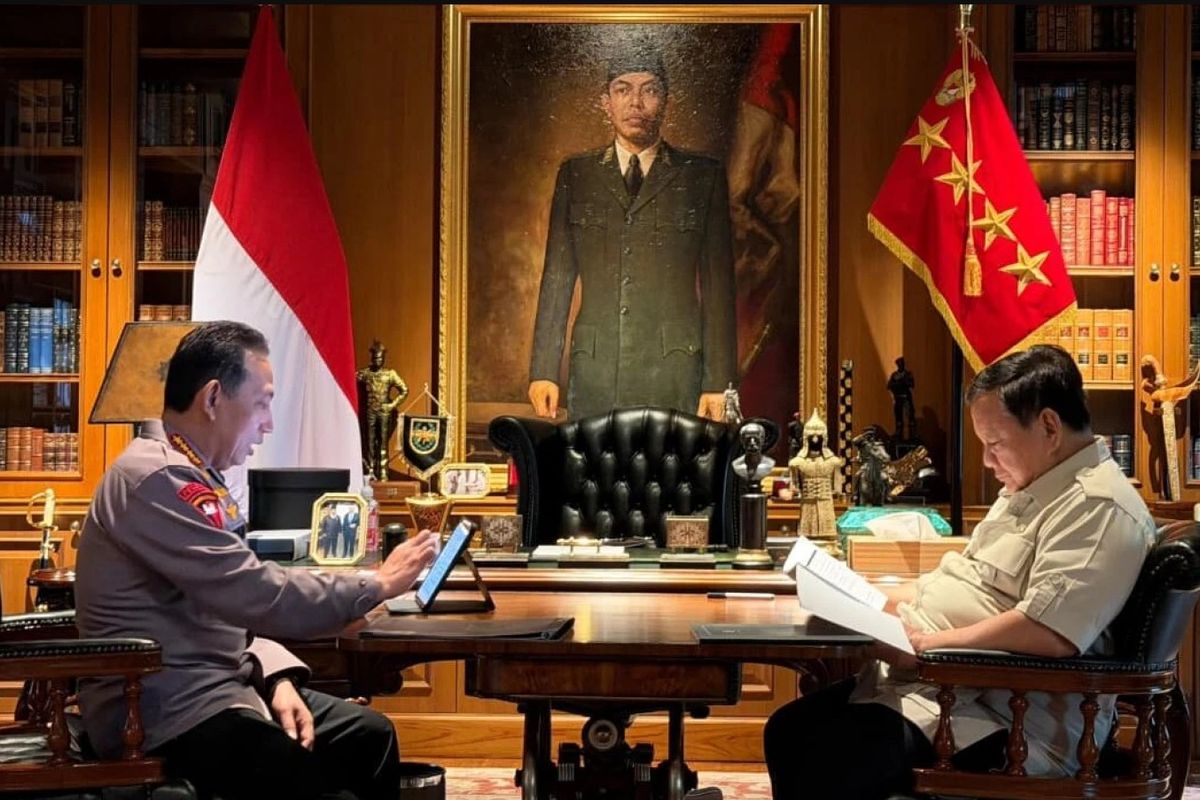
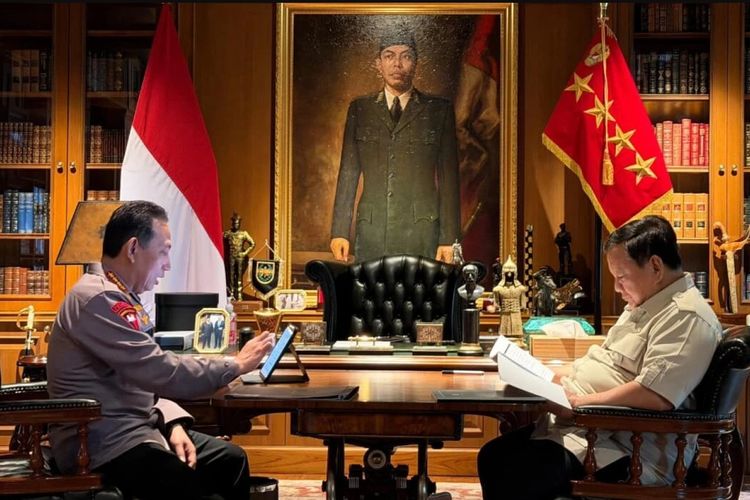
WHAT exactly is the content of the conversation of President Prabowo Subianto allegedly intercepted by several police generals?
This question has garnered increasing public interest after the allegations of interception escalated to accusations of treason.
Calls for the police to release the results of the interception have emerged. The public certainly wants to know what really happened.
Moreover, accusations of treason are no small matter. They concern the continuity of a legitimate government and the legal fate of several individuals suspected of committing crimes against state security.
This curiosity is understandable. In a democratic country, the public has the right to seek explanations regarding alleged abuses of power by state officials.
However, not everything known to investigators must be disclosed to the public. Nor should every piece of evidence in state custody be exhibited to the people.
The issue is not merely whether the results of the interception should be opened, but how far the law permits such disclosure.
One of the functions of criminal procedural law that is often overlooked is to limit state power.
Public attention tends to focus more on the success of authorities in uncovering crimes rather than on the methods used to do so.
In fact, the manner in which the state enforces the law is just as important as the outcomes of that enforcement.
Article 136 of Law Number 20 of 2025 on the Indonesian Criminal Procedure Code (KUHAP) grants investigators the authority to intercept communications for the purpose of investigation.
The implementation of this authority is subject to legal regulations regarding interception.
The phrase for the purposes of investigation carries a limitation on the intended use of this authority.
Interception is not a power that can be used at the discretion of officials.
Similarly, when investigators seize the recordings from interceptions, control over those recordings is intended for the purpose of examining the case, not for investigators to act as if they own the information and can use it at will.
For instance, when police seize an individual’s cell phone, it does not mean all the photos, messages, and conversations stored within can be made public.
The same logic applies to the results of the President’s interception.
Control over the recordings does not automatically grant the authority to publish them.
The power to seize is distinct from the power to broadcast.
In a rule-of-law country, every use of authority must be accountable in its foundation, purpose, and effects.
This includes situations where investigators intend to disclose information obtained from an action whose legality is currently under scrutiny.
KUHAP has introduced significant developments in the system of criminal evidence in Indonesia.
Article 235 paragraphs (3), (4), and (5) emphasize the authenticity and legality of evidence acquisition as conditions for proof. Judges have the authority to assess this.
Evidence declared unauthentic or obtained unlawfully must be excluded in trial proceedings.
This provision reflects the exclusionary rule doctrine, which entails the dismissal of evidence obtained unlawfully.
The state must not only find evidence of a crime but also ensure that this evidence is obtained in accordance with the law.
However, in cases of illegal interception, there are more complex issues at play. At least two legal positions regarding interception results need to be distinguished.
Firstly, recordings used to prove the crime of the person being intercepted.
In this condition, the legality of the interception presents a fundamental issue for accepting the recordings as evidence.
Secondly, recordings used to prove the crime of the individual conducting the interception.