

Discussion on Vice Presidential Election Through Consensus, Gerindra: No Violations
-
News
-
Just now
This article was translated by AI. Read the original article on Kompas.com. See Original
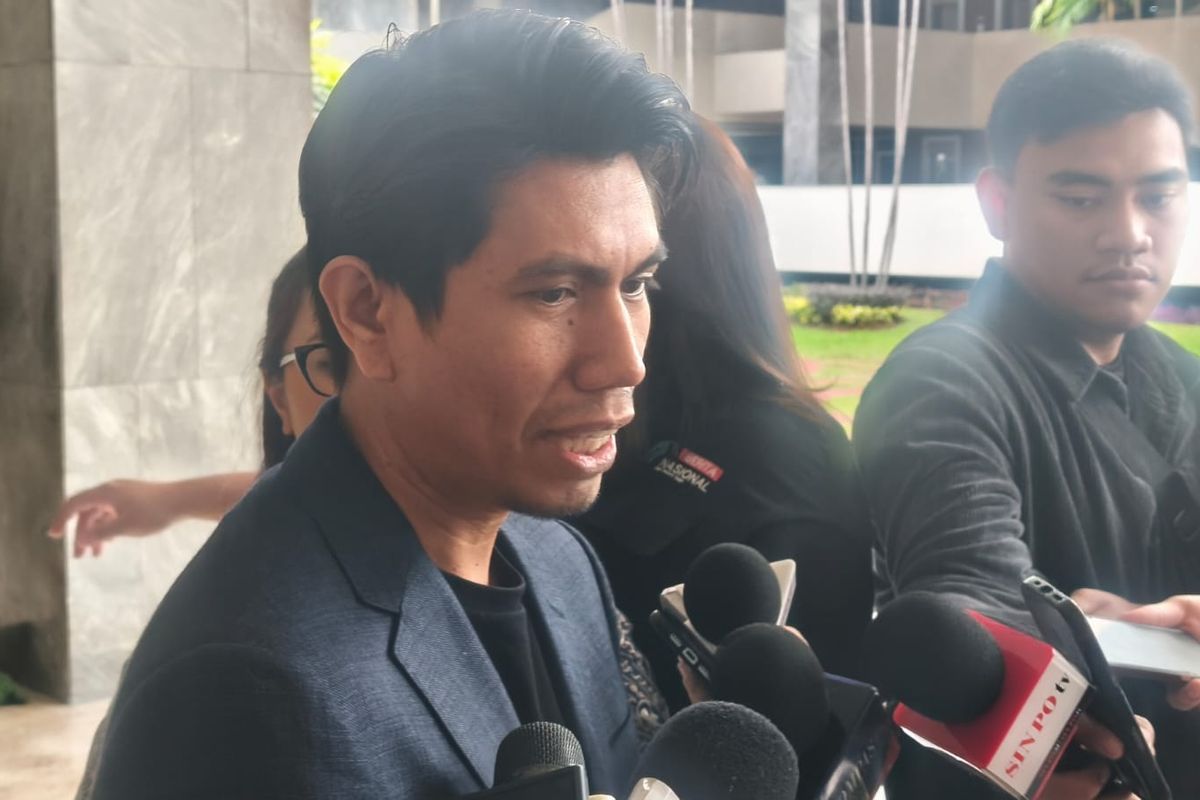
JAKARTA, KOMPAS.com - Spokesperson for the Gerindra Party, Bahtra Banong, stated that there are no regulations being violated if the vice presidential election is conducted through a consensus mechanism.
"There is nothing being violated, right? Because our constitution refers to the MPR (People's Consultative Assembly), which is indeed the place for deliberation and there's nothing against the rules," Bahtra told reporters at the Senayan Parliamentary Complex in Jakarta on Thursday (26/11/2026).
Bahtra believes that elections can still be conducted by any mechanism.
He did not rule out the possibility of the vice presidential election being held via voting.
"But it’s also possible that we can conduct voting, meaning both mechanisms can be pursued," he said.
Nevertheless, the Gerindra Party hopes that the vice presidential election will be conducted through a deliberative process.
The rationale is to prevent the election from dragging on.
"Our hope is that it won't drag on, right? There is no closing the door on other possibilities, and indeed our constitution and Pancasila promotes deliberation and a democracy led by consensus. So it’s feasible and there's no issue," he asserted.
The Association for Elections and Democracy (Perludem) assesses the proposition for a vice presidential election through consensus is contrary to Law Number 13 of 2019 concerning the People's Consultative Assembly, the House of Representatives, the Regional Representative Council, and the Regional House of Representatives (UU MD3).
"If we change it to a consensus-based deliberation, it will contradict UU MD3," said Perludem researcher Haykal to Kompas.com on Wednesday (25/11/2026).
Haykal explained that the current UU MD mandates a voting mechanism in this process.
This is stipulated in Article 46 Paragraph (5) of UU MD3, which reads:
"The vice presidential candidate with the most votes in the MPR plenary session is appointed as Vice President."
"If we adhere to the existing regulations in UU MD3, what should be conducted is voting, because Article 46 states that the vice president is the person who receives the most votes," Haykal said.
He noted that changing the election mechanism to a consensus would actually contravene legal norms that are already set.
Additionally, Haykal highlighted the potential for a rapid revision of the law to facilitate this proposal.
According to him, altering regulations swiftly to accommodate a consensus would lead to serious legal issues.
"It seems very forced if a law is changed quickly just to accommodate the deliberation process," said Haykal.
"Legally, it will pose problems, and its legal legitimacy could be questioned," he added.