
Gibran's Nomination Hearing at DKPP, KPU to Present Former Chairman Hasyim Asy'ari as Witness
-
News
-
1 minute ago
This article was translated by AI. Read the original article on Kompas.com. See Original
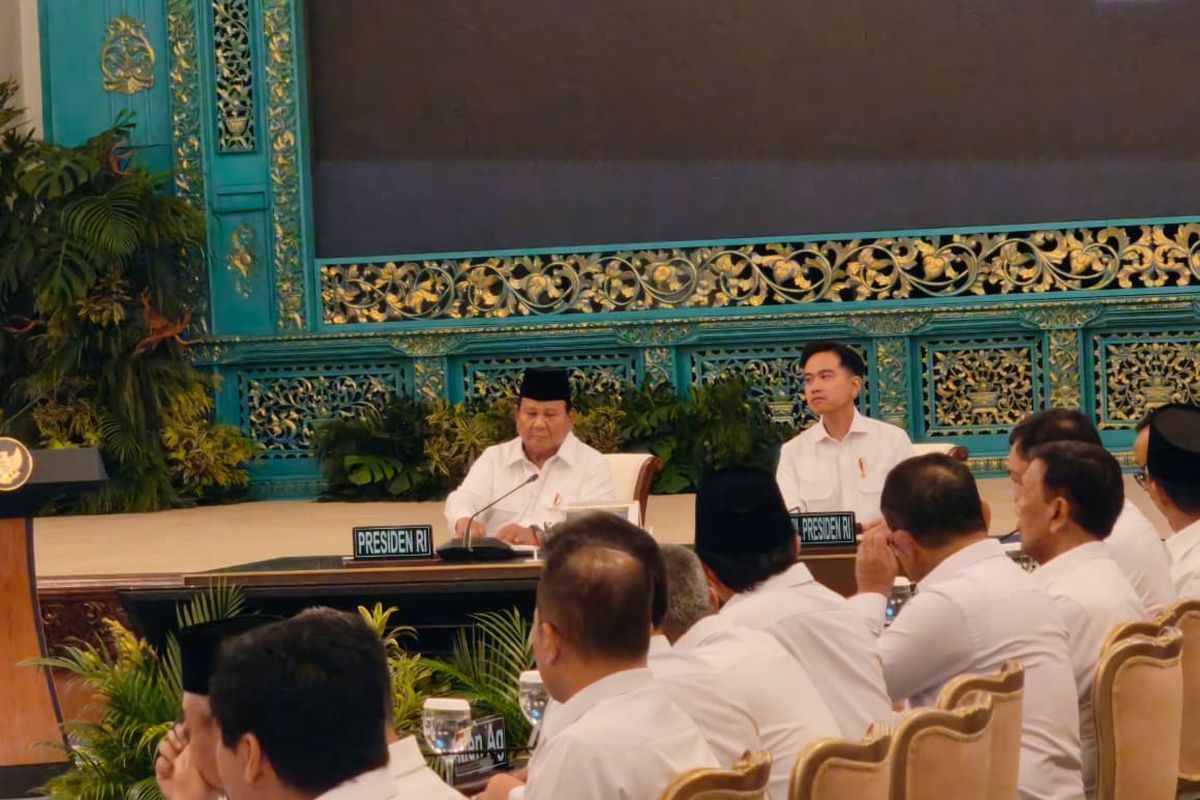
Civil servants are reassigned to a fragmented ministry or new unit based solely on an administrative decision, without adequate role mapping and transitional support.
Government employees indeed possess formal qualifications and reputable academic degrees.
However, diplomas do not automatically prepare them to face new mandates, a new digital ecosystem, unfamiliar cross-sector coordination rhythms, and drastically changing performance standards.
The consequences are predictable. During the transition, the bureaucracy is prone to role confusion, overlapping authorities, concealed resistance, and decreased motivation.
Ultimately, it is the public, as service users, who bear the costs of this inefficiency.
Empirical findings in the public sector confirm this vulnerability. A study on change readiness during the restructuring of the National Center for Agricultural Research and Innovation (2023) revealed that employee preparedness for change is greatly influenced by four psychological and organizational factors.
These factors are past restructuring experiences, perceptions of the benefits of change for the organization, internal communication systems, and employee self-efficacy.
These four human factors account for up to 80.2 percent of the variation in civil servant readiness for successful restructuring.
In the report Public Employment and Management (2021), the OECD emphasizes that the future of public service requires governments to understand how employee work is changing, identify new skills needed, and design a roadmap for the transition from the current state to one of readiness.
This means that the restructuring of ministry structures must be preceded and accompanied by a comprehensive mapping of competencies.
Technical and administrative skills alone are no longer sufficient.
The OECD stresses the importance of cross-sector competencies, including collaborative leadership, behavioral intelligence, digital literacy, problem-solving abilities, and learning agility.
In the context of Indonesia today, employees moving to new ministries need more than just an appointment and allocation of workspace. They require objective competency assessments, training based on new task needs, and intensive support during the adaptation phase.
To ensure that cabinet reshuffles do not remain mere institutional cosmetics, the government needs to adopt a structured change management approach.
The ADKAR framework from Prosci offers a simple yet sharp guide that organizational change only occurs if individuals within it change.