


Allegations of Coup Plots Against Listyo Sigit: ACAB Infiltrates Demonstrations and Spies on Chief of Police Candidates
-
News
-
3 minutes ago
This article was translated by AI. Read the original article on Kompas.com. See Original
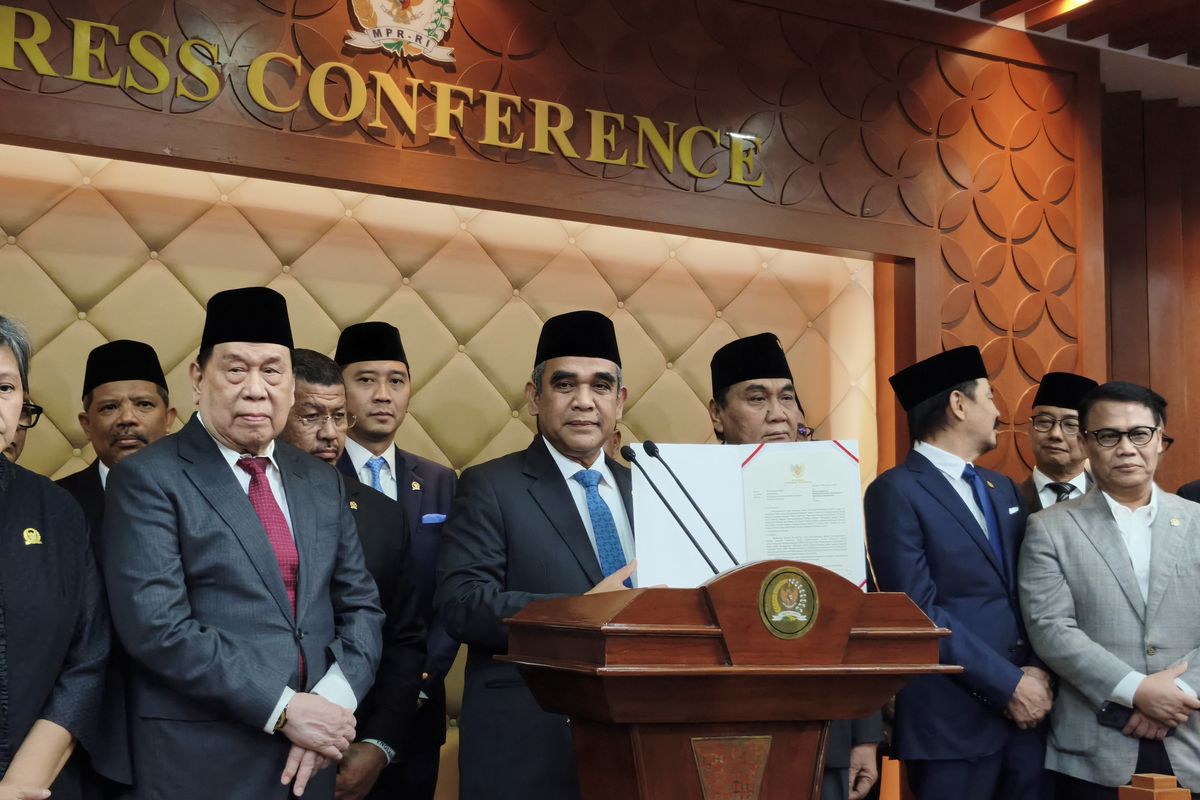
THE NOMINATION of two vice presidential candidates by President Prabowo Subianto—Andi Amran Sulaiman and Sugiono—reopens an important question about the direction of Indonesia's national leadership.
After Gibran Rakabuming Raka stepped down, the public is not only waiting to see who will be chosen by the People's Consultative Assembly (MPR) but also needs to ask: what kind of vice president does the Republic of Indonesia truly need?
This question is crucial because filling the vice president's position should not merely satisfy political needs of the government.
This moment should be an opportunity to enhance the quality of national leadership, especially after political experiences have shown how vulnerable public positions can be to power calculations, personal connections, and family interests.
In a previous writing, I proposed the idea of seeking a vice president in the mold of Mohammad Hatta.
This idea is based on Herbert Feith's typology of leadership in The Decline of Constitutional Democracy in Indonesia (1962), which distinguishes between solidarity makers and administrators.
Soekarno is often associated with the former type, while Hatta represents the latter (see: “Searching for a Hatta-type Vice President: Escaping the Trap of Political Calculation”, Kompas.com, 15/11/2026).
Both have distinct competencies that complement each other. Soekarno could build solidarity and a sense of national imagination.
Hatta possessed intellectual diligence, policy rationality, administrative discipline, and a commitment to democracy and governance.
Indonesia needs a combination of both. The question is whether the two names proposed by President Prabowo have the capacity to meet these needs.
Andi Amran Sulaiman and Sugiono have different backgrounds.
This distinction is interesting to explore—not to determine who is superior but to understand each one's potential contributions to the nation's leadership needs.
Amran has extensive experience in agriculture, business, and government.
His academic background and experience in managing companies provide a knowledge base on productivity, management, and economic development.
His tenure as Minister of Agriculture gave him direct exposure to issues related to food policy, agricultural production, distribution, and farmer welfare.
From an administrator perspective, such experience is certainly relevant.
A country needs leaders who understand how policies are translated into programs, how resources are managed, and how development outcomes can be felt by the community.
However, there is a broader issue. A vice president does not merely need the ability to manage a particular sector of government.
They must possess a cross-sectoral perspective, understand inter-agency relationships, and be able to view national issues comprehensively.
Sectoral administrative experience does not automatically prove the capacity to manage the complexities of national governance.
The next question is whether managerial and entrepreneurial orientations can evolve into statesmanship grounded in integrity, democracy, and public interests?
Sugiono has a different background. He has been involved in the military, party politics, parliament, and diplomacy.
His experience as Minister of Foreign Affairs and Coordinating Minister for Human Development and Cultural Affairs has exposed him to international relations issues and government coordination.
From the perspective of state administration, this experience provides a different foundation compared to Amran.
Sugiono has experience in a political and governmental environment that demands coordination, communication, and decision-making.
Yet, there are institutional questions to consider.
Sugiono also has a longstanding political relationship with Prabowo and is part of Gerindra Party leadership.
Political closeness is not inherently a problem. In a presidential system, trust between the president and vice president is indeed necessary.