

Focus on CPNS Needs 2026-2027: From Teachers to Cooperative Supervisors
-
News
-
Just now
This article was translated by AI. Read the original article on Kompas.com. See Original

JAKARTA, KOMPAS.com - The establishment of new institutions is often seen as a way to strengthen law enforcement.
However, this approach does not always guarantee that existing issues can be resolved, especially when their authority overlaps with pre-existing institutions.
This concern arose after the Indonesian Parliament passed the Asset Forfeiture Law related to Corruption Crimes and Other Criminal Acts.
The law mandates the formation of two new bodies: the Asset Forfeiture Management Agency and the Asset Forfeiture Supervisory Agency, as outlined in Article 53 paragraph 1 and Article 61 paragraph 1.
The government and Parliament argue that a management body is essential to ensure that assets from criminal activities are not directly managed by law enforcement officials involved in the seizures.
Meanwhile, the supervisory body is established to prevent abuse of power in the implementation of asset forfeiture.
However, the police, prosecutor's office, and the Corruption Eradication Commission (KPK) already have mechanisms and units related to the management of assets from criminal acts.
So, how effective will the establishment of these new bodies be, and how can we ensure that their existence does not merely add to bureaucratic burdens in asset recovery efforts?
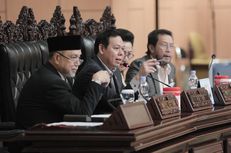
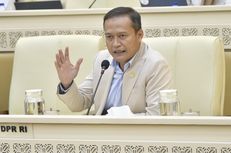
The Chairman of Commission III of the Parliament, Habiburokhman, stated that the establishment of the Asset Forfeiture Management Agency is necessary to keep the management of assets from criminal activities separate from the law enforcement officials carrying out the seizures.
According to him, this separation is crucial to prevent conflicts of interest in the implementation of asset forfeiture.
"First, the management agency, what is it called? The asset forfeiture agency. We are pushing for a distinct body separate from law enforcement agencies," Habiburokhman said at the Parliament building on Thursday (19/11/2026).
He expressed concern that without this functional separation, law enforcement officers may have a vested interest in seizing as many assets as possible because they would also be responsible for managing the confiscated results.
"We must ensure that no law enforcement official merely targets seizing as much as possible, because they would be the ones to manage it. Thus, there exists a conflict of interest," he added.
Habiburokhman referred to several countries, such as the United States, the United Kingdom, and Australia, that have applied the same separation of asset management from law enforcement agencies.
In addition to the management agency, the law also mandates the formation of the Asset Forfeiture Supervisory Agency.
Habiburokhman noted that the supervisory body is needed to address societal concerns over potential abuses of authority in applying this law.
"Secondly, the supervisor, the Asset Forfeiture Supervisory Agency. This addresses public concerns and aspirations," he stated.
He hopes the presence of this supervisory body will prevent the Asset Forfeiture Law from being used to oppress those outside the power structure or serve as a means of extortion by law enforcement.