
Focus on CPNS Needs 2026-2027: From Teachers to Cooperative Supervisors
-
News
-
Just now
This article was translated by AI. Read the original article on Kompas.com. See Original
JAKARTA, KOMPAS.com - The establishment of new institutions is often seen as a way to strengthen law enforcement.
However, this approach does not always guarantee that existing issues can be resolved, especially when their authority overlaps with pre-existing institutions.
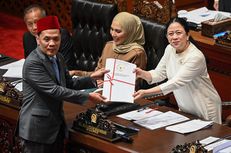
This concern arose after the Indonesian Parliament passed the Asset Forfeiture Law related to Corruption Crimes and Other Criminal Acts.
The law mandates the formation of two new bodies: the Asset Forfeiture Management Agency and the Asset Forfeiture Supervisory Agency, as outlined in Article 53 paragraph 1 and Article 61 paragraph 1.
The government and Parliament argue that a management body is essential to ensure that assets from criminal activities are not directly managed by law enforcement officials involved in the seizures.
Meanwhile, the supervisory body is established to prevent abuse of power in the implementation of asset forfeiture.
However, the police, prosecutor's office, and the Corruption Eradication Commission (KPK) already have mechanisms and units related to the management of assets from criminal acts.
So, how effective will the establishment of these new bodies be, and how can we ensure that their existence does not merely add to bureaucratic burdens in asset recovery efforts?
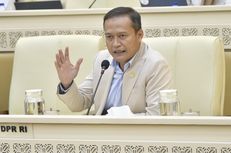
The Chairman of Commission III of the Parliament, Habiburokhman, stated that the establishment of the Asset Forfeiture Management Agency is necessary to keep the management of assets from criminal activities separate from the law enforcement officials carrying out the seizures.
According to him, this separation is crucial to prevent conflicts of interest in the implementation of asset forfeiture.
"First, the management agency, what is it called? The asset forfeiture agency. We are pushing for a distinct body separate from law enforcement agencies," Habiburokhman said at the Parliament building on Thursday (19/11/2026).
He expressed concern that without this functional separation, law enforcement officers may have a vested interest in seizing as many assets as possible because they would also be responsible for managing the confiscated results.
"We must ensure that no law enforcement official merely targets seizing as much as possible, because they would be the ones to manage it. Thus, there exists a conflict of interest," he added.
Habiburokhman referred to several countries, such as the United States, the United Kingdom, and Australia, that have applied the same separation of asset management from law enforcement agencies.
In addition to the management agency, the law also mandates the formation of the Asset Forfeiture Supervisory Agency.
Habiburokhman noted that the supervisory body is needed to address societal concerns over potential abuses of authority in applying this law.
"Secondly, the supervisor, the Asset Forfeiture Supervisory Agency. This addresses public concerns and aspirations," he stated.
He hopes the presence of this supervisory body will prevent the Asset Forfeiture Law from being used to oppress those outside the power structure or serve as a means of extortion by law enforcement.
The establishment of these two new bodies has drawn criticism from legal experts.
Criminal law expert from Trisakti University, Abdul Fickar Hadjar, argues that the formation of these two new bodies is unnecessary since several law enforcement agencies already have units that handle asset management.
According to Hadjar, the government should optimize existing agencies, such as the Prosecutor's Office and KPK, rather than create new institutions that might have overlapping authorities.
"I also agree, why not optimize existing divisions at the Prosecutor's Office or KPK? It would be more efficient," Hadjar told Kompas.com on Friday (20/11/2026).
He even suggested that the Prosecutor's Office and KPK be appointed as the implementers of asset forfeiture, while oversight can be conducted by pre-existing institutions.
Hadjar mentioned that the Supervisory Board of KPK, the Prosecutor's Commission, and the Ombudsman could be involved in oversight functions as per their authority.
He noted that the Prosecutor's Office already has a unit that handles execution and asset recovery.
Thus, the establishment of new bodies is likely to create duplicated efforts.
"It's not urgent because there are existing bodies that are already functioning, such as KPK and the Prosecutor's Office," he stated.
Hadjar also highlighted that forming new institutions would require budgets, human resources, and specific operational frameworks.
In fact, more pressing issues involve strengthening the capacities and coordination of existing agencies.
He also criticized provisions that allow the formation of these two bodies through presidential regulation.
He argued that while this mechanism could expedite the establishment process, it still carries risks of politicization regarding the appointments to these bodies.
Hadjar expressed concern that appointments to both the management and supervisory bodies could be influenced by the political interests of those in power.
Therefore, he believes strengthening existing institutions is more appropriate than creating new ones that could increase government spending and coordination challenges.
Criticism regarding the establishment of the two new bodies was also voiced by the former Head of the Financial Transaction Reports and Analysis Center (PPATK), Yunus Husein, serving from 2002 to 2011.
Yunus stated that establishing two new agencies is inefficient because the government already has several institutions that could be tasked with managing assets from criminal activities.
He emphasized that creating new agencies requires not only legal foundations but also a pool of integrity-based human resources, budgets, personnel, venues, and operational systems.
"In my opinion, creating new bodies, especially two, is completely inefficient," Yunus stated in an interview on the YouTube program Newsroom by Kompas.com on Thursday (19/11/2026).
He recounted his experience establishing PPATK from scratch.
According to him, establishing a new agency to operate optimally is not an easy task.
"Not to mention the budget, personnel, venues, and systems. My previous experience building PPATK from scratch to what it is now was not trivial," he said.
Yunus also cautioned that forming new agencies risks increasing the burden on the national budget, especially at a time when the government funds many institutions.
He suggested that the government should utilize existing agencies experienced in asset management.
He pointed out that the Asset Recovery Agency within the Prosecutor's Office, the Directorate General of State Assets under the Ministry of Finance, and the State Seized Goods Storage Agency (Rupbasan) could be reinforced.
"Why not utilize existing bodies? For instance, by enhancing the capacities of the Asset Recovery Agency under the Prosecutor's Office or the Directorate General of State Assets or Rupbasan," Yunus noted.
He insisted that existing agencies could expand their capacities in terms of organization, personnel, and budget without needing to build a new system from the ground up.
Yunus also emphasized the need to pay attention to the selection of individuals to fill these new bodies.
He expressed concern that a selection process that does not prioritize competence and integrity creates opportunities for corruption in managing confiscated assets.
"The issue in Indonesia is mainly a human problem; it's not about the regulations. Selecting the right people is not easy, especially in a situation where we face a crisis of integrity," he warned.
In addition to questioning the formation of the management agency, Yunus believes oversight of confiscated assets should not depend on creating new institutions.
He argued that the fundamental issue today lies in the lack of integration of information regarding assets seized by each law enforcement agency.
He pointed out that police and prosecutors across various regions have the authority to seize assets.
However, information regarding the number of seized assets, their storage locations, and handling statuses remains opaque and disconnected.
"Currently, district police and prosecutors can seize assets, but we do not know how many assets have been seized, where they are located, and their handling statuses," Yunus stated.
Therefore, he believes transparency and inter-agency coordination are crucial to preventing abuse of power.
"There is no control at all if it's not transparent. Thus, I request that transparency must be ensured first," he urged.
Yunus also proposed that seized assets at risk of losing value, such as vehicles, land, and houses, should be liquidated following appropriate regulations.
He provided an example from the Netherlands, where certain seized assets can be sold, and the proceeds are stored in a bank.
If the owner is proven guilty, the funds can be seized by the state; conversely, if not proven guilty, the proceeds from the sale are returned.
Yunus stated that this would reduce storage costs, space requirements, and the risk of asset depreciation.
Regarding oversight, he opined that the function could be strengthened through existing institutions, such as the Supreme Audit Agency (BPK) and the Financial and Development Supervisory Agency (BPKP).
The Parliament could also request periodic audits by independent auditors to ensure asset management is conducted accountably.
"There's no need for new institutions; it would suffice to attach this to BPK's responsibilities at the request of the Parliament," he suggested.
Meanwhile, the Head of the Law and Investigation Division at Indonesia Corruption Watch (ICW), Ibrahim, believes that the establishment of the Asset Forfeiture Management Agency may address longstanding issues in the management of confiscated goods.
Historically, seized assets can suffer damage or loss of value due to their management being spread across various agencies.
However, Ibrahim contended that the new management body would only be effective if it functions to consolidate existing units rather than merely adding layers of bureaucracy.
"The crucial point: Article 74 makes the new law effective only after the establishment of both bodies, without a time limit. The switch is in the President's hands," said Ibrahim to Kompas.com on Friday.
He brought attention to Article 74, which ties the law's effectiveness to the establishment of these two bodies.
He pointed out that the absence of a deadline for formation makes the enforcement of the law contingent upon the President's decision.
Additionally, Ibrahim assessed that the regulations regarding the Asset Forfeiture Supervisory Agency do not provide adequate guarantees for independence.
He stated that the term "independent" is not explicitly included in the law's content.
Moreover, the appointment, leadership, and dismissal of the supervisory body are at the President's discretion.
This situation, according to Ibrahim, could potentially lead to issues since the supervised agency also falls under the executive power's jurisdiction.
He also highlighted Article 65 paragraph (6), which stipulates that proposed candidates may be deemed approved if the Parliament does not respond within 21 days.
According to Ibrahim, this mechanism must be reviewed so the appointment process does not undermine the supervisory functions of the Parliament.
For that reason, he urged that implementing regulations through presidential regulation include an open selection mechanism, clearly limited reasons for dismissal, and an obligation to publicly disclose lists of seized assets.
Additionally, audit reports from BPK on asset management need to be published so that the public can engage in oversight.
Ibrahim added that the establishment of the management body does not automatically resolve all issues regarding asset forfeiture.
This is because the body will only operate after assets have been seized.
Meanwhile, more fundamental obstacles could arise before seizing occurs.
He noted that the ability of officials to trace assets, inter-agency data integration, and political will are among the factors that determine the success of asset recovery.
"It's not a matter of choosing one. The management agency only works after assets are seized. The biggest barrier lies upstream: the capacity to trace assets, data integration, and political will," he stated.
Without strengthening these aspects, the presence of new bodies risks adding bureaucratic layers without addressing the main issues in tracing and recovering assets derived from crimes.