Update on Treason Case: Names of Brigadier General Tedjo Kusumo and Commissioner Iman Imanuddin Emerge, Exposition This Week
-
News
-
9 minutes ago
This article was translated by AI. Read the original article on Kompas.com. See Original

Therefore, the creation of three Vice President positions is not just a matter of government organizational arrangement but involves changing the constitutional design.
This provision is fortified by Article 6A paragraph (1) of the 1945 NRI Constitution, which states that the President and Vice President are elected as a pair directly by the people.
Consequently, the Vice President is an integral part of national executive leadership, not a political representative obtaining a mandate based on territorial divisions.
The Vice President is not designed to exclusively represent Sumatra, Kalimantan, Papua, or any other region.
His or her mandate is national, assisting the President in governing for all the people of Indonesia.
Thus, converting the Vice Presidency into a representation of geographical regions could obscure its constitutional function and position.
Moreover, when a Vice Presidency position becomes vacant, the Constitution provides a clear mechanism for filling that vacancy.
Article 8 paragraph (2) of the 1945 NRI Constitution states that in the event of a Vice President vacancy, within no later than 60 days, the People's Consultative Assembly (MPR) shall hold a session to elect a Vice President from two candidates proposed by the President.
This provision reaffirms that the position to be filled is one Vice President, not several positions based on geographical divisions.
If the idea of three Vice Presidents is still to be pursued, the consequence would be an amendment of the 1945 NRI Constitution through the constitutional mechanism as detailed in Article 37.
The question remains, is a constitutional amendment to increase the number of Vice Presidents truly an urgent need for Indonesia at this moment?
We should ensure that constitutional changes are not driven merely by a desire to expand the power structure while fundamental governance issues remain unresolved.
It’s necessary to distinguish between equitable regional representation and the establishment of the Vice Presidency.
These are different issues. The Constitution has provided instruments for regional representation through the DPD as outlined in Articles 22C and 22D of the 1945 NRI Constitution.
This body was established to bring regional interests into the constitutional process, particularly through functions relating to legislation, considerations, and oversight regarding regional affairs.
Meanwhile, Articles 18, 18A, and 18B of the 1945 NRI Constitution have established a constitutional framework regarding local governance, relations between central and local governments, regional autonomy, and the recognition of regional uniqueness and diversity.
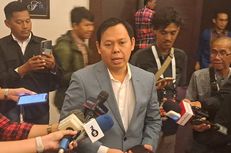
In fact, the DPD Chairman’s proposal raises a fundamental question: why should oversight of regional matters be strengthened by adding more Vice Presidents?
Then, how do we optimize the function of the 152 members of the DPD RI for the term of 2024–2029, who indeed have a mandate for regional representation in our constitutional system?
This question is not intended to pit the DPD against the Vice President.
Rather, I want to clarify that every state institution should operate according to its constitutional mandate.
If oversight of regional areas is not functioning optimally, the focus should be on evaluating the effectiveness of oversight functions, inter-agency coordination, and existing policy instruments—not automatically creating new positions.
Territorial equity should be reinforced through decentralization, fiscal equalization, strengthening local government capacity, and equitable development distribution.
Issues of inter-regional inequality cannot be resolved solely by placing high-ranking officials in multiple areas.
What is needed more is the local government’s capacity to plan, budget, execute, and evaluate development effectively.
Indeed, suggesting changes is not an issue, but it should be thoughtfully weighed, especially when such arguments are put forth by state officials.