
IEU-CEPA Officially Signed, Here Are Its Benefits for Indonesia
-
News
-
1 minute ago
This article was translated by AI. Read the original article on Kompas.com. See Original
In the MSME sector and traditional local products, IEU-CEPA offers protection for 72 geographical indications from Indonesia in the EU market.
These include Gayo Arabica Coffee, Toraja Coffee, Preanger Java Coffee, Banda Nutmeg, Lampung Black Pepper, Bali Amed Sea Salt, and Alor Vanilla.
The protection of these geographical indications presents an opportunity to enhance the added value of local products while preserving the identity and reputation of regional flagship commodities in the international market.
MSME players will also benefit from easier export procedures through self-origin declaration mechanisms.
Additionally, a dedicated point of contact and a specific website for MSMEs will provide tariff information based on the harmonized system (HS), making it easier for business actors to access trade information.
Amid these various opportunities, the government also ensures that national interests remain protected.
A total of 129 Indonesian tariff lines are exempt from liberalization, including rice, sugar, alcoholic beverages, cigarettes, and several other sensitive products.
The opening of the Indonesian market to EU products will also be carried out gradually over 15 years.
On the other hand, there will still be room to regulate the import of strategic food and energy through volume-based licensing and to implement safeguard mechanisms if there is a surge in imports that could harm domestic industries.
The economic impact of IEU-CEPA is reflected in simulations by the European Commission, which projected an increase in Indonesia's Gross Domestic Product (GDP) by 26.8 billion euros or approximately 0.13 percent by 2042.
Meanwhile, Indonesian exports to the EU are projected to increase by 2.6 billion euros or 14.4 percent.
The clothing sector is projected to record the largest increase in exports amounting to 779 million euros, followed by leather and footwear at 652 million euros, and vegetable oils at 512 million euros.
Airlangga stressed that the success of this agreement will not only be measured by the extent of market access gained but also by Indonesia's ability to leverage the agreement to strengthen the national economy.
"Ultimately, IEU-CEPA is a strategic bridge between Indonesia and the EU. The success of this agreement will be measured by how much it can drive productive investment, increase domestic value added, strengthen the national industry, and create jobs for the Indonesian and EU populations," he asserted.
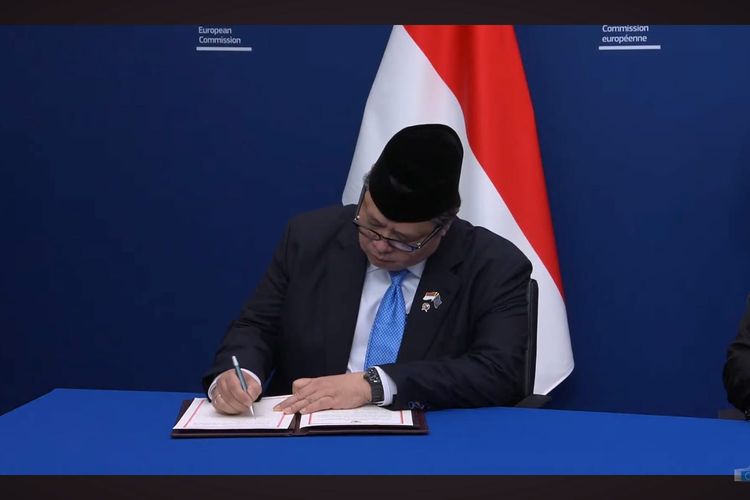
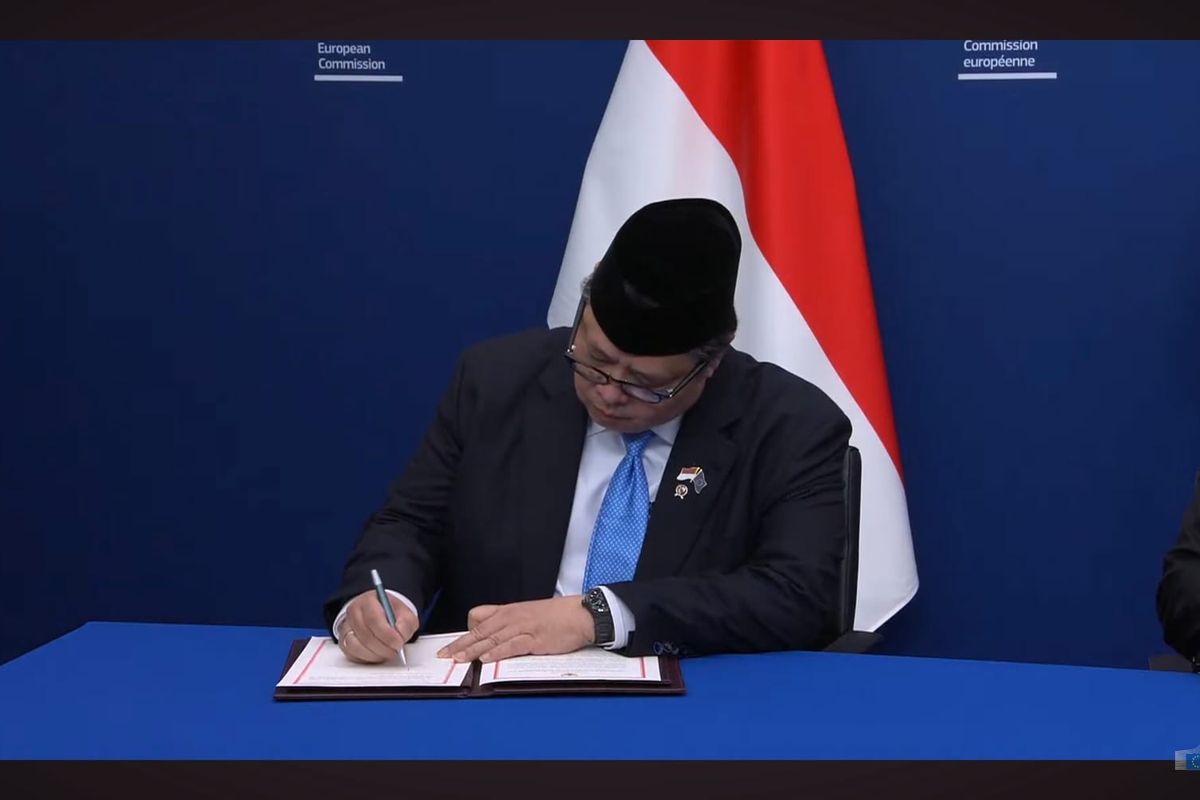
After the signing, both parties will continue the approval and ratification processes in accordance with their respective legal provisions, including the approval of the European Parliament and ratification in Indonesia.
The government targets IEU-CEPA to take effect on January 1, 2027, after all procedures and notifications exchanges between both parties are completed.