When the Wrong is Justified by the Masses
-
News
-
25 minutes ago
This article was translated by AI. Read the original article on Kompas.com. See Original

“Who will eventually occupy the Vice President's seat?”
MAYBE that question now floats amidst the lively discussions of national politics, buzzing on grassroots social media, and serving as the focal point of speculation about the direction of our country's leadership.
Amidst the various names being circulated, the public is not only waiting to see who will take the seat of power but also gauging where the government's compass will point.
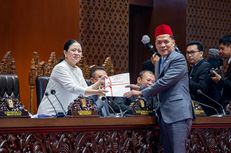
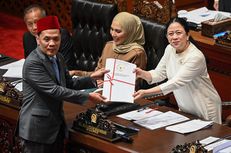
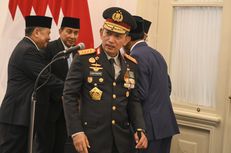
The resignation of Gibran Rakabuming Raka from the position of Vice President of the Republic of Indonesia on November 12, 2026, marked by his submission of a resignation letter directly to the leadership of the People's Consultative Assembly (MPR) of the Republic of Indonesia and accepted by MPR Chairman Ahmad Muzani, opens a new chapter in Indonesia's statehood.
The vacancy of the Vice President's position is not just a change of figure in the power structure, but a moment to reexamine how the state determines the right person to accompany the President in governing.
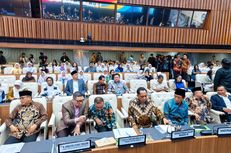
The MPR has scheduled a plenary session to fill the vacancy of the Vice President through a mechanism of election, appointment, and inauguration on December 9, 2026.
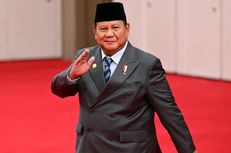
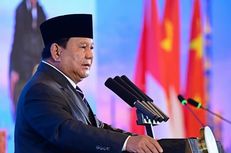
This schedule was postponed by a week from its original plan of December 2, 2026, after considering a proposal from President Prabowo Subianto.
This change also allows the President to consult and consider more thoroughly the two names of candidates that will be submitted to the MPR.
In this dynamic, public discourse has begun to be animated by several names seen as having political closeness and experience working with President Prabowo.
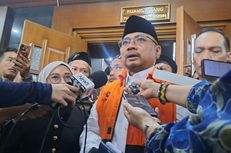
Three names that have emerged in conversations are Ahmad Muzani, Sugiono, and Sufmi Dasco Ahmad.
All three have political track records and institutional relationships with both the Gerindra Party and the Prabowo government.
However, in determining the Vice President, political closeness should not be the only variable considered.
Intellectual capacity, institutional experience, coordination skills, and understanding of public policy complexities must also be benchmarks.
Nominating someone for a public position is certainly a part of the political freedom of the community and the dynamics of democracy.
Political parties, social groups, academics, and various national elements have the space to express their views.
However, constitutionally, the mechanism for filling the Vice President's vacancy is stipulated in Article 8 paragraph (2) of the 1945 Constitution of the Republic of Indonesia.
The President proposes two candidates to the MPR, which then selects one to fill the Vice Presidency until the end of the term.
Thus, this process is not simply a decision of the President, but a constitutional mechanism involving both the President and the MPR.
Academic capacity and intellectual competency become increasingly relevant when discussing the need for national leadership, especially for someone who will occupy the Vice President's position as the “number two” in this republic.
The Vice President must be more than just able to read political winds, maintain coalition harmony, or mediate elite interests.
Moreover, they must have the skills to understand state issues, as this role is not merely an assistant to the President but a vital part of the national leadership architecture that also determines the direction of government administration.
The challenges facing our nation are not simple.
Strengthening the rule of law, bureaucratic reform, improving the quality of legislation, overseeing state budget usage, and ensuring equitable development require leadership that is not only politically savvy but also possesses strong policy reasoning.
This means that popularity cannot substitute for competence. Political victory does not automatically confer the skills to govern a country.
We need a figure who can connect political calculations with policy rationality and translate governmental visions into measurable, effective decisions that favor public interests.