
Part-Time PPPK Transitioning to Full-Time: Where Will Their Salaries Come From?
-
News
-
Just now
This article was translated by AI. Read the original article on Kompas.com. See Original
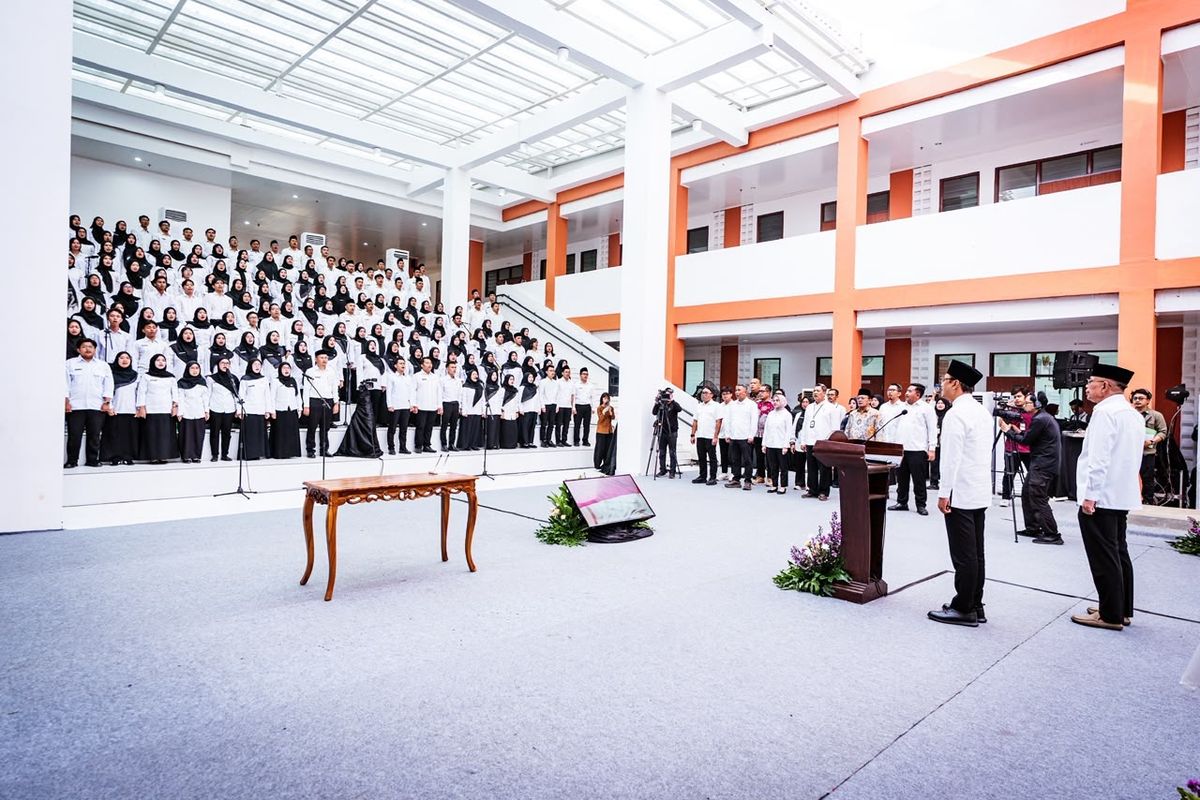
JAKARTA, KOMPAS.com - The central government has confirmed plans to transition part-time Government Employees with Work Agreements (PPPK) to full-time status.
This announcement was made by Minister of State Secretary Prasetyo Hadi on Friday (6/11/2026).
He stated that the shift to full-time PPPK will apply not only to teachers or educational staff but also to healthcare workers, firefighters, the Civil Service Police Unit (Satpol PP), as well as technical and other service personnel.
The government's decision comes after extensive discussions across ministries facilitated by the leadership of the House of Representatives (DPR RI) to resolve various employment issues.
The Minister emphasized that this decision is aimed at providing certainty in employment status for those who have been serving the public.
“The government has decided to appoint our brothers and sisters who are part-time PPPK employees to full-time status,” said the Minister.
In addition to upgraded employment status, the government will also provide full-time PPPK the opportunity to participate in the selection for Civil Service Candidates (CPNS), applicable to full-time PPPK across professions.
“For those who are appointed as full-time PPPK, they will have the same opportunity to take the CPNS test starting in 2027,” the Minister revealed.
This policy has raised significant concerns among local governments with limited fiscal space. The main question is, where will the salaries for full-time PPPK come from?
Will the salaries for full-time PPPK be sourced from the National Revenue and Expenditure Budget (APBN) or will they be drawn from an already constrained Regional Revenue and Expenditure Budget (APBD)?
“Alhamdulillah, there is good news that the central government has announced that all part-time PPPK will be converted to full-time status. This is progress. However, the question remains, who will pay their salaries?” said Siak Regent Afni Zulkifli.
Afni welcomed the positive development in employment policy.
However, behind this good news, there remain fundamental questions that have not yet been addressed by the central government.
The most critical question concerns who will bear the financial burden of paying the salaries of tens of thousands of PPPK after their status becomes full-time.