
Prabowo at APEC Summit: Bilateral Talks with Putin and Xi Jinping, Securing Investments of Rp 1,600 Trillion
-
News
-
1 minute ago
This article was translated by AI. Read the original article on Kompas.com. See Original
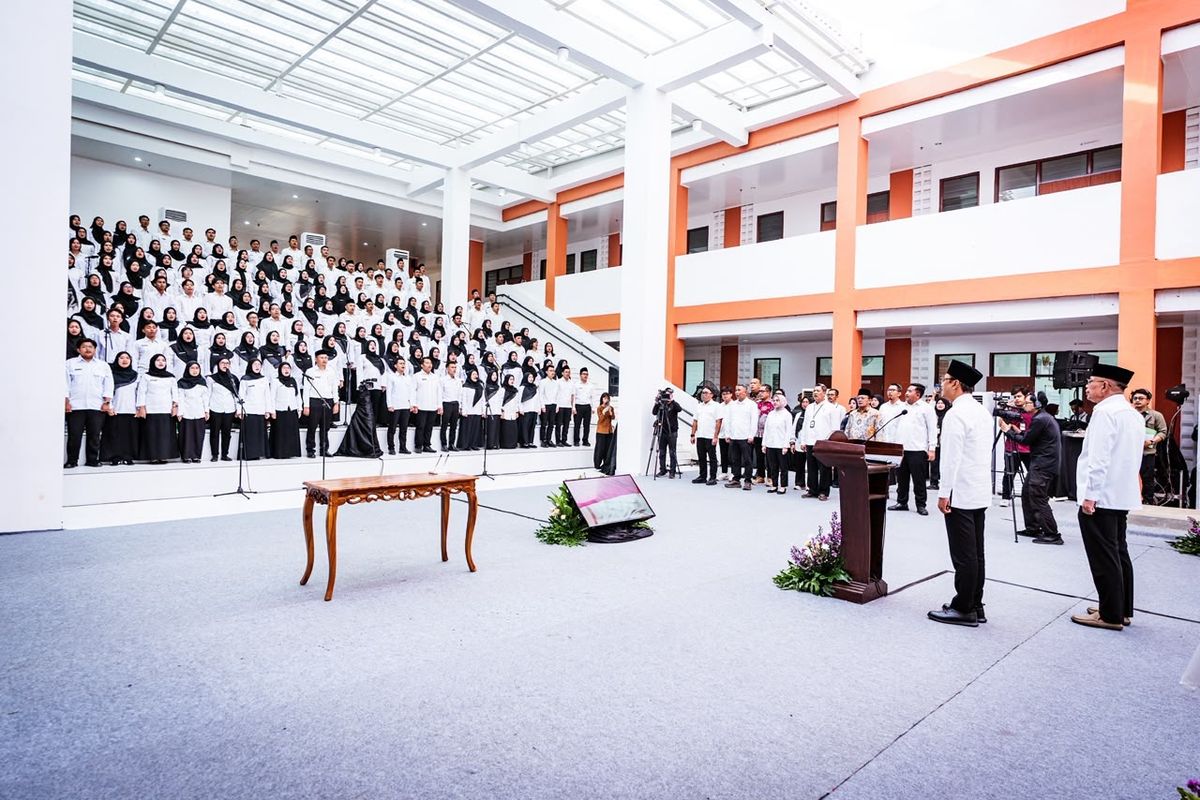
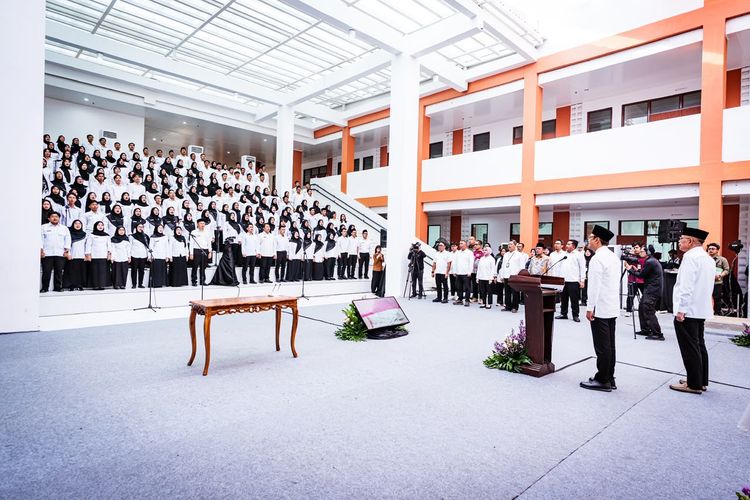
JAKARTA, KOMPAS.com - The central government has confirmed plans to transition part-time Government Employees with Work Agreements (PPPK) to full-time status.
This announcement was made by Minister of State Secretary Prasetyo Hadi on Friday (6/11/2026).
He stated that the shift to full-time PPPK will apply not only to teachers or educational staff but also to healthcare workers, firefighters, the Civil Service Police Unit (Satpol PP), as well as technical and other service personnel.
The government's decision comes after extensive discussions across ministries facilitated by the leadership of the House of Representatives (DPR RI) to resolve various employment issues.
The Minister emphasized that this decision is aimed at providing certainty in employment status for those who have been serving the public.
“The government has decided to appoint our brothers and sisters who are part-time PPPK employees to full-time status,” said the Minister.
In addition to upgraded employment status, the government will also provide full-time PPPK the opportunity to participate in the selection for Civil Service Candidates (CPNS), applicable to full-time PPPK across professions.
“For those who are appointed as full-time PPPK, they will have the same opportunity to take the CPNS test starting in 2027,” the Minister revealed.
This policy has raised significant concerns among local governments with limited fiscal space. The main question is, where will the salaries for full-time PPPK come from?
Will the salaries for full-time PPPK be sourced from the National Revenue and Expenditure Budget (APBN) or will they be drawn from an already constrained Regional Revenue and Expenditure Budget (APBD)?
“Alhamdulillah, there is good news that the central government has announced that all part-time PPPK will be converted to full-time status. This is progress. However, the question remains, who will pay their salaries?” said Siak Regent Afni Zulkifli.
Afni welcomed the positive development in employment policy.
However, behind this good news, there remain fundamental questions that have not yet been addressed by the central government.
The most critical question concerns who will bear the financial burden of paying the salaries of tens of thousands of PPPK after their status becomes full-time.
Will the funding come from the APBN or will it continue to fall under the responsibility of the APBD?
Clarifying the source of funding is deemed crucial for local governments currently drafting their 2027 APBD budgets.
Without clear technical guidelines, this policy could potentially create serious issues in local budget planning.
Afni reaffirmed that the central government's announcement is a development worth acknowledging.
Nevertheless, this policy must be accompanied by clarity regarding the mechanisms for financing and human resource administration.
The Lhokseumawe City Government in Aceh has reminded the central government to also bear the salary costs for these employees.
This is because the local government has stated that it cannot afford to pay the salaries of thousands of PPPK from the APBD.
Lhokseumawe City Secretary A Haris reported that there are currently 3,694 part-time and full-time PPPK in the area.
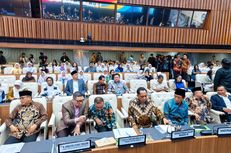
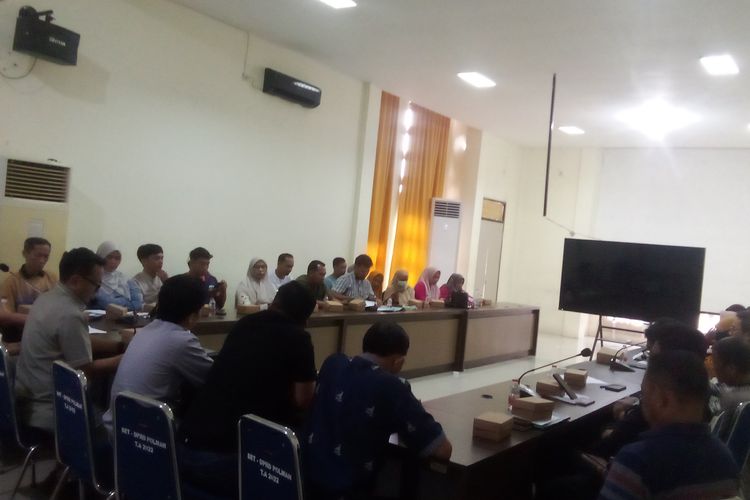 Dozens of part-time healthcare workers (nakes) attend a meeting with members of the Regional House of Representatives and representatives of the Polman district government at the Polman DPRD building on Friday (20/11/2026).
With an APBD of around IDR 890 billion per year, the local government's fiscal capacity is deemed insufficient to cover all employee salary needs.
"For example, this year we submitted a letter requesting that PPPK salaries be paid by the central government through the Regional Transfer Fund (TKD). If that funding is not provided, we cannot pay the salaries. Our fiscal resources are minimal," said Haris.
According to him, if the APBD is used to pay the salaries of thousands of PPPK, the remaining budget for local development will become even more limited.
Therefore, the Lhokseumawe City Government hopes that the financing of PPPK salaries will be the responsibility of the central government through a budget transfer scheme.
Member of Commission II of the DPR from the Nasdem Party faction, Ujang Bey, stated that the salaries of full-time PPPK will be paid by the central government.
Ujang emphasized that the decision to upgrade PPPK status from part-time to full-time was not made without careful consideration.
"This policy was not made just like that, where the government, among others through the Minister of State Secretary, has coordinated with the leadership of the DPR before this decision was made, including the formulation of its funding. The government certainly has reviewed it," said Ujang.
"I believe, the commitment remains the same as discussed previously in the joint session with the government and regional heads, deciding that PPPK salaries will be borne by the central government," he added.
Ujang praised the government's move to elevate part-time PPPK to full-time status.
According to the Head of the Nasdem Faction in Commission II of the DPR, this move demonstrates the government's commitment to improve the welfare of part-time PPPK during President Prabowo Subianto's administration.
Similar sentiments were expressed by Minister of Primary and Secondary Education Abdul Mu'ti. He stated that all salaries for full-time PPPK teachers would be covered by the central government.
"The central government. Yes, through the Ministry of Primary and Secondary Education," Mu'ti said when met at the DPR Building in Senayan.
Mu'ti stated that all teachers currently classified as part-time PPPK will be converted to full-time status.
He mentioned that teachers over 40 years of age will also have the chance to become full-time PPPK.
"For those currently part-time PPPK, they will all be included. Yes (those over 40 will also be), all of them," he added.