


KSPI Rejects DKI UMP of Rp 6.1 Million, Said Iqbal: Can't Improve Workers' Purchasing Power
-
News
-
22 minutes ago
This article was translated by AI. Read the original article on Kompas.com. See Original
PRIORITY programs of the government are often understood merely as instruments to solve sectoral issues.
Education programs aim to enhance the quality of human resources, health programs strive to improve public health, while social protection programs are intended to maintain the purchasing power of vulnerable groups.
However, from the perspective of development economics, priority programs actually hold far greater potential.
If designed correctly, these programs can serve as instruments for demand creation, drivers of domestic production, job creation, strengthening of MSMEs, and as accelerators of national economic growth.
In this context, the Free Nutritious Food Program (MBG) stands out as an intriguing policy to monitor.
This program is not merely an agenda to meet the nutritional needs of school children and other target groups, but it also has the potential to become an economic engine that connects agriculture, livestock, fisheries, food processing, trade, transportation, and local community economies.
Essentially, the MBG program can be transformed from a government spending initiative into a productive, inclusive, and sustainable economic growth driver.
The success of priority programs should not be measured solely by the budget absorption or the number of beneficiaries served.
A more substantive measure is how well state spending is able to create economic value, improve productivity, strengthen national production capacity, and yield long-term welfare impacts.
In macroeconomic theory, government expenditure is one component that forms gross domestic product (GDP).
When the government increases spending on goods and services, aggregate demand can rise. If spending is directed towards productive sectors domestically, the impact does not stop at initial transactions but can cascade through increased production, income, job opportunities, and public consumption.
The MBG program has a relatively unique characteristic as it connects social needs with productive economic activities.
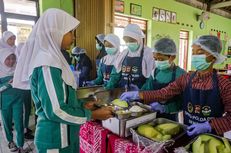
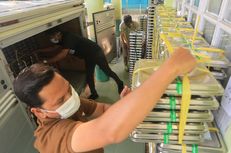
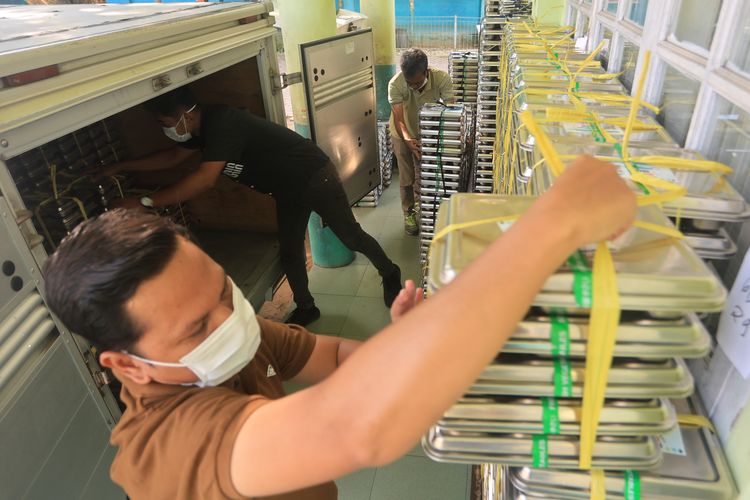
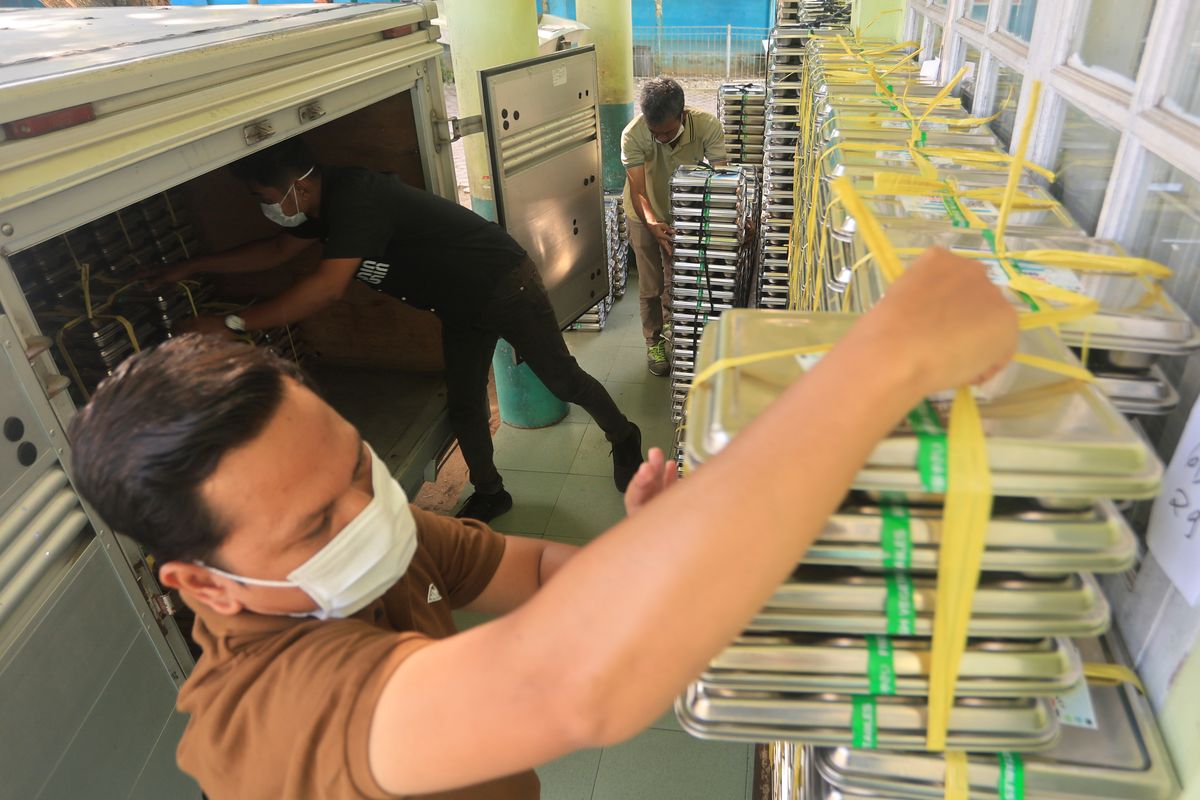
 Illustration of MBG kitchen.
Every meal served requires raw materials such as rice, eggs, chicken, fish, vegetables, fruits, milk, and various other food commodities. These raw materials must be produced, gathered, processed, packaged, and distributed.
Thus, there is a long economic value chain behind a single portion of nutritious food, especially when the food needs for millions of beneficiaries are met through the production of farmers, livestock breeders, fishermen, cooperatives, community business groups, and MSMEs around the service locations.
The government’s routine demand can create market certainty for local food producers.
Farmers have guaranteed buyers, livestock breeders secure a more stable market, fishermen gain broader distribution channels, while MSMEs have opportunities to develop food processing businesses.
The impact is not only increased consumption but also strengthened production sides of the economy.
Data from the implementation of MBG shows that economies of scale are beginning to take shape. According to a report from the Ministry of Finance presented on November 13, 2026, the realization of the MBG budget had reached Rp173.2 trillion by the end of October 2026.
This program has reached approximately 58.2 million beneficiaries through 27,485 Nutritional Fulfillment Service Units (SPPG).
This figure indicates that MBG has evolved into one of the government’s spending activities with a very broad economic reach.
Behind those tens of thousands of service units lies a demand for labor, kitchen infrastructure, procurement of foodstuffs, transportation, storage, processing, and distribution.
If managed properly, every rupiah spent on MBG has the potential to generate subsequent economic activities.
Government spending becomes income for suppliers, supplier revenue becomes wages for workers and payments to producers, and that income is then recirculated through public consumption.
This flow of economic activity is referred to as the multiplier effect in the economy.
However, a large budget does not automatically guarantee a significant multiplier effect. The key issue lies in how state funds are spent, who benefits, and how much of the added value actually remains in the domestic economy.
The context of the national economy provides reasons why priority programs must be positioned as tools for growth drivers.
Bank Indonesia noted that Indonesia’s economy grew 5.47 percent year-on-year in the third quarter of 2026, up from 5.29 percent in the previous quarter.
Household consumption growth was at 5.04 percent, while government consumption rose by 8.95 percent. Investment or Gross Fixed Capital Formation (PMTB) also grew by 6.06 percent.
This data indicates that domestic demand remains one of the main pillars supporting Indonesia's economic growth.
Interestingly, government consumption grew at a higher rate than household consumption. In Bank Indonesia’s report, the increase was supported by procurement of goods and services, including the implementation of MBG.
Government expenditure plays a strategic role in maintaining growth momentum amid global uncertainty.
However, it is important to distinguish between growth driven by expenditure expansion and growth that results from an increase in production capacity.