
Law on Asset Forfeiture: Fulfilling Promises, Suffers "Illicit Enrichment" Debt
-
News
-
1 minute ago
This article was translated by AI. Read the original article on Kompas.com. See Original
PRIORITY programs of the government are often understood merely as instruments to solve sectoral issues.
Education programs aim to enhance the quality of human resources, health programs strive to improve public health, while social protection programs are intended to maintain the purchasing power of vulnerable groups.
However, from the perspective of development economics, priority programs actually hold far greater potential.
If designed correctly, these programs can serve as instruments for demand creation, drivers of domestic production, job creation, strengthening of MSMEs, and as accelerators of national economic growth.
In this context, the Free Nutritious Food Program (MBG) stands out as an intriguing policy to monitor.
This program is not merely an agenda to meet the nutritional needs of school children and other target groups, but it also has the potential to become an economic engine that connects agriculture, livestock, fisheries, food processing, trade, transportation, and local community economies.
Essentially, the MBG program can be transformed from a government spending initiative into a productive, inclusive, and sustainable economic growth driver.
The success of priority programs should not be measured solely by the budget absorption or the number of beneficiaries served.
A more substantive measure is how well state spending is able to create economic value, improve productivity, strengthen national production capacity, and yield long-term welfare impacts.
In macroeconomic theory, government expenditure is one component that forms gross domestic product (GDP).
When the government increases spending on goods and services, aggregate demand can rise. If spending is directed towards productive sectors domestically, the impact does not stop at initial transactions but can cascade through increased production, income, job opportunities, and public consumption.
The MBG program has a relatively unique characteristic as it connects social needs with productive economic activities.
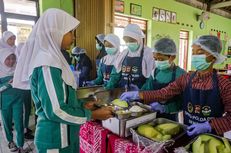
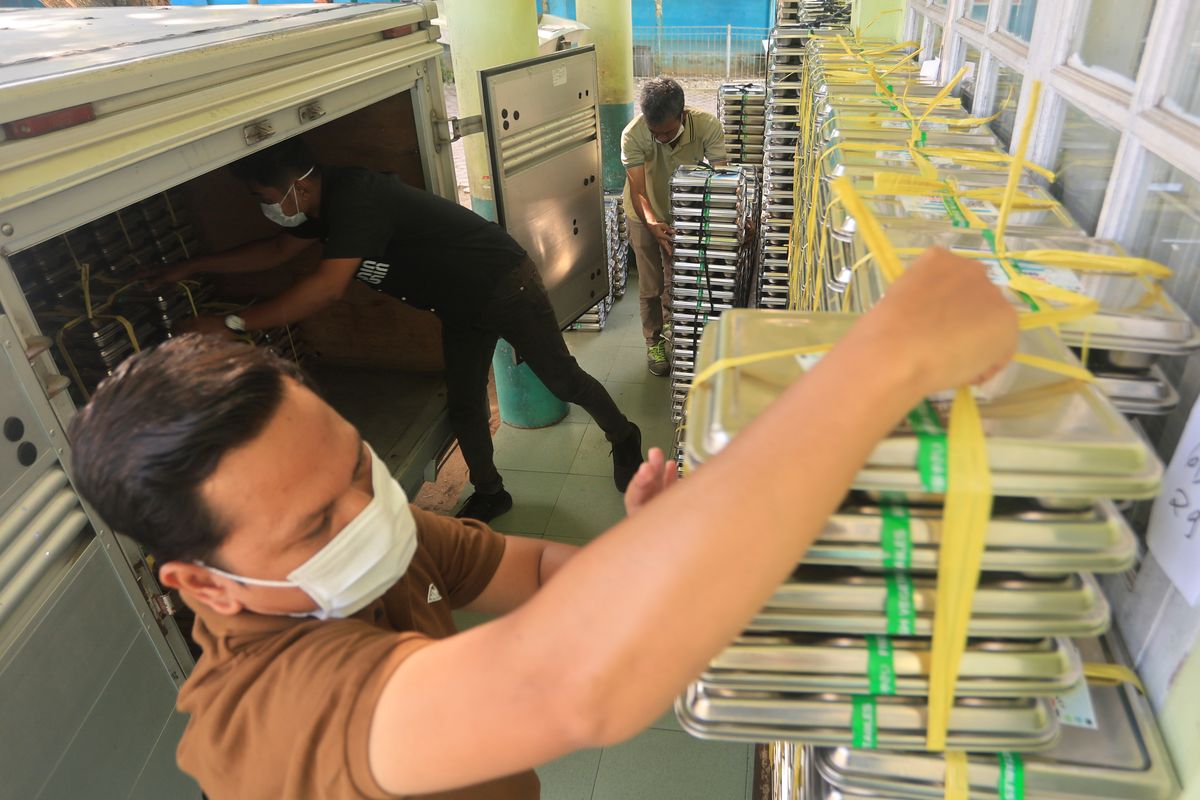
 Illustration of MBG kitchen.
Every meal served requires raw materials such as rice, eggs, chicken, fish, vegetables, fruits, milk, and various other food commodities. These raw materials must be produced, gathered, processed, packaged, and distributed.
Thus, there is a long economic value chain behind a single portion of nutritious food, especially when the food needs for millions of beneficiaries are met through the production of farmers, livestock breeders, fishermen, cooperatives, community business groups, and MSMEs around the service locations.
The government’s routine demand can create market certainty for local food producers.
Farmers have guaranteed buyers, livestock breeders secure a more stable market, fishermen gain broader distribution channels, while MSMEs have opportunities to develop food processing businesses.
The impact is not only increased consumption but also strengthened production sides of the economy.
Data from the implementation of MBG shows that economies of scale are beginning to take shape. According to a report from the Ministry of Finance presented on November 13, 2026, the realization of the MBG budget had reached Rp173.2 trillion by the end of October 2026.
This program has reached approximately 58.2 million beneficiaries through 27,485 Nutritional Fulfillment Service Units (SPPG).
This figure indicates that MBG has evolved into one of the government’s spending activities with a very broad economic reach.
Behind those tens of thousands of service units lies a demand for labor, kitchen infrastructure, procurement of foodstuffs, transportation, storage, processing, and distribution.
If managed properly, every rupiah spent on MBG has the potential to generate subsequent economic activities.
Government spending becomes income for suppliers, supplier revenue becomes wages for workers and payments to producers, and that income is then recirculated through public consumption.
This flow of economic activity is referred to as the multiplier effect in the economy.
However, a large budget does not automatically guarantee a significant multiplier effect. The key issue lies in how state funds are spent, who benefits, and how much of the added value actually remains in the domestic economy.
The context of the national economy provides reasons why priority programs must be positioned as tools for growth drivers.
Bank Indonesia noted that Indonesia’s economy grew 5.47 percent year-on-year in the third quarter of 2026, up from 5.29 percent in the previous quarter.
Household consumption growth was at 5.04 percent, while government consumption rose by 8.95 percent. Investment or Gross Fixed Capital Formation (PMTB) also grew by 6.06 percent.
This data indicates that domestic demand remains one of the main pillars supporting Indonesia's economic growth.
Interestingly, government consumption grew at a higher rate than household consumption. In Bank Indonesia’s report, the increase was supported by procurement of goods and services, including the implementation of MBG.
Government expenditure plays a strategic role in maintaining growth momentum amid global uncertainty.
However, it is important to distinguish between growth driven by expenditure expansion and growth that results from an increase in production capacity.
Expenditure expansion can boost demand in the short term, but sustainable growth requires improvements in productivity, investment, efficiency, and national production capacity.
Therefore, MBG should not stop as a food distribution program. It must evolve into a policy capable of strengthening the national food production ecosystem.
If MBG's food needs are mostly met through local products, this program can create a more certain market for domestic producers.
On the other hand, if procurement is too concentrated on large suppliers or products from outside the region without considering local production potential, some of the economic multiplier potential will leak out of the program recipient area.
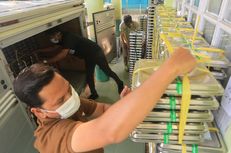
 Illustration of SPPG.
One fundamental challenge for Indonesia’s economy is the less-than-optimal relationship between the primary production sector and the consumption market.
Farmers often face fluctuating prices, limited market access, long distribution chains, and weak bargaining positions. Fishermen encounter limitations in storage and distribution facilities, while livestock breeders deal with issues of feed costs, capital, and purchasing certainty.
MBG could indeed be part of the solution to these issues.
The food needs within this program should not just be met through conventional procurement mechanisms but also through purchasing contracts with farming groups, agricultural cooperatives, fishery groups, breeders, and local food MSMEs.
The government can establish a region-based procurement system. Each SPPG is encouraged to map the potential commodities in their areas.
Rice needs to be fulfilled by local farmers, eggs and chicken by local breeders, fish by fishermen or aquaculture producers, as well as vegetables and fruits from farming groups and horticultural players.
This model will create mutually beneficial relationships. The MBG program gets fresher food and shorter distribution chains, while local producers gain demand certainty.
Furthermore, the government can integrate MBG with cooperatives and village economy strengthening programs.
For instance, the Red and White Village/Kelurahan Cooperatives have the potential to act as aggregators consolidating production from farmers and livestock breeders, standardizing quality, and organizing distribution to SPPGs.
In this way, MBG not only funds consumption but also serves as a tool for strengthening community economic institutions.
However, this integration requires fundamental improvements. Farmers and MSMEs need access to financing, production technologies, food safety standards mentoring, storage facilities, and payment certainty.
Without such support, the economic opportunities created by MBG might be more easily seized by companies or suppliers with existing capital and distribution networks.
Behind its economic potentials, there are issues that cannot be ignored. The large budget and broad beneficiary scope do not automatically correlate with equitable economic benefits.
INDEF’s study in October 2026 on MSME participation in the MBG program and the Merah Putih Village Cooperatives provided noteworthy findings.
The research, which involved 1,800 formal and informal MSMEs in August 2026, found that although 97 percent of respondents knew of the MBG and the program was present in 92 percent of the villages/sub-districts surveyed, only 5 percent of formal MSMEs and 1 percent of informal MSMEs had formed partnerships or explored partnerships.
About 80 percent of respondents did not see new business opportunities from the two programs. In fact, 22 percent reported a decrease in business activities due to MBG, while only 5 percent experienced an increase.
These findings suggest potential demand substitution and concentration of economic benefits among certain business actors.
This observation warrants careful consideration. Because if a program with a budget of hundreds of trillions of rupiah cannot engage MSMEs widely, it indicates issues in supply chain design and procurement mechanisms.
We must ensure that the establishment of MBG kitchens does not unintentionally displace the activities of food stalls, small traders, or community food businesses that previously served as sources of livelihood for residents.
Government programs should expand economic activities, not merely transfer market shares from one business group to another.
We need to ensure that the growth generated by MBG is inclusive. Economic benefits should not only be enjoyed by kitchen managers and large suppliers but also reach small farmers, small-scale livestock producers, fishermen, market traders, cooperatives, and MSMEs.
The next issue is governance. A program with tens of millions of beneficiaries certainly requires a complex management system, from raw material planning, menu standards, procurement, processing, distribution, quality control, to impact evaluation.
One risk that must be anticipated is food safety. A program aimed at improving people’s nutritional quality will lose its legitimacy if cleanliness standards, raw material quality, and food safety are not guaranteed.
Therefore, there needs to be strict standardization across all SPPGs. Oversight should not only be administrative but must include audits of food quality, kitchen feasibility, food processor competency, and regular food safety testing.
Additionally, transparency in procurement is critical. Information about suppliers, purchase prices, volume requirements, and food quality must be diligently monitored.
This way, potential waste, conflicts of interest, and unhealthy procurement practices can be minimized.
The government also needs to develop a digital system linking SPPGs to local food producers.
Through this system, raw material needs can be mapped more accurately, prices can be compared transparently, and distribution can be carried out more efficiently.
Another challenge is fiscal sustainability. An MBG budget reaching hundreds of trillions of rupiah certainly requires long-term financing plans.
The government must ensure that program expansion does not compromise other priority developments, such as education, health, productive infrastructure, research, and technology development.
Thus, the success of MBG must be evaluated based on the balance between social benefits, economic benefits, and the country's fiscal capacity.
To ensure that MBG truly becomes a driver of national economic growth, there are five strategic agendas that require the government's attention.
 Illustration of MBG.
First, build a food supply chain based on local production. Food procurement must be directed to optimize production potential in the regions.
The government needs to develop food requirement maps for each area and connect them with farmers, livestock breeders, fishermen, and MSME production capacities. This approach will shorten distribution chains while increasing the value added that remains in the regions.
Second, strengthen the involvement of MSMEs and cooperatives. MSMEs should not just be seen as supplementary in the MBG supply chain. They must be a main part of the procurement ecosystem.
The government needs to simplify partnership requirements, segment procurement into scales manageable by MSMEs, ensure payment certainty, and provide access to contract-based financing.
Third, integrate MBG with agricultural and livestock sector transformations. Food demand certainty from the MBG program should become momentum to enhance agricultural productivity.
The government needs to encourage agricultural modernization, technology use, superior seed development, strengthening of smallholder livestock, and construction of food storage and processing facilities.
Consequently, increasing demand should not only boost prices but also be followed by an increase in production capacity.
Fourth, develop a circular economy within the food ecosystem. MBG management needs to consider resource efficiency and food waste reduction.
Edible food waste should be separated from unusable waste, while organic waste can be processed into compost or other useful products in compliance with safety standards.
This approach can connect MBG with circular agriculture and green economy objectives.
Fifth, build a system for evaluating economic and social impact. The success of MBG cannot merely be gauged by the amount of food distributed, the number of kitchens operating, or the absorption of the budget.
The government needs to develop more comprehensive indicators, including improvements in the nutritional quality of beneficiaries, MSME engagement, farmer income increases, job creation, local food production growth, and the magnitude of economic value added in the area.
This evaluation must be conducted periodically and transparently so the public can understand whether the state budget genuinely provides equivalent benefits.
Ultimately, government priority programs should be placed within the broader framework of national economic transformation. MBG is one example of how social policies can be designed to also serve as instruments of economic development.
However, we need to understand that economic growth cannot be supported only by increased consumption. Indonesia needs productivity-based growth, strengthening of the real sector, creation of quality jobs, and enhancement of national production capacity.
In this context, MBG has the potential to connect social protection policies and the development of productive sectors.
This program can create more certain demand for farmers, livestock breeders, fishermen, and MSMEs, while also enhancing the quality of human resources through nutritional fulfillment.
Moreover, if designed integratively, MBG could serve as one of the instruments to strengthen national food security.
The large food demand can be geared towards strengthening domestic production, reducing dependence on imports, improving food distribution, and enhancing producer welfare in rural areas.
However, these opportunities will not manifest automatically. The government must avoid an overly budget absorption-oriented approach and administrative target achievement.
The more crucial factor is ensuring that every rupiah spent generates tangible economic added value and is distributed fairly.
Here lies the relevance of development economic thinking, placing the state not merely as a spender but as a guide of economic transformation.
The state must be able to create markets, strengthen economic institutions, build production infrastructure, and ensure small business actors have equal opportunities to grow.
The measure of MBG's success should not solely revolve around how many millions receive food, how many kitchens are built, or how many trillions of rupiah are spent.
The more important measure is whether the program can enhance the nutritional quality of future generations, increase food producers' incomes, strengthen MSMEs, create jobs, and drive regional economies.
The MBG program should be an instrument that bridges human development with productive economic development.
A good priority program is one that can transform state spending into social investments, productive investments, and new sources of economic growth.