


Law on Asset Forfeiture: Fulfilling Promises, Suffers "Illicit Enrichment" Debt
-
News
-
1 minute ago
This article was translated by AI. Read the original article on Kompas.com. See Original

Another challenge is fiscal sustainability. An MBG budget reaching hundreds of trillions of rupiah certainly requires long-term financing plans.
The government must ensure that program expansion does not compromise other priority developments, such as education, health, productive infrastructure, research, and technology development.
Thus, the success of MBG must be evaluated based on the balance between social benefits, economic benefits, and the country's fiscal capacity.
To ensure that MBG truly becomes a driver of national economic growth, there are five strategic agendas that require the government's attention.
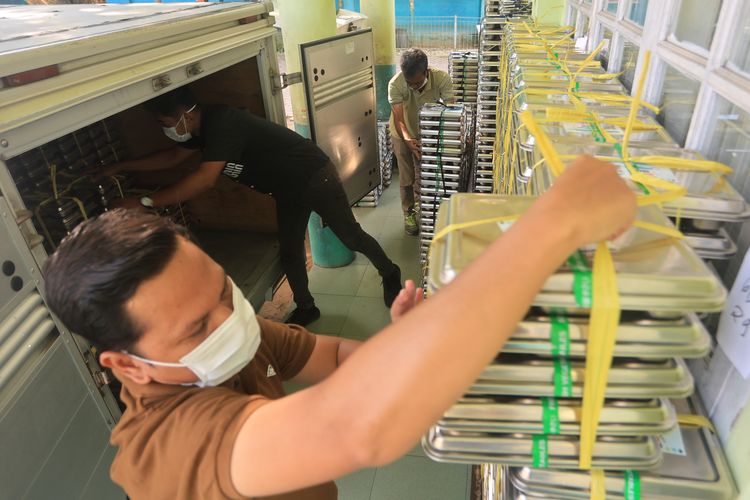
First, build a food supply chain based on local production. Food procurement must be directed to optimize production potential in the regions.
The government needs to develop food requirement maps for each area and connect them with farmers, livestock breeders, fishermen, and MSME production capacities. This approach will shorten distribution chains while increasing the value added that remains in the regions.
Second, strengthen the involvement of MSMEs and cooperatives. MSMEs should not just be seen as supplementary in the MBG supply chain. They must be a main part of the procurement ecosystem.
The government needs to simplify partnership requirements, segment procurement into scales manageable by MSMEs, ensure payment certainty, and provide access to contract-based financing.
Third, integrate MBG with agricultural and livestock sector transformations. Food demand certainty from the MBG program should become momentum to enhance agricultural productivity.
The government needs to encourage agricultural modernization, technology use, superior seed development, strengthening of smallholder livestock, and construction of food storage and processing facilities.
Consequently, increasing demand should not only boost prices but also be followed by an increase in production capacity.
Fourth, develop a circular economy within the food ecosystem. MBG management needs to consider resource efficiency and food waste reduction.
Edible food waste should be separated from unusable waste, while organic waste can be processed into compost or other useful products in compliance with safety standards.
This approach can connect MBG with circular agriculture and green economy objectives.
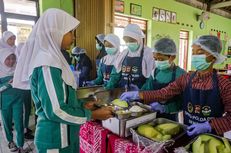
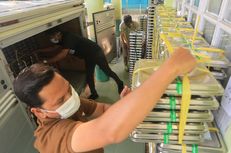
Fifth, build a system for evaluating economic and social impact. The success of MBG cannot merely be gauged by the amount of food distributed, the number of kitchens operating, or the absorption of the budget.
The government needs to develop more comprehensive indicators, including improvements in the nutritional quality of beneficiaries, MSME engagement, farmer income increases, job creation, local food production growth, and the magnitude of economic value added in the area.
This evaluation must be conducted periodically and transparently so the public can understand whether the state budget genuinely provides equivalent benefits.
Ultimately, government priority programs should be placed within the broader framework of national economic transformation. MBG is one example of how social policies can be designed to also serve as instruments of economic development.
However, we need to understand that economic growth cannot be supported only by increased consumption. Indonesia needs productivity-based growth, strengthening of the real sector, creation of quality jobs, and enhancement of national production capacity.
In this context, MBG has the potential to connect social protection policies and the development of productive sectors.
This program can create more certain demand for farmers, livestock breeders, fishermen, and MSMEs, while also enhancing the quality of human resources through nutritional fulfillment.
Moreover, if designed integratively, MBG could serve as one of the instruments to strengthen national food security.
The large food demand can be geared towards strengthening domestic production, reducing dependence on imports, improving food distribution, and enhancing producer welfare in rural areas.
However, these opportunities will not manifest automatically. The government must avoid an overly budget absorption-oriented approach and administrative target achievement.
The more crucial factor is ensuring that every rupiah spent generates tangible economic added value and is distributed fairly.
Here lies the relevance of development economic thinking, placing the state not merely as a spender but as a guide of economic transformation.
The state must be able to create markets, strengthen economic institutions, build production infrastructure, and ensure small business actors have equal opportunities to grow.
The measure of MBG's success should not solely revolve around how many millions receive food, how many kitchens are built, or how many trillions of rupiah are spent.
The more important measure is whether the program can enhance the nutritional quality of future generations, increase food producers' incomes, strengthen MSMEs, create jobs, and drive regional economies.
The MBG program should be an instrument that bridges human development with productive economic development.
A good priority program is one that can transform state spending into social investments, productive investments, and new sources of economic growth.