

When Priority Programs Drive Economic Growth
-
News
-
17 minutes ago
This article was translated by AI. Read the original article on Kompas.com. See Original
Expenditure expansion can boost demand in the short term, but sustainable growth requires improvements in productivity, investment, efficiency, and national production capacity.
Therefore, MBG should not stop as a food distribution program. It must evolve into a policy capable of strengthening the national food production ecosystem.
If MBG's food needs are mostly met through local products, this program can create a more certain market for domestic producers.
On the other hand, if procurement is too concentrated on large suppliers or products from outside the region without considering local production potential, some of the economic multiplier potential will leak out of the program recipient area.
One fundamental challenge for Indonesia’s economy is the less-than-optimal relationship between the primary production sector and the consumption market.
Farmers often face fluctuating prices, limited market access, long distribution chains, and weak bargaining positions. Fishermen encounter limitations in storage and distribution facilities, while livestock breeders deal with issues of feed costs, capital, and purchasing certainty.
MBG could indeed be part of the solution to these issues.
The food needs within this program should not just be met through conventional procurement mechanisms but also through purchasing contracts with farming groups, agricultural cooperatives, fishery groups, breeders, and local food MSMEs.
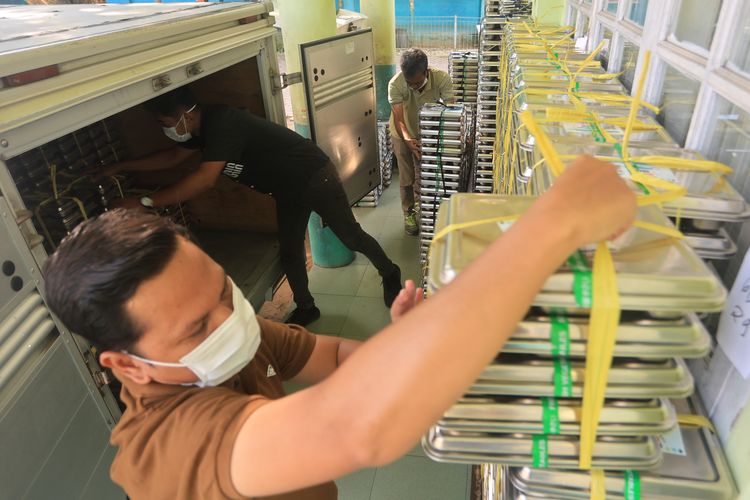
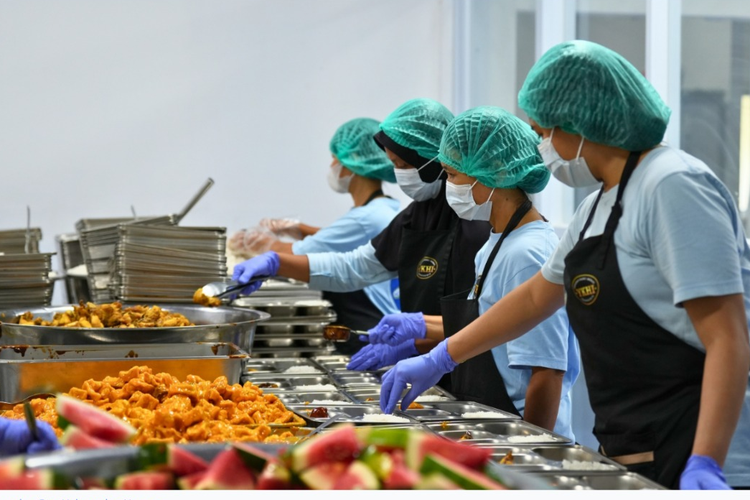
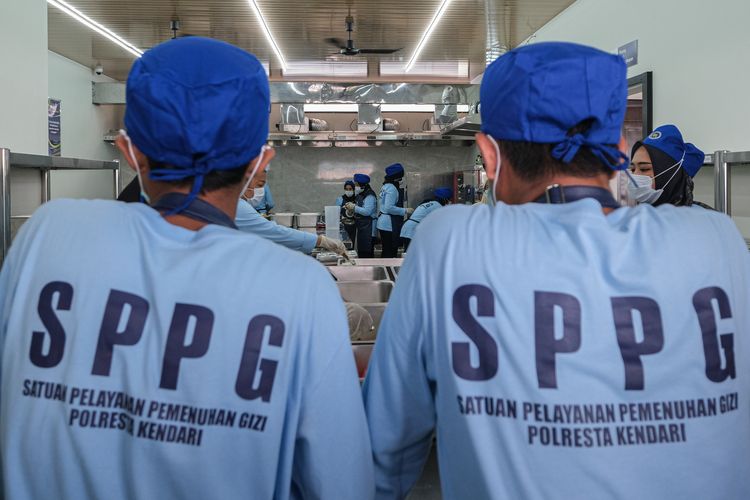
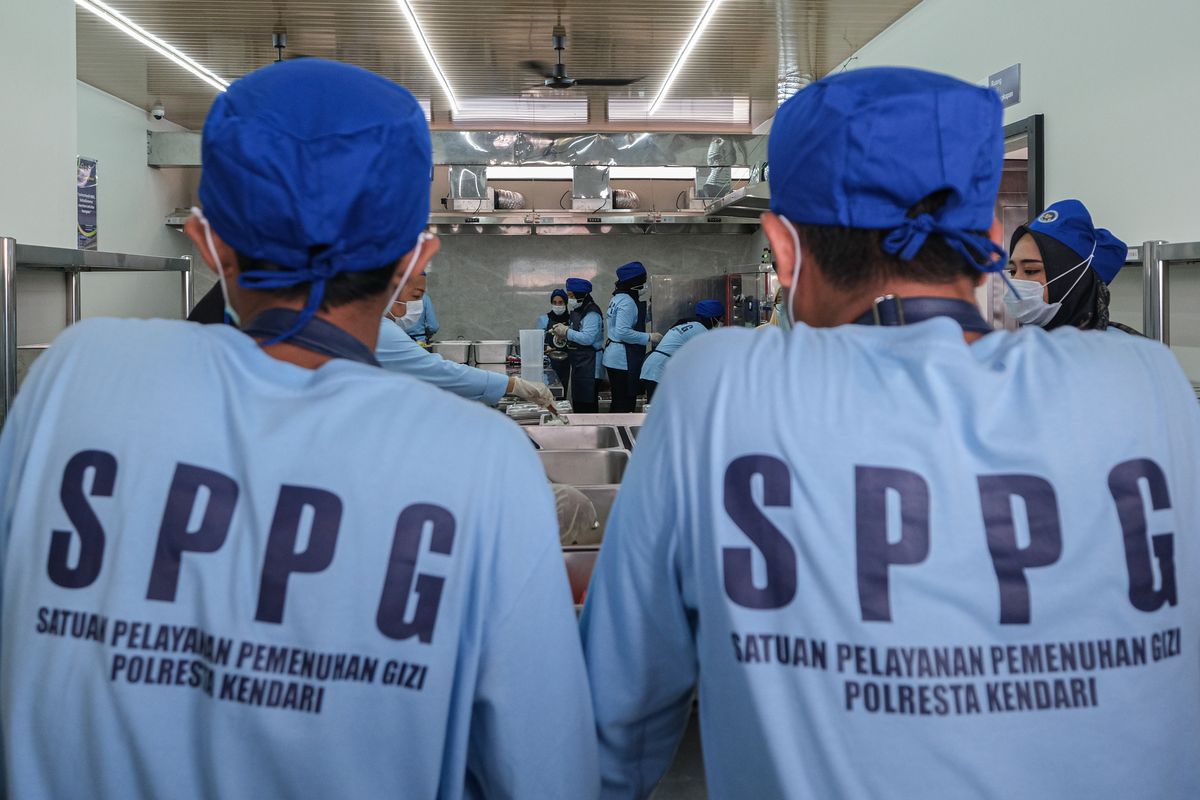
The government can establish a region-based procurement system. Each SPPG is encouraged to map the potential commodities in their areas.
Rice needs to be fulfilled by local farmers, eggs and chicken by local breeders, fish by fishermen or aquaculture producers, as well as vegetables and fruits from farming groups and horticultural players.
This model will create mutually beneficial relationships. The MBG program gets fresher food and shorter distribution chains, while local producers gain demand certainty.
Furthermore, the government can integrate MBG with cooperatives and village economy strengthening programs.
For instance, the Red and White Village/Kelurahan Cooperatives have the potential to act as aggregators consolidating production from farmers and livestock breeders, standardizing quality, and organizing distribution to SPPGs.
In this way, MBG not only funds consumption but also serves as a tool for strengthening community economic institutions.
However, this integration requires fundamental improvements. Farmers and MSMEs need access to financing, production technologies, food safety standards mentoring, storage facilities, and payment certainty.
Without such support, the economic opportunities created by MBG might be more easily seized by companies or suppliers with existing capital and distribution networks.
Behind its economic potentials, there are issues that cannot be ignored. The large budget and broad beneficiary scope do not automatically correlate with equitable economic benefits.
INDEF’s study in October 2026 on MSME participation in the MBG program and the Merah Putih Village Cooperatives provided noteworthy findings.
The research, which involved 1,800 formal and informal MSMEs in August 2026, found that although 97 percent of respondents knew of the MBG and the program was present in 92 percent of the villages/sub-districts surveyed, only 5 percent of formal MSMEs and 1 percent of informal MSMEs had formed partnerships or explored partnerships.
About 80 percent of respondents did not see new business opportunities from the two programs. In fact, 22 percent reported a decrease in business activities due to MBG, while only 5 percent experienced an increase.
These findings suggest potential demand substitution and concentration of economic benefits among certain business actors.
This observation warrants careful consideration. Because if a program with a budget of hundreds of trillions of rupiah cannot engage MSMEs widely, it indicates issues in supply chain design and procurement mechanisms.
We must ensure that the establishment of MBG kitchens does not unintentionally displace the activities of food stalls, small traders, or community food businesses that previously served as sources of livelihood for residents.
Government programs should expand economic activities, not merely transfer market shares from one business group to another.
We need to ensure that the growth generated by MBG is inclusive. Economic benefits should not only be enjoyed by kitchen managers and large suppliers but also reach small farmers, small-scale livestock producers, fishermen, market traders, cooperatives, and MSMEs.
The next issue is governance. A program with tens of millions of beneficiaries certainly requires a complex management system, from raw material planning, menu standards, procurement, processing, distribution, quality control, to impact evaluation.
One risk that must be anticipated is food safety. A program aimed at improving people’s nutritional quality will lose its legitimacy if cleanliness standards, raw material quality, and food safety are not guaranteed.
Therefore, there needs to be strict standardization across all SPPGs. Oversight should not only be administrative but must include audits of food quality, kitchen feasibility, food processor competency, and regular food safety testing.
Additionally, transparency in procurement is critical. Information about suppliers, purchase prices, volume requirements, and food quality must be diligently monitored.
This way, potential waste, conflicts of interest, and unhealthy procurement practices can be minimized.
The government also needs to develop a digital system linking SPPGs to local food producers.
Through this system, raw material needs can be mapped more accurately, prices can be compared transparently, and distribution can be carried out more efficiently.