The Puzzle of Prabowo's Vice Presidential Choice
-
News
-
18 minutes ago
This article was translated by AI. Read the original article on Kompas.com. See Original

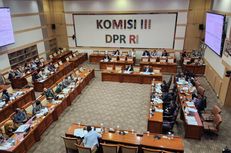
JAKARTA, KOMPAS.com - Public pressure for transparency regarding the educational backgrounds of members of the Indonesian House of Representatives (DPR) is intensifying.
This demand has surfaced through three different online petitions.
One of the petitions has successfully gathered 26,495 verified signatures as of Wednesday (18/11/2026), with 3,531 signatures recorded on the same day.
In the petition, the public is urging DPR leadership to require all members to disclose their educational history and diplomas, from secondary education to higher education.
Furthermore, they request that the General Elections Commission (KPU) and relevant ministries facilitate audits or re-verifications of the authenticity of diplomas for all currently active legislators in a transparent and independent manner, and to publicly disclose the results.
Legal expert in electoral affairs from the University of Indonesia (UI), Titi Anggraini, believes that the demand for transparency in the education of DPR members is highly relevant given their role as representatives of the people.
She stated that DPR members should indeed be transparent about their educational backgrounds, including their political track records.
"This transparency is important because they are representatives elected through a democratic process, thus the public has the right to know the qualifications and integrity of the individuals who will represent them in parliament," Titi told Kompas.com on Tuesday (17/11/2026).
Moreover, many representatives currently "conceal" or fail to mention their school origins and graduation years.
According to data from the Central Statistics Agency (BPS) in 2024, 211 members of the council, accounting for 36.38 percent, chose not to disclose this information.
Meanwhile, 63 others are high school graduates, three are diploma III (D3) graduates, 155 are bachelor's (S1) degree holders, 119 hold master’s (S2) degrees, and 29 are doctorate (S3) degree holders.
This stands in contrast to professions such as teachers, lecturers, state-owned enterprise (BUMN) employees, and private sector employees, who are often required to meet higher qualifications.
"Although the formal requirements to become a member of DPR are indeed lighter constitutionally, the demand for transparency has become even more relevant because they carry public mandates," Titi noted.
Titi emphasized that the public’s demand ultimately leads to the establishment of trust.
According to her, disclosing educational history and track record is not just about fulfilling the petition's demands.