

The Puzzle of Prabowo's Vice Presidential Choice
-
News
-
18 minutes ago
This article was translated by AI. Read the original article on Kompas.com. See Original
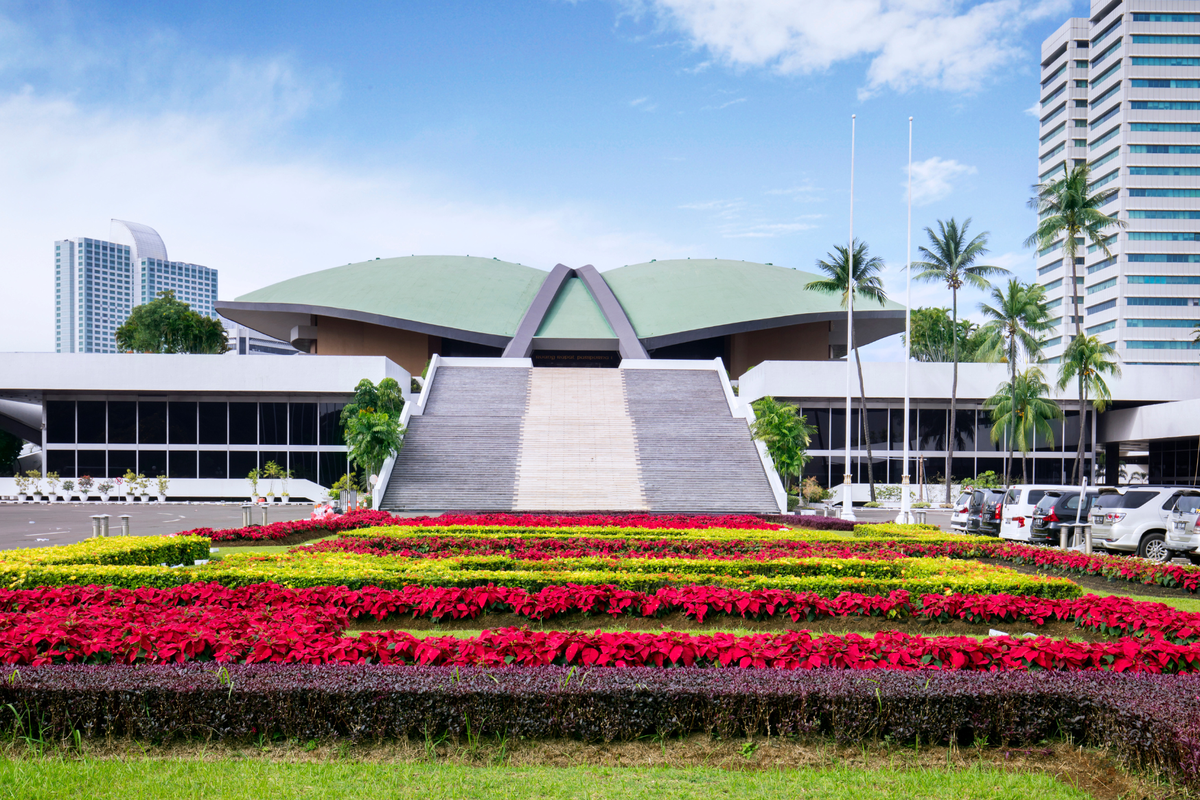
JAKARTA, KOMPAS.com - Public pressure for transparency regarding the educational backgrounds of members of the Indonesian House of Representatives (DPR) is intensifying.
This demand has surfaced through three different online petitions.
One of the petitions has successfully gathered 26,495 verified signatures as of Wednesday (18/11/2026), with 3,531 signatures recorded on the same day.
In the petition, the public is urging DPR leadership to require all members to disclose their educational history and diplomas, from secondary education to higher education.
Furthermore, they request that the General Elections Commission (KPU) and relevant ministries facilitate audits or re-verifications of the authenticity of diplomas for all currently active legislators in a transparent and independent manner, and to publicly disclose the results.
Legal expert in electoral affairs from the University of Indonesia (UI), Titi Anggraini, believes that the demand for transparency in the education of DPR members is highly relevant given their role as representatives of the people.
She stated that DPR members should indeed be transparent about their educational backgrounds, including their political track records.
"This transparency is important because they are representatives elected through a democratic process, thus the public has the right to know the qualifications and integrity of the individuals who will represent them in parliament," Titi told Kompas.com on Tuesday (17/11/2026).
Moreover, many representatives currently "conceal" or fail to mention their school origins and graduation years.
According to data from the Central Statistics Agency (BPS) in 2024, 211 members of the council, accounting for 36.38 percent, chose not to disclose this information.
Meanwhile, 63 others are high school graduates, three are diploma III (D3) graduates, 155 are bachelor's (S1) degree holders, 119 hold master’s (S2) degrees, and 29 are doctorate (S3) degree holders.
This stands in contrast to professions such as teachers, lecturers, state-owned enterprise (BUMN) employees, and private sector employees, who are often required to meet higher qualifications.
"Although the formal requirements to become a member of DPR are indeed lighter constitutionally, the demand for transparency has become even more relevant because they carry public mandates," Titi noted.
Titi emphasized that the public’s demand ultimately leads to the establishment of trust.
According to her, disclosing educational history and track record is not just about fulfilling the petition's demands.
"This is also a part of efforts to build public trust in representative institutions," she explained.
Therefore, Titi hopes for clearer and more open mechanisms in the future.
"I expect that in the future there will be a clearer and more open mechanism, both from political parties and relevant institutions, so that this information is easily accessible to the public," Titi expressed.
She further remarked that transparency should already start at the candidacy stage in the General Elections Commission (KPU) during election periods.
Transparency from the outset will help the electoral process become more qualitative.
"KPU should have opened all candidate requirements data to the public, except for personal data protected by the PDP Law," she clarified.
Similarly, Jojo Rohi, a member of the National Council of the Independent Election Monitoring Committee (KIPP) Indonesia, suggested that the DPR RI should swiftly release and display the educational history of its members throughout their term following the controversy.
Jojo also supports the KPU in opening up the educational history of council members from the onset of their registration.
"I support KPU opening the educational history and experience of candidates from the time the provisional candidate list is announced. After the inauguration, the DPR should display it throughout their term," Jojo proposed.
He reasoned that voters have the right to information regarding the educational backgrounds and especially the work experiences pertinent to public issues of their representatives in the legislature.
The solution is straightforward.
The DPR RI can list the schools and universities attended, along with the graduation years on each member's profile.
Documents reviewed by the KPU during the legislative candidate registration can also be included.
"And whether the issuing institutions have ever confirmed their graduation. A copy of the graduation proof should be made accessible with irrelevant personal data anonymized," he commented.
Jojo believes that this openness should have been implemented when candidates registered with the KPU.
The KPU, he said, must make the educational background and experience of candidates available from the time the provisional candidate list is announced.
Meanwhile, the public should have a window of 10 days from the announcement of the provisional candidate list to provide feedback.
"If there is conflicting evidence, the KPU should seek clarification and announce the results. For serving members, citizens can request documents through KPU's Information Public Documentation (PPID)," Jojo asserted.
Meanwhile, DPR Deputy Speaker Sufmi Dasco Ahmad asserted that all matters related to DPR members are indeed accessible through the KPU.
The public can utilize that system to find out more.
"So it can be seen that perhaps all the data regarding candidates are available at KPU, including their information before they became candidates for legislative positions," Dasco stated.
In agreement, Deputy Speaker Saan Mustopa also noted the same.
The educational backgrounds of DPR members can be searched on the DPR and KPU websites.
All backgrounds of each DPR member can be traced.
Saan also warned that public pressure to disclose the diplomas of DPR members should not create the impression that the educational backgrounds of all representatives are problematic.
"Let’s not create an opinion that education and educational backgrounds in DPR are problematic. This can simply be verified. It will certainly be checked against existing requirements," Saan concluded on Tuesday.
Responding to this, KPU has confirmed that every legislative candidate participating in the 2024 General Election has met the minimum education requirements.
KPU Commissioner Idham Holik stated that they refer to Article 240, paragraph (1), letter e of Law Number 7 of 2017.
According to that regulation, representatives must possess a minimum of a senior high school (SMA) education or its equivalent.
"The article states that they must have at least graduated from high school, madrasah aliah, vocational high school, madrasah aliah vocational, or other equivalent schools," Idham explained.
Furthermore, the KPU is also guided by the principle of legal certainty in conducting the stages of registration for legislative candidates.
This refers to Article 253 of Law Number 7 of 2017 concerning General Elections, whereby the KPU, Provincial KPU, and District/City KPU request clarifications from political parties regarding public input and feedback.
"Political party leaders must provide the respective candidates the opportunity to clarify any public input and feedback," Idham quoted from the article.
The stages for the 2024 Simultaneous Elections are now complete, marked by the inauguration of legislative candidates or selected election participants.