
How to Read Indonesia Today?
-
News
-
1 minute ago
This article was translated by AI. Read the original article on Kompas.com. See Original
Periodic elections do not automatically mean the sovereignty of the people; proclamations born from good intentions do not automatically mean legitimate authority.
Indeed, what maintains the distance between text and spirit is etiquette: the humility of the ruler to be limited, and the steadfastness of citizens to continue voicing their concerns without losing their politeness.
The seventh cargo: If etiquette is the spirit, the culture of the archipelago provides the tools. We do not need to borrow all the answers from outside, for this nation has its own vocabulary about healthy power, long before the term "oligarchy" was known.
Hatta, when writing about democracy, referred to elements alive in the villages: meetings, consensus, the people's right to protest together (the tradition of pego in royal courtyards), and the right to retreat from tyrannical rulers. All of these represent oversight, long before there were oversight institutions.
The first tool answers the question of office. Javanese tradition formulates the character of leaders in Hasta Brata, eight natural qualities that must reside within the ruler.
One of them is Kuwera, the guardian of wealth, demanding honesty and frugality from those managing state assets.
A leader who treats office as a share of the spoils has failed even before being tested. Its meaning is emphasized by the adage sepi ing pamrih, rame ing gawe: little profit, much work.
Its tangible form is simple yet stern: open selection for positions based on competence, strict enforcement of bans on doubling up, and asset reports that anyone can scrutinize.
The second tool answers the question of control and it arises from Hatta’s earlier formulation. Pego teaches that the people have the right to voice objections before the ruler, and the right to retreat from the tyrants is the “ancestors” of the tradition of officials resigning when in the wrong.
Today, both demand legitimate and safe channels of protest, as well as the courage of mulat sarira hangrasa wani, self-reflection without waiting to be examined.
Deliberation and village discussions demand similar accountability for policies: major decisions should be meaningfully subjected to public scrutiny, not merely formalities.
The third tool addresses the exploitation of nature. The Balinese have Tri Hita Karana and subak; the Minangkabau view nature as a teacher; both treat nature as a trust, not a commodity.
From those roots grows the recognition of territory and customary laws and community-based resource management.
The fourth tool addresses exemplary crises, and the formula has been provided by Ki Hajar Dewantara: ing ngarsa sung tuladha, ing madya mangun karsa, tut wuri handayani. Ethics of office must be taught from the classroom and demonstrated from the top.
There is a saying from Mangkunegara I that is worth displaying in every cabinet meeting room: rumangsa melu handarbeni, wajib melu hangrungkebi, mulat sarira hangrasa wani. To feel ownership is to protect it, and to be brave is to self-reflect.
A state can only be strong when its people feel ownership of it, and people will only feel ownership if the state managers are willing to be scrutinized.
However, culture can be hijacked, and to call it out truthfully actually strengthens this argument.
“As long as the boss is happy” is certainly not the culture of the archipelago. It is the patronage of the New Order that pleased its head, Suharto, for safety and share, then disguised as decorum.
It steals the clothing of mutual respect to cover selfishness. Genuine reluctance, ewuh pakewuh, can easily be twisted into an aversion to criticizing superiors.
Therefore, what we carry are the values, not the surface, and those values must be protected from hijacking by power, among other things, through modern laws.
Culture without law becomes mere rhetoric; law without culture becomes a cold machine. Perhaps somewhere between the two, in that patient and not easily navigable intersection, our way out awaits.
So, what should we better not carry?
There are some things better left behind at the harbor. Early certainty, namely the belief that we already know the direction of everything.
Hatred, which causes us to read opponents as caricatures. Nostalgia, which sells the past as a remedy that we never truly consumed.
Finally, avoid using a single perspective lens, whether economic, political, moral, or religious, as if that were enough to gaze upon such a vast nation.
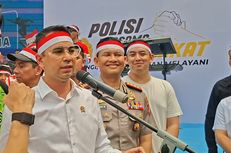
Friends among students who are starting to take action and usually end up clashing with authorities, know that misdirected anger will only burn oneself, or perhaps ignite chaos everywhere.
Celebrating street parliaments is not the same as sitting down to manage governance. We have all proven that even a figure the caliber of Prof. Mahfud MD finds it difficult to maneuver when asked to sit behind President Jokowi.
Reading Indonesia today perhaps resembles sailing more than passing judgment on anyone. We carry data without idolizing it, memories without imprisoning them, critique without losing love.
Then we leave space in the ship's hold for the possibility that we ourselves might still be reading the wind of this maritime nation's journey incorrectly.