How to Read Indonesia Today?
-
News
-
1 minute ago
This article was translated by AI. Read the original article on Kompas.com. See Original

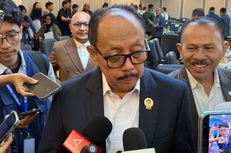
AS NOON approached on Thursday, November 12, 2026, an Innova stopped in the yard of the MPR Building. A thirty-nine-year-old man stepped out and was immediately surrounded by journalists, holding a letter in his hand.
He is the eldest son of the seventh president, the youngest vice president in this republic, in a surprising turn of events. The letter contained just one thing: he resigned from his position at his own request, on the 753rd day in office.
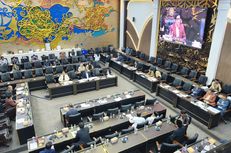
Inside the building, the MPR leadership read the letter and began counting down fourteen days for President Prabowo Subianto to submit the names of two replacements, with December 2 rumored to be the date for his successor’s inauguration.
Shortly thereafter, at the Vice Presidential Palace, cheers from volunteers accompanied his departure, while he himself walked away without a word.
On the same day, in a nearly seven-minute video, he stated that the decision was personal and unrelated to the diploma controversy; he returned the mandate to the people.
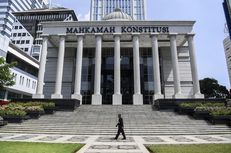
However, the fact is, since the end of October, the Supreme Court had declared his high school diploma equivalency certificate null and void, and 120 members of the House of Representatives from eight factions have proposed a motion that could open the door for impeachment.
Two interpretations sit side by side in the same room, and both may be debated for some time to come.
For Generation Z, who have grown up on social media, such events can easily be read as a drama of this week, lively today, and forgotten by tomorrow.
Yet behind it lies something older and vitally important: the constitution that is at work.
There are court decisions, parliamentary proposals, a letter addressed to the MPR, and deadlines regulated by articles.
That’s why reading Indonesia today is not enough to simply look at who is rising and who is falling; we need to see which door is being used.
Reading always means bringing something into what is read. We intentionally chose the word "bring" because we are a maritime nation, and the archipelago was built on sailing.
A ship can stay afloat as long as its cargo is balanced. Too much optimism makes it list to one side; too much anxiety tilts it to the other. Therefore, the question is, what cargo is appropriate for us to load?
The first cargo: BPS recorded that poverty decreased to 8.07 percent in mid-March 2026, around 22.93 million people, and open unemployment stood at approximately 4.65 percent in May. That is good news and should not be scorned.
However, beneath the same figures, the Gini ratio increased to 0.368. Informal workers, about 87.7 million in February, far outnumber formal workers, which number around 59.9 million.
Foreign exchange reserves shrank to $146.3 billion in September 2025, and businesspeople themselves admit they are still waiting for government policy direction.
Reading the numbers fairly means placing two columns side by side: what is improving, and who is still not benefiting.
Growth that does not translate into real income and decent jobs is just noise from a machine, not the sound of a kitchen.
The second cargo: Gen Z needs to know that running a country according to the constitution is not a fantasy.
Indonesia has come close to achieving this twice. The first time was in the 1950s, when Sukarno and Hatta led the republic with a functioning parliament, the 1955 election, often remembered as one of the freest in our history, and the Constituent Assembly that convened to draft a permanent constitution.
However, multi-party democracy was accused by the leftist socialists of being unsuitable for the character of the nation and a source of instability.
As a result, Hatta resigned from the vice presidency in December 1956, differing in views from Sukarno, and the decree of July 5, 1959 dissolved the Constituent Assembly, paving the way for "guided" democracy.
Hatta then wrote "Democracy kita" to remind of the price that must be paid.
The second time was from 1999 to 2001, under Gus Dur’s administration: the press was liberated, the TNI and Polri were separated, the cultural rights of the Chinese community were restored, and civil supremacy over the military was promoted.
However, he was forced to slip away via the proclamation of July 23, 2001, which many of his enemies deemed exceeded the president's authority, and on the same day, he was recklessly dismissed by the MPR.
These two stories teach the same lesson: what collapsed was not the constitutional idea itself, but the patience to carry it out.
Both were twisted when “people who wanted to save the country” chose a shortcut outside the rules.
History does not repeat itself exactly, but it leaves behind a healthy suspicion. Each time democracy's weaknesses are cited as a reason to reduce democracy, we should ask who stands to gain the most.
The third cargo: The most common read from the Red and White government circle is this: the country is being reclaimed from a few who have enjoyed natural resources for decades without adhering to the rules.
There is factual basis that cannot be ignored. Through Presidential Regulation No. 5 of 2025, President Prabowo established the Forest Area Orderliness Task Force (PKH).
In April 2026, the government announced that the task force had deposited IDR 31.3 trillion to the state since October 2025 and had taken control of assets worth around IDR 370 trillion—which the President stated is equivalent to almost 10 percent of the state budget.
Included are 5.89 million hectares of illegal palm oil plantations and about 10,000 hectares of illegal mining in forest areas. The government also emphasized investigating corruption allegations in the previously untouchable oil and gas sectors.
For their supporters, this is the 33rd article of the 1945 Constitution that has finally ceased to be mere window dressing: the land, water, and natural resources are controlled by the state for the prosperity of the people.
They see it as a bold step rarely tried by previous administrations, and Prabowo himself asserted that threatening the task force equates to threatening him.
However, careful readers should keep three notes. First, the figures primarily come from the government, so it is worth waiting for independent checks from bodies like the BPK, academics, and the press; “controlled assets” do not mean “money in the state treasury.”
Second, the true test lies in what happens after the orderliness: who will manage the land afterward, and whether the management is more transparent than before.
Third, tackling mafias and combating oligarchy is not an easy task. The first part punishes the culprits; the second changes the structures that allow culprits to re-emerge.
The fourth cargo: On the other hand, there’s a similar frustration. The Red and White Cabinet was inaugurated in October 2024, with 48 ministers and 56 deputy ministers.
Following the reshuffle on October 1, 2026, the seventh in two years, the number of ministries actually increased to 49, and the next day, the Presidential Advisory Council was filled with 26 members—none of whom have direct access to the president.
According to Inayah Wulandari, whose mother is a member of the Presidential Advisory Council, Sinta Nuriyah Wahid, “We are only tasked with advising the president, nothing more.”
Expenditure for ministry and agency staff in the 2026 draft state budget amounted to IDR 357 trillion. Transparency International Indonesia noted that at least 30 deputy ministers as of the end of June 2026 also held positions as commissioners in state-owned enterprises. Meanwhile, the Constitutional Court has enforced a ban on this and only granted a two-year transition period.
Economist Celios Bhima Yudhistira believes that doubling up in such positions actually hinders company performance due to issues of competence and time management.
The president openly addressed this criticism on October 21, 2026. A country the size of Indonesia, he said, requires a large coalition so that as many forces as possible can unite.
This argument cannot be dismissed. A broad coalition can indeed effectively dampen elite friction.
However, he has yet to answer the core question of critics: how do we measure that the additional seats benefit the people?
Public frustration arises not merely from the number of seats but also from the absence of an open metric, such as targets, budgets, and results that can be scrutinized by the people.
This frustration is evident on the streets. On October 20 and 28, students, along with labor groups and civil society, descended with five demands: from ecological disasters, economic policies, and freedom of expression to anti-corruption and accessible public services.
The government stated it respects these aspirations. One thing must be noted for fairness: the distribution of patronage is not unique to one administration.
Similar criticisms were leveled at previous administrations, which demonstrates that the issue is structural, not merely about who is in power.
The fifth cargo: A reading of politics today tends to be divided. One reading sees stability: a large coalition, reduced elite conflict, and a seemingly solid government.
The other reading, from researchers like Puskapol UI and BRIN, observes that while democracy is procedurally functioning, it is increasingly controlled by a handful of elites, with international rating agencies noting a decline in quality since 2015.
Survey numbers provide additional material. According to SMRC, as reported by Reuters, presidential approval in October 2026 stood at 44.5 percent, down from 81.2 percent a year earlier, with around 44 percent of respondents rating the political situation as bad or even very bad.
These figures do not prove a crisis, and those close to the government will certainly point to their achievements and programs.
However, they indicate that the sentiment at the grassroots level is more restless than the calm impression at the top, while the electoral law for 2029 has yet to be ratified.
Stability and oversight actually need each other. Stability without checks is silent, and silence is not always healthy.
It is here where the previous two cargoes intersect and challenge each other. Fighting oligarchy requires a strong and brave state.
However, a coalition that embraces nearly all parties, coupled with the task force relying on presidential will, centralizes power in the hands of the executive.
Critics ask whether oligarchy is truly being defeated or merely changing gatekeepers?
Defenders respond that without broad unity, orderliness will not succeed.
Both pose honest questions, and the answers can only be tested through one thing: whether the power enforcing action is willing to be scrutinized by the courts, BPK, the press, and the common people.
The sixth cargo: This nation is not only driven by numbers and articles. It is also propelled by a sense of community, mutual respect, and a willingness to listen that is often quieter than we are.
From history, we learn that a constitution can be obeyed in its text but denied in its spirit.
Periodic elections do not automatically mean the sovereignty of the people; proclamations born from good intentions do not automatically mean legitimate authority.
Indeed, what maintains the distance between text and spirit is etiquette: the humility of the ruler to be limited, and the steadfastness of citizens to continue voicing their concerns without losing their politeness.
The seventh cargo: If etiquette is the spirit, the culture of the archipelago provides the tools. We do not need to borrow all the answers from outside, for this nation has its own vocabulary about healthy power, long before the term "oligarchy" was known.
Hatta, when writing about democracy, referred to elements alive in the villages: meetings, consensus, the people's right to protest together (the tradition of pego in royal courtyards), and the right to retreat from tyrannical rulers. All of these represent oversight, long before there were oversight institutions.
The first tool answers the question of office. Javanese tradition formulates the character of leaders in Hasta Brata, eight natural qualities that must reside within the ruler.
One of them is Kuwera, the guardian of wealth, demanding honesty and frugality from those managing state assets.
A leader who treats office as a share of the spoils has failed even before being tested. Its meaning is emphasized by the adage sepi ing pamrih, rame ing gawe: little profit, much work.
Its tangible form is simple yet stern: open selection for positions based on competence, strict enforcement of bans on doubling up, and asset reports that anyone can scrutinize.
The second tool answers the question of control and it arises from Hatta’s earlier formulation. Pego teaches that the people have the right to voice objections before the ruler, and the right to retreat from the tyrants is the “ancestors” of the tradition of officials resigning when in the wrong.
Today, both demand legitimate and safe channels of protest, as well as the courage of mulat sarira hangrasa wani, self-reflection without waiting to be examined.
Deliberation and village discussions demand similar accountability for policies: major decisions should be meaningfully subjected to public scrutiny, not merely formalities.
The third tool addresses the exploitation of nature. The Balinese have Tri Hita Karana and subak; the Minangkabau view nature as a teacher; both treat nature as a trust, not a commodity.
From those roots grows the recognition of territory and customary laws and community-based resource management.
The fourth tool addresses exemplary crises, and the formula has been provided by Ki Hajar Dewantara: ing ngarsa sung tuladha, ing madya mangun karsa, tut wuri handayani. Ethics of office must be taught from the classroom and demonstrated from the top.
There is a saying from Mangkunegara I that is worth displaying in every cabinet meeting room: rumangsa melu handarbeni, wajib melu hangrungkebi, mulat sarira hangrasa wani. To feel ownership is to protect it, and to be brave is to self-reflect.
A state can only be strong when its people feel ownership of it, and people will only feel ownership if the state managers are willing to be scrutinized.
However, culture can be hijacked, and to call it out truthfully actually strengthens this argument.
“As long as the boss is happy” is certainly not the culture of the archipelago. It is the patronage of the New Order that pleased its head, Suharto, for safety and share, then disguised as decorum.
It steals the clothing of mutual respect to cover selfishness. Genuine reluctance, ewuh pakewuh, can easily be twisted into an aversion to criticizing superiors.
Therefore, what we carry are the values, not the surface, and those values must be protected from hijacking by power, among other things, through modern laws.
Culture without law becomes mere rhetoric; law without culture becomes a cold machine. Perhaps somewhere between the two, in that patient and not easily navigable intersection, our way out awaits.
So, what should we better not carry?
There are some things better left behind at the harbor. Early certainty, namely the belief that we already know the direction of everything.
Hatred, which causes us to read opponents as caricatures. Nostalgia, which sells the past as a remedy that we never truly consumed.
Finally, avoid using a single perspective lens, whether economic, political, moral, or religious, as if that were enough to gaze upon such a vast nation.
Friends among students who are starting to take action and usually end up clashing with authorities, know that misdirected anger will only burn oneself, or perhaps ignite chaos everywhere.
Celebrating street parliaments is not the same as sitting down to manage governance. We have all proven that even a figure the caliber of Prof. Mahfud MD finds it difficult to maneuver when asked to sit behind President Jokowi.
Reading Indonesia today perhaps resembles sailing more than passing judgment on anyone. We carry data without idolizing it, memories without imprisoning them, critique without losing love.
Then we leave space in the ship's hold for the possibility that we ourselves might still be reading the wind of this maritime nation's journey incorrectly.