
How to Read Indonesia Today?
-
News
-
1 minute ago
This article was translated by AI. Read the original article on Kompas.com. See Original
Included are 5.89 million hectares of illegal palm oil plantations and about 10,000 hectares of illegal mining in forest areas. The government also emphasized investigating corruption allegations in the previously untouchable oil and gas sectors.
For their supporters, this is the 33rd article of the 1945 Constitution that has finally ceased to be mere window dressing: the land, water, and natural resources are controlled by the state for the prosperity of the people.
They see it as a bold step rarely tried by previous administrations, and Prabowo himself asserted that threatening the task force equates to threatening him.
However, careful readers should keep three notes. First, the figures primarily come from the government, so it is worth waiting for independent checks from bodies like the BPK, academics, and the press; “controlled assets” do not mean “money in the state treasury.”
Second, the true test lies in what happens after the orderliness: who will manage the land afterward, and whether the management is more transparent than before.
Third, tackling mafias and combating oligarchy is not an easy task. The first part punishes the culprits; the second changes the structures that allow culprits to re-emerge.
The fourth cargo: On the other hand, there’s a similar frustration. The Red and White Cabinet was inaugurated in October 2024, with 48 ministers and 56 deputy ministers.
Following the reshuffle on October 1, 2026, the seventh in two years, the number of ministries actually increased to 49, and the next day, the Presidential Advisory Council was filled with 26 members—none of whom have direct access to the president.
According to Inayah Wulandari, whose mother is a member of the Presidential Advisory Council, Sinta Nuriyah Wahid, “We are only tasked with advising the president, nothing more.”
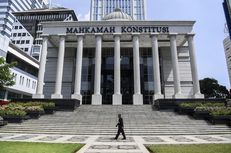
Expenditure for ministry and agency staff in the 2026 draft state budget amounted to IDR 357 trillion. Transparency International Indonesia noted that at least 30 deputy ministers as of the end of June 2026 also held positions as commissioners in state-owned enterprises. Meanwhile, the Constitutional Court has enforced a ban on this and only granted a two-year transition period.
Economist Celios Bhima Yudhistira believes that doubling up in such positions actually hinders company performance due to issues of competence and time management.
The president openly addressed this criticism on October 21, 2026. A country the size of Indonesia, he said, requires a large coalition so that as many forces as possible can unite.
This argument cannot be dismissed. A broad coalition can indeed effectively dampen elite friction.
However, he has yet to answer the core question of critics: how do we measure that the additional seats benefit the people?
Public frustration arises not merely from the number of seats but also from the absence of an open metric, such as targets, budgets, and results that can be scrutinized by the people.
This frustration is evident on the streets. On October 20 and 28, students, along with labor groups and civil society, descended with five demands: from ecological disasters, economic policies, and freedom of expression to anti-corruption and accessible public services.
The government stated it respects these aspirations. One thing must be noted for fairness: the distribution of patronage is not unique to one administration.
Similar criticisms were leveled at previous administrations, which demonstrates that the issue is structural, not merely about who is in power.
The fifth cargo: A reading of politics today tends to be divided. One reading sees stability: a large coalition, reduced elite conflict, and a seemingly solid government.
The other reading, from researchers like Puskapol UI and BRIN, observes that while democracy is procedurally functioning, it is increasingly controlled by a handful of elites, with international rating agencies noting a decline in quality since 2015.
Survey numbers provide additional material. According to SMRC, as reported by Reuters, presidential approval in October 2026 stood at 44.5 percent, down from 81.2 percent a year earlier, with around 44 percent of respondents rating the political situation as bad or even very bad.
These figures do not prove a crisis, and those close to the government will certainly point to their achievements and programs.
However, they indicate that the sentiment at the grassroots level is more restless than the calm impression at the top, while the electoral law for 2029 has yet to be ratified.
Stability and oversight actually need each other. Stability without checks is silent, and silence is not always healthy.
It is here where the previous two cargoes intersect and challenge each other. Fighting oligarchy requires a strong and brave state.
However, a coalition that embraces nearly all parties, coupled with the task force relying on presidential will, centralizes power in the hands of the executive.
Critics ask whether oligarchy is truly being defeated or merely changing gatekeepers?
Defenders respond that without broad unity, orderliness will not succeed.
Both pose honest questions, and the answers can only be tested through one thing: whether the power enforcing action is willing to be scrutinized by the courts, BPK, the press, and the common people.
The sixth cargo: This nation is not only driven by numbers and articles. It is also propelled by a sense of community, mutual respect, and a willingness to listen that is often quieter than we are.
From history, we learn that a constitution can be obeyed in its text but denied in its spirit.