How to Read Indonesia Today?
-
News
-
Just now
This article was translated by AI. Read the original article on Kompas.com. See Original

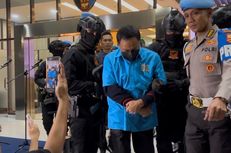
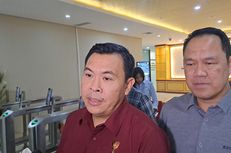
AS NOON approached on Thursday, November 12, 2026, an Innova stopped in the yard of the MPR Building. A thirty-nine-year-old man stepped out and was immediately surrounded by journalists, holding a letter in his hand.
He is the eldest son of the seventh president, the youngest vice president in this republic, in a surprising turn of events. The letter contained just one thing: he resigned from his position at his own request, on the 753rd day in office.
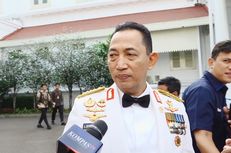
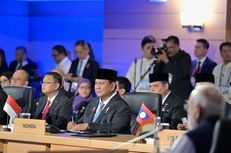
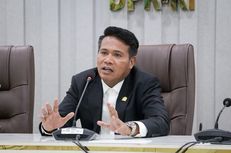
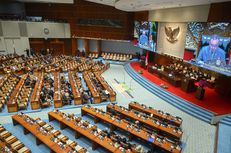
Inside the building, the MPR leadership read the letter and began counting down fourteen days for President Prabowo Subianto to submit the names of two replacements, with December 2 rumored to be the date for his successor’s inauguration.
Shortly thereafter, at the Vice Presidential Palace, cheers from volunteers accompanied his departure, while he himself walked away without a word.
On the same day, in a nearly seven-minute video, he stated that the decision was personal and unrelated to the diploma controversy; he returned the mandate to the people.
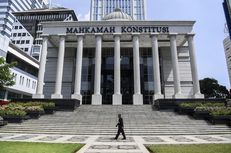
However, the fact is, since the end of October, the Supreme Court had declared his high school diploma equivalency certificate null and void, and 120 members of the House of Representatives from eight factions have proposed a motion that could open the door for impeachment.
Two interpretations sit side by side in the same room, and both may be debated for some time to come.
For Generation Z, who have grown up on social media, such events can easily be read as a drama of this week, lively today, and forgotten by tomorrow.
Yet behind it lies something older and vitally important: the constitution that is at work.
There are court decisions, parliamentary proposals, a letter addressed to the MPR, and deadlines regulated by articles.
That’s why reading Indonesia today is not enough to simply look at who is rising and who is falling; we need to see which door is being used.
Reading always means bringing something into what is read. We intentionally chose the word "bring" because we are a maritime nation, and the archipelago was built on sailing.
A ship can stay afloat as long as its cargo is balanced. Too much optimism makes it list to one side; too much anxiety tilts it to the other. Therefore, the question is, what cargo is appropriate for us to load?
The first cargo: BPS recorded that poverty decreased to 8.07 percent in mid-March 2026, around 22.93 million people, and open unemployment stood at approximately 4.65 percent in May. That is good news and should not be scorned.
However, beneath the same figures, the Gini ratio increased to 0.368. Informal workers, about 87.7 million in February, far outnumber formal workers, which number around 59.9 million.
Foreign exchange reserves shrank to $146.3 billion in September 2025, and businesspeople themselves admit they are still waiting for government policy direction.
Reading the numbers fairly means placing two columns side by side: what is improving, and who is still not benefiting.
Growth that does not translate into real income and decent jobs is just noise from a machine, not the sound of a kitchen.
The second cargo: Gen Z needs to know that running a country according to the constitution is not a fantasy.
Indonesia has come close to achieving this twice. The first time was in the 1950s, when Sukarno and Hatta led the republic with a functioning parliament, the 1955 election, often remembered as one of the freest in our history, and the Constituent Assembly that convened to draft a permanent constitution.
However, multi-party democracy was accused by the leftist socialists of being unsuitable for the character of the nation and a source of instability.
As a result, Hatta resigned from the vice presidency in December 1956, differing in views from Sukarno, and the decree of July 5, 1959 dissolved the Constituent Assembly, paving the way for "guided" democracy.
Hatta then wrote "Democracy kita" to remind of the price that must be paid.
The second time was from 1999 to 2001, under Gus Dur’s administration: the press was liberated, the TNI and Polri were separated, the cultural rights of the Chinese community were restored, and civil supremacy over the military was promoted.
However, he was forced to slip away via the proclamation of July 23, 2001, which many of his enemies deemed exceeded the president's authority, and on the same day, he was recklessly dismissed by the MPR.
These two stories teach the same lesson: what collapsed was not the constitutional idea itself, but the patience to carry it out.
Both were twisted when “people who wanted to save the country” chose a shortcut outside the rules.
History does not repeat itself exactly, but it leaves behind a healthy suspicion. Each time democracy's weaknesses are cited as a reason to reduce democracy, we should ask who stands to gain the most.
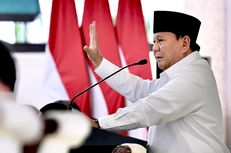
The third cargo: The most common read from the Red and White government circle is this: the country is being reclaimed from a few who have enjoyed natural resources for decades without adhering to the rules.
There is factual basis that cannot be ignored. Through Presidential Regulation No. 5 of 2025, President Prabowo established the Forest Area Orderliness Task Force (PKH).
In April 2026, the government announced that the task force had deposited IDR 31.3 trillion to the state since October 2025 and had taken control of assets worth around IDR 370 trillion—which the President stated is equivalent to almost 10 percent of the state budget.