

Tax, Rank, and Meritocracy Exam
-
News
-
6 minutes ago
This article was translated by AI. Read the original article on Kompas.com. See Original
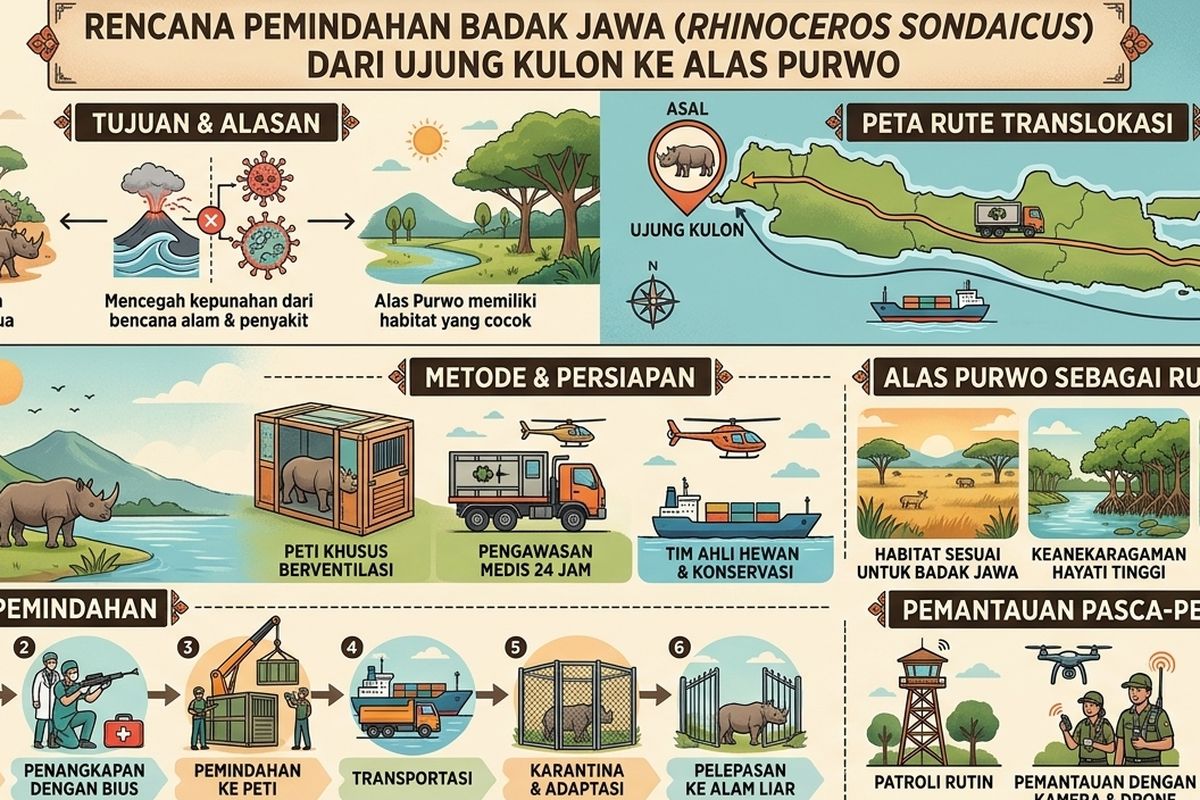
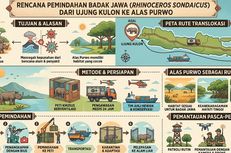
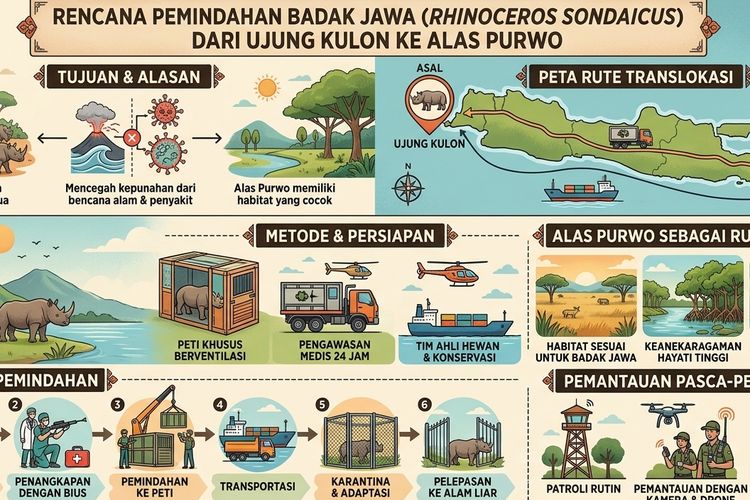
The first step is to create a habitat distribution model to identify potential areas where rhinos once existed.
"Previously, there have been studies in several regions of West Java and Banten, where several options existed but were never executed. I believe the approach will be similar, using modeling first. The entire region of Java will be analyzed via a computer desk study to find the most promising areas," Ali explained.
The second step involves validating the areas that have been mapped.
Through validation, the government, academics, and stakeholders will assess whether the selected land is truly suitable for Javan rhinos, or not.
"We need to consider whether the food is adequate, whether there is enough water, whether it is safe, and whether there are any diseases present. These are the factors to determine suitability," Ali clarified.
Similarly, Umi Marufah, a campaigner for the National Environmental Agency (WALHI), emphasized that comprehensive scientific studies and risk analyses must ensure that the targeted habitat possesses suitable ecological characteristics.
Furthermore, the availability of sufficient food and living space, as well as consideration of the animals’ health, behavior, and adaptation capabilities, are crucial.
"Additionally, long-term monitoring post-relocation is essential to ensure the animals can survive and reproduce," Umi elaborated.
Ali elaborated that establishing a second population should be regarded as a long-term strategy, considering that the conservation process takes many years.
This strategy should be outlined in a conservation action plan, which contains a list of action needs along with their priorities.
"Don’t expect this to be completed in a year or two. It's a much longer process; I estimate that if this is to be carried out, it will undoubtedly take about 15 years, and not in a short timeframe," Ali revealed.
In line with this, the government must enhance its scientific knowledge to avoid missteps. This knowledge encompasses understanding reproduction, disease threats, the most suitable food, and ideal habitat.
Additionally, the characteristics of the local community must be understood. Without community acceptance, these conservation efforts could spark controversy.
"The acceptance of the area also needs to be assessed before taking action. It must fit into the action plan documentation, ensuring that the needs of various parties are met, not just one party, but multiple stakeholders, collaboratively determining, 'This will be our priority moving forward,'" he stated.
Meanwhile, Umi views relocating part of the population as a last resort, under specific conditions.
She believes that moving animals should only be considered when their safety and survival are seriously threatened, such as when their habitat is severely damaged.
This includes instances of disasters rendering the habitat uninhabitable or facing serious threats that cannot be mitigated through protective measures in the original habitat.
Relocation should not be justified without genuinely pressing conditions.
"Relocation must be the last option, not the first solution. Therefore, strengthening habitat protection, monitoring systems, and disaster mitigation should take precedence over simply moving the animals," said Umi.
Similarly, Ali emphasized that the initial population living in the natural habitat should be prioritized for improvement before considering relocation.
Improving this population should be accompanied by habitat restoration and protection.