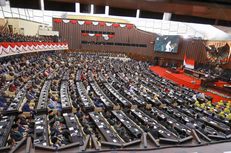

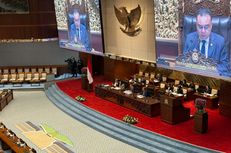
Sufmi Dasco Leads Plenary Meeting, 206 out of 573 DPR Members Present
-
News
-
2 minutes ago
This article was translated by AI. Read the original article on Kompas.com. See Original

There are far more significant reasons why science and religion must be integrated: to prevent the dark history of conflict between science and religion from recurring in modern civilization.
We must not allow the differing paths in the search for truth to transform into hostility, let alone produce victims.
The history of Galileo Galilei should serve as a lesson we cannot afford to forget.
When religious authorities feel they hold a monopoly over all truths, while scientific discoveries are viewed as threats to established beliefs, what emerges is not dialogue but judgment.
Conversely, when science views all religious dimensions as irrational and unworthy of respect, it also runs the risk of fostering epistemological arrogance.
We certainly do not want to see new Galileos emerging in modern history.
We do not want scientists to face judgment simply because their discoveries challenge dominant religious understandings.
We also do not wish for religion to lose its authority by being positioned as an enemy of scientific progress.
We must find ways for both to grow, dialogue, correct each other, and enrich one another.
The tragedy of Galileo Galilei teaches us one important thing: humans often create conflicts not because truths contradict each other, but rather because they are too confident that they possess all truths.
In reality, both scientists and religious figures are human beings with limitations.
Thus, the integration of science and religion must be built on epistemological humility.
Science must realize that not all realities can be reduced to objects of empirical measurement.
Likewise, religion must recognize that not all human understandings of divine revelation are identical to God’s intentions.
Science requires space to develop findings, while religion needs interpretative instruments to understand the messages of revelation contextually.
Let us not repeat the tragedy of Galileo merely because we fail to distinguish between God’s truth and humanity’s limited understanding of God.
Nor should science repeat the same mistake by asserting that anything it has yet to explain lacks truth.
Integrating science and religion is not merely an academic agenda for thinkers, but a humanitarian and civilizational agenda.
We wish to produce a generation capable of scientific thinking without losing a sense of the divine, while also having religious conviction without sacrificing intellectual courage.
A great civilization is not one that forces everyone to think with a single instrument of knowledge, but rather one that allows various paths to truth to meet without destructive conflict.