
Sufmi Dasco Leads Plenary Meeting, 206 out of 573 DPR Members Present
-
News
-
2 minutes ago
This article was translated by AI. Read the original article on Kompas.com. See Original

ONE of the major mistakes in human civilization is placing science and religion in opposition to each other.
It seems that both are seen as rival forces that must negate one another.
Science believes itself to be the owner of truth because it relies on empirical proof, while religion perceives itself as holding the ultimate truth derived from divine revelation.
Science and religion then build epistemological walls, often viewing each other with suspicion.
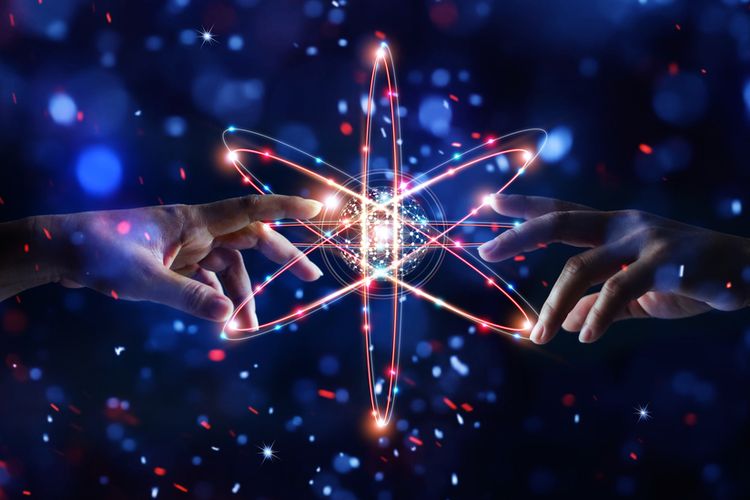
However, when traced back to their philosophical roots, science and religion do not have to be enemies in conflict.
Science arises through observation, experimentation, measurement, reasoning, and testing against the reality of the universe created by God.
Religion presents itself through divine revelation (the word of God). Both have different epistemological paths, yet originate from the same source.
From a theological perspective, the universe studied by science is God's creation, just as the revelation that underpins religious teachings also comes from God's words.
Thus, nature and revelation are truly two fields sharing a single source.
However, humanity often exhibits arrogance beyond its own knowledge.
Some in the scientific community fall into scientism, the belief that only what can be empirically proven is worthy of being called true.
Anything that cannot be measured, weighed, or tested in the laboratory is considered devoid of truth.
This represents epistemological arrogance. The inability of science to explain something does not automatically prove that the thing does not exist.
Science has methodological limits. It is powerful in explaining how things happen, but it does not always answer why things must exist.
For instance, the force of gravity in this universe can be explained empirically by scientists.
However, they cannot explain why gravity must exist.
Similarly, while biologists can empirically explain the banana tree, the reason why there must be banana trees in this world remains a mystery.
On the other hand, religion must also avoid falling into theological arrogance.
Having revelation does not mean that every believer automatically comprehends all of God’s intentions.
Revelation has a clear dimension, but it also contains verses that require deep interpretation.
Some texts are explicit, while others are symbolic, metaphorical, contextual, and open to differing interpretations.
Therefore, humans need tools from linguistics, history, philosophy, social sciences, and empirical knowledge to grasp the messages of religion.
Not everything claimed as divine will is genuinely God's will.
It might simply arise from human limitations in interpreting His intentions.
This is where religion requires epistemological humility.
Humans should not equate their interpretations with God, then use differing interpretations as a reason to reject knowledge.
Science needs religion to ensure that the progress of knowledge does not lose its moral direction, while religion needs science to prevent understanding of reality from being trapped in ignorance perpetuated in the name of faith.
Science can explain how artificial intelligence technology works, but religion helps humanity question whether everything that can be technically done is morally permissible.
Science may develop genetic engineering capabilities, but questions about human dignity require a broader theo-philosophical reflection.
Conversely, religion is insufficient if it only conveys teachings about protecting nature without understanding ecology, climate change, and environmental degradation.
The theological call requires scientific knowledge to be translated into effective action.
Prayer does not replace disaster mitigation, just as disaster mitigation does not eliminate the human need for prayer, hope, and spiritual strength.
Both exist in different realms of contribution yet can work toward a common humanitarian goal.
Integrating science and religion is not a project to force scientific theories to justify every religious text, nor to compel religion to submit to every advance in scientific theory.
Integration is an effort to build a critical and productive dialogue between two knowledge traditions.
Science must be open to theo-philosophical questions, while religion must be receptive to empirical findings.
Integrating religion and science does not imply erasing their methodological boundaries. Their meeting can enrich each other without one dominating the other.
If God is the source of all truths (religion and science), why should humanity fear when truth is found through different paths?
Will truth become less divine simply because it is discovered through telescopes, microscopes, mathematics, or laboratory experiments?
Conversely, will knowledge lose its rationality just because humans acknowledge the existence of a transcendental dimension that surpasses their sensory capabilities?
There are far more significant reasons why science and religion must be integrated: to prevent the dark history of conflict between science and religion from recurring in modern civilization.
We must not allow the differing paths in the search for truth to transform into hostility, let alone produce victims.
The history of Galileo Galilei should serve as a lesson we cannot afford to forget.
When religious authorities feel they hold a monopoly over all truths, while scientific discoveries are viewed as threats to established beliefs, what emerges is not dialogue but judgment.
Conversely, when science views all religious dimensions as irrational and unworthy of respect, it also runs the risk of fostering epistemological arrogance.
We certainly do not want to see new Galileos emerging in modern history.
We do not want scientists to face judgment simply because their discoveries challenge dominant religious understandings.
We also do not wish for religion to lose its authority by being positioned as an enemy of scientific progress.
We must find ways for both to grow, dialogue, correct each other, and enrich one another.
The tragedy of Galileo Galilei teaches us one important thing: humans often create conflicts not because truths contradict each other, but rather because they are too confident that they possess all truths.
In reality, both scientists and religious figures are human beings with limitations.
Thus, the integration of science and religion must be built on epistemological humility.
Science must realize that not all realities can be reduced to objects of empirical measurement.
Likewise, religion must recognize that not all human understandings of divine revelation are identical to God’s intentions.
Science requires space to develop findings, while religion needs interpretative instruments to understand the messages of revelation contextually.
Let us not repeat the tragedy of Galileo merely because we fail to distinguish between God’s truth and humanity’s limited understanding of God.
Nor should science repeat the same mistake by asserting that anything it has yet to explain lacks truth.
Integrating science and religion is not merely an academic agenda for thinkers, but a humanitarian and civilizational agenda.
We wish to produce a generation capable of scientific thinking without losing a sense of the divine, while also having religious conviction without sacrificing intellectual courage.
A great civilization is not one that forces everyone to think with a single instrument of knowledge, but rather one that allows various paths to truth to meet without destructive conflict.