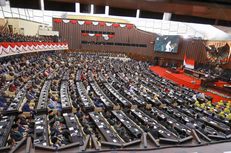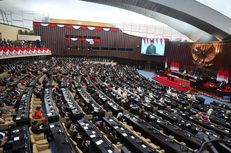

Sufmi Dasco Leads Plenary Meeting, 206 out of 573 DPR Members Present
-
News
-
2 minutes ago
This article was translated by AI. Read the original article on Kompas.com. See Original
Some texts are explicit, while others are symbolic, metaphorical, contextual, and open to differing interpretations.
Therefore, humans need tools from linguistics, history, philosophy, social sciences, and empirical knowledge to grasp the messages of religion.
Not everything claimed as divine will is genuinely God's will.
It might simply arise from human limitations in interpreting His intentions.
This is where religion requires epistemological humility.
Humans should not equate their interpretations with God, then use differing interpretations as a reason to reject knowledge.
Science needs religion to ensure that the progress of knowledge does not lose its moral direction, while religion needs science to prevent understanding of reality from being trapped in ignorance perpetuated in the name of faith.
Science can explain how artificial intelligence technology works, but religion helps humanity question whether everything that can be technically done is morally permissible.
Science may develop genetic engineering capabilities, but questions about human dignity require a broader theo-philosophical reflection.
Conversely, religion is insufficient if it only conveys teachings about protecting nature without understanding ecology, climate change, and environmental degradation.
The theological call requires scientific knowledge to be translated into effective action.
Prayer does not replace disaster mitigation, just as disaster mitigation does not eliminate the human need for prayer, hope, and spiritual strength.
Both exist in different realms of contribution yet can work toward a common humanitarian goal.
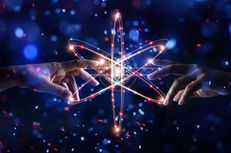
Integrating science and religion is not a project to force scientific theories to justify every religious text, nor to compel religion to submit to every advance in scientific theory.
Integration is an effort to build a critical and productive dialogue between two knowledge traditions.
Science must be open to theo-philosophical questions, while religion must be receptive to empirical findings.
Integrating religion and science does not imply erasing their methodological boundaries. Their meeting can enrich each other without one dominating the other.
If God is the source of all truths (religion and science), why should humanity fear when truth is found through different paths?
Will truth become less divine simply because it is discovered through telescopes, microscopes, mathematics, or laboratory experiments?
Conversely, will knowledge lose its rationality just because humans acknowledge the existence of a transcendental dimension that surpasses their sensory capabilities?