Habiburokhman: "Subversive Group 'LSP' Threatens, Wiretapping Bill Accelerated!"
-
News
-
Just now
This article was translated by AI. Read the original article on Kompas.com. See Original
Operators must know the arrival rate, service rate, and available space for queuing.
Trains and planes operate on schedules that allow operators to manage when transport utilizes tracks or runways.
Car and motorcycle drivers decide their departure times themselves.
The government can still influence these decisions through travel demand management.
This can be achieved by offering reasonable choices of timing, mode, and access for travelers. Some families may depart earlier.
Others are bound by work hours, worship schedules, or ferry departure times.
Effective policies leverage the flexibility of the first group while maintaining access for the second.
First, before the integrated posts planned to operate from December 18, 2026, to January 6, 2027, the Ministry of Transportation, police, local governments, and operators need to agree on actions for each vulnerable point.
Use flow data every 15 minutes, travel time, queue length, and service capacity to determine when officers should act.
At each point, it must be clear who has the authority to hold entry flows, adjust traffic lights, or open additional access.
Test scenarios before the holiday, including situations where accidents or bad weather reduce capacity.
Operational rules must also specify when actions should cease.
If the flow is held at the toll entrance, personnel must monitor waiting queues on feeder roads.
Diverting to alternative routes requires assessing the capacity of intersections and the condition of residential areas traversed.
If the available capacity is nearly exhausted, both operators must quickly adjust their arrangements. Such decisions need to be rehearsed together before the holiday season, as local government responsibilities and operator obligations often converge precisely at the entrance or exit of infrastructure.
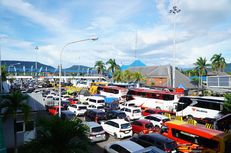
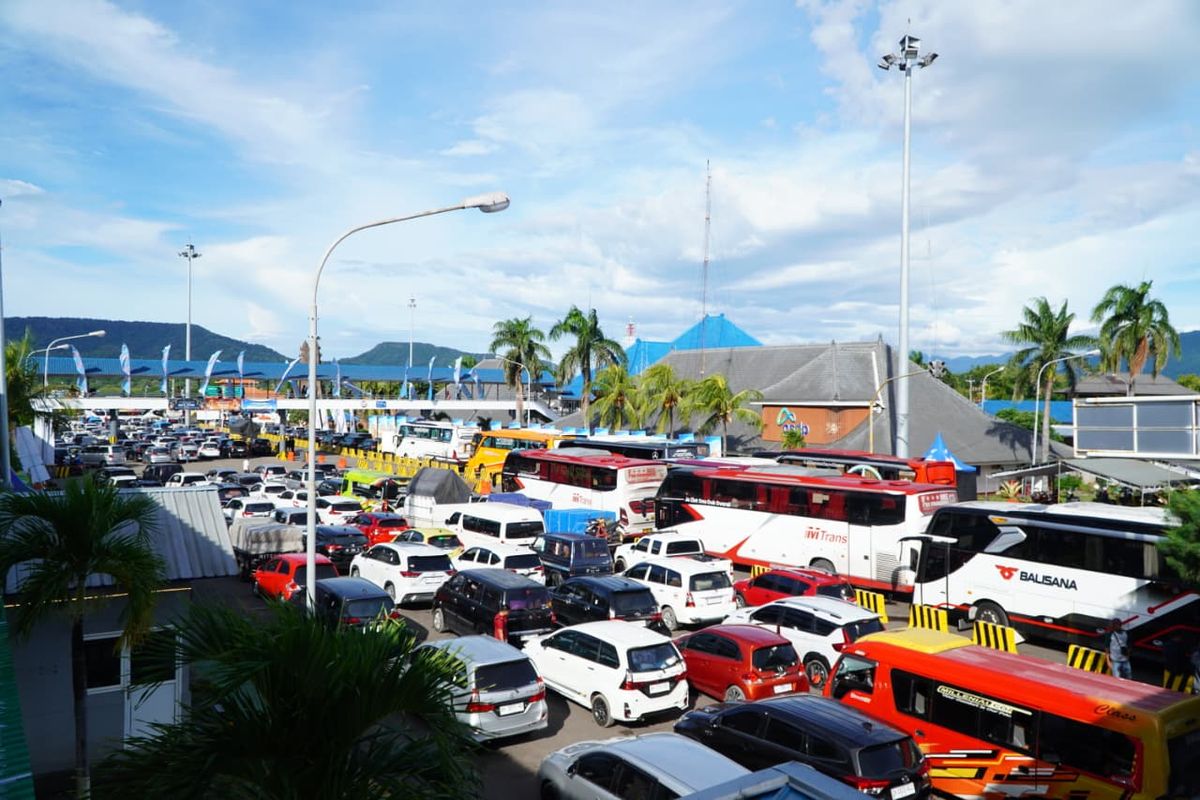
In Merak–Bakauheni, for instance, ferry ticket reservations can be used to stagger vehicle arrivals.
Quotas for each time segment must align with the capacity of docks and fleets to service vehicles.
When ferry operations are disrupted, operators must promptly update information and direct approaching vehicles to waiting areas before queues spill into the toll road or arterial routes.
Drivers who haven't yet departed need assurance about alternative schedules.
Without that certainty, they have reasons to arrive early and wait around the port.
The approach differs in urban areas. Leading up to Christmas worship or New Year's Eve celebrations, the transport service can separate access for vehicles only dropping off passengers from those intending to park.
In tourist areas, notifications that parking is nearly full should be communicated before drivers reach the final stretch.
If parking lots exist outside the area, a shuttle bus service must run frequently enough to encourage its use.
Local governments must also maintain access for local residents, public transport, and emergency vehicles when visitor flows peak.