Habiburokhman: "Subversive Group 'LSP' Threatens, Wiretapping Bill Accelerated!"
-
News
-
Just now
This article was translated by AI. Read the original article on Kompas.com. See Original
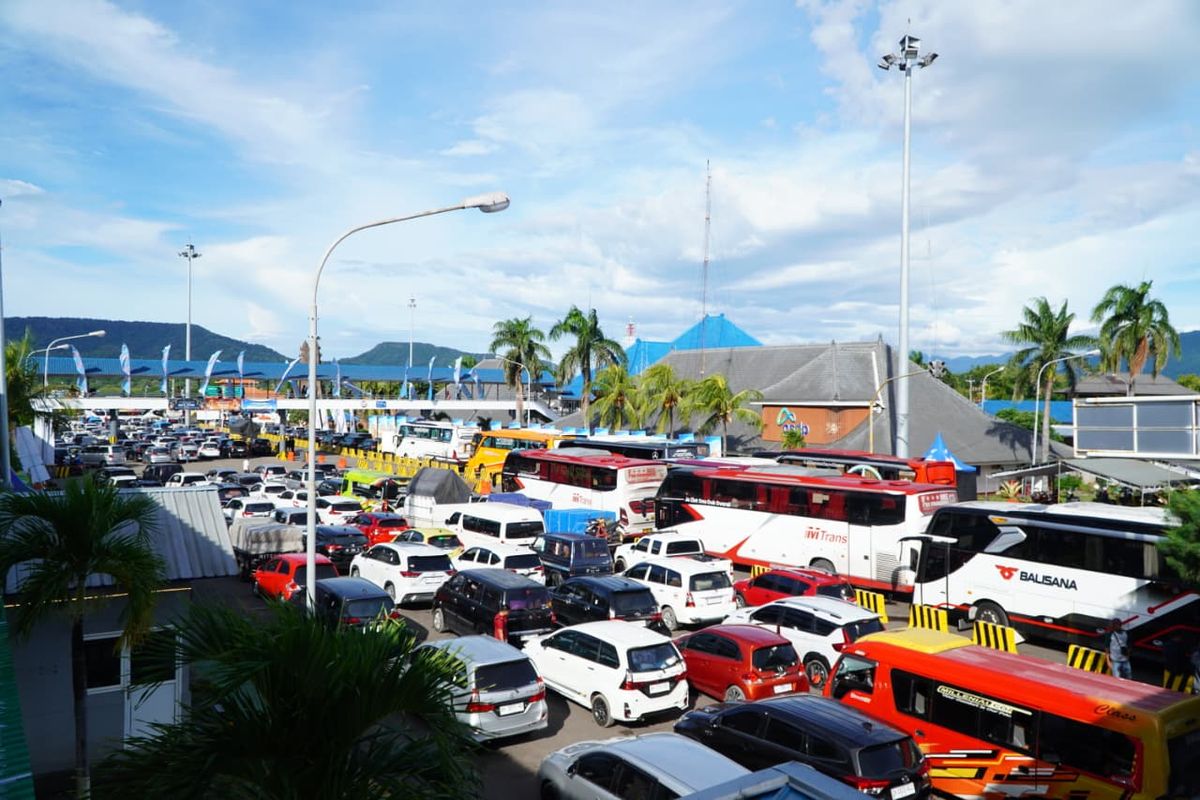
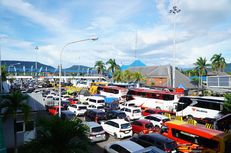
ONE family might drive smoothly for hours on the toll road, only to spend the last hour reaching the port entrance.
At the same time, residents living near the port may find themselves stuck on their way home.
They are experiencing very different journeys. Yet, that morning, both depend on the same stretch of road.
This is often where the problems of Christmas and New Year transportation begin.
We know how many people are expected to travel, but we often underestimate how many vehicles will arrive at a single location simultaneously.
The Ministry of Transportation predicts around 127 million people will travel during Christmas 2026 and New Year 2027.
In the previous period, around 110.43 million people were registered traveling from December 18, 2025, to January 4, 2026, based on mobile device position data.
This represents a difference of about 15 percent, noting that the first number is an estimate and the second is a realized figure.
For road and port operators, both numbers illustrate the scale of the work ahead.
The risk of local queues still needs to be calculated based on vehicle flow by location, direction, and time.
In transportation planning, internal movement occurs within a designated area, while external movement crosses the boundaries of that area.
Traveling from home to church, shopping centers, or tourist attractions within a city can intersect with intercity travel on the same arterial roads.
A junction in Bandung, for instance, can serve local residents while also receiving vehicles from the toll exit.
Untangling congestion on the toll road by speeding up the exit flow can increase queues at that junction.
Therefore, toll roads, city streets, parking access, and ports need to be managed as a single network.
Transportation economist William Vickrey explains this issue using the capacity bottleneck model.
When vehicles arrive faster than a given point can accommodate, the excess results in a queue.
If 1,000 vehicles arrive at an entrance that can only process 800 in one hour, 200 vehicles will remain at the end of that hour.
If the arrival rate in the following hour drops to 700 and capacity stays at 800, there will still be a backlog of 100 vehicles.
Thus, congestion can persist even after peak arrivals have passed.
In the field, queues also occupy space. If the queue stretches to the previous junction, vehicles intending to turn in another direction get stuck as well.
Service capacity can change within minutes due to vehicle breakdowns, rain, or operational disruptions.
Two lanes with identical daily volumes can experience significantly different situations.
Traffic spread throughout the day may be manageable, whereas a surge in two hours can immobilize local access.