Habiburokhman: "Subversive Group 'LSP' Threatens, Wiretapping Bill Accelerated!"
-
News
-
Just now
This article was translated by AI. Read the original article on Kompas.com. See Original
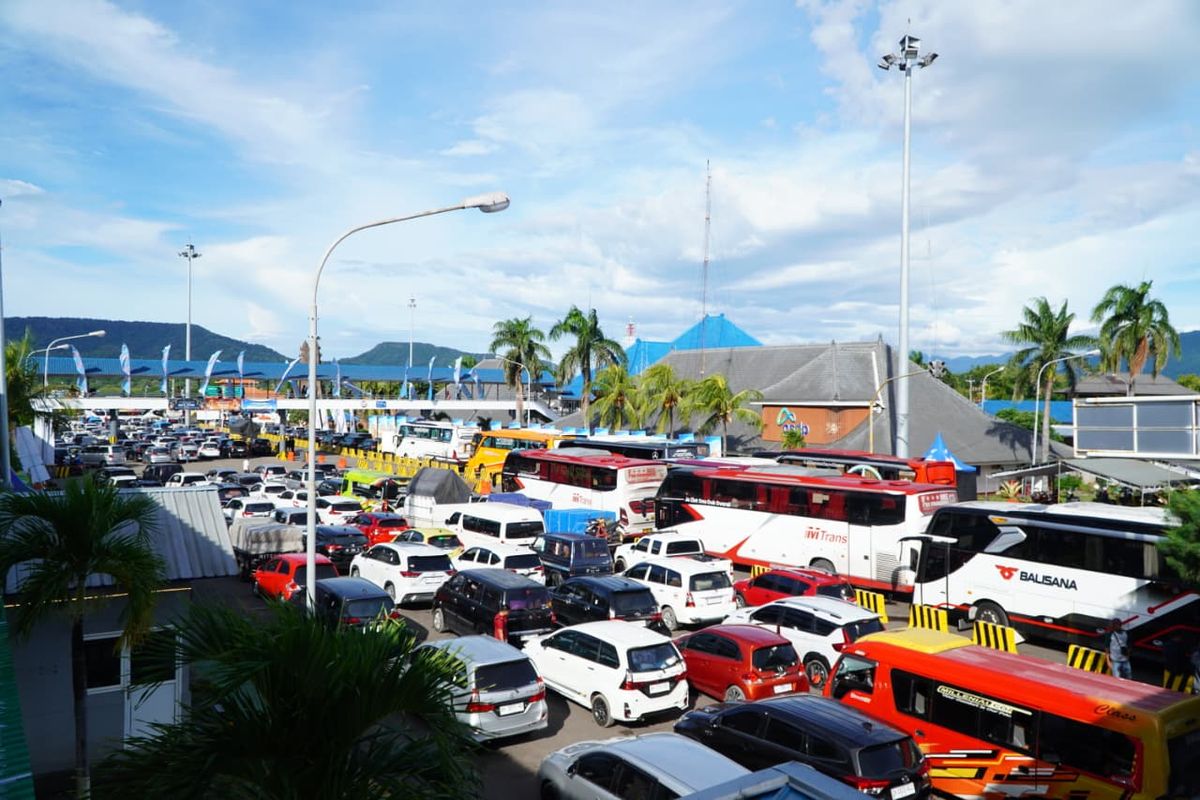
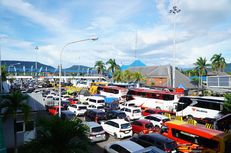
ONE family might drive smoothly for hours on the toll road, only to spend the last hour reaching the port entrance.
At the same time, residents living near the port may find themselves stuck on their way home.
They are experiencing very different journeys. Yet, that morning, both depend on the same stretch of road.
This is often where the problems of Christmas and New Year transportation begin.
We know how many people are expected to travel, but we often underestimate how many vehicles will arrive at a single location simultaneously.
The Ministry of Transportation predicts around 127 million people will travel during Christmas 2026 and New Year 2027.
In the previous period, around 110.43 million people were registered traveling from December 18, 2025, to January 4, 2026, based on mobile device position data.
This represents a difference of about 15 percent, noting that the first number is an estimate and the second is a realized figure.
For road and port operators, both numbers illustrate the scale of the work ahead.
The risk of local queues still needs to be calculated based on vehicle flow by location, direction, and time.
In transportation planning, internal movement occurs within a designated area, while external movement crosses the boundaries of that area.
Traveling from home to church, shopping centers, or tourist attractions within a city can intersect with intercity travel on the same arterial roads.
A junction in Bandung, for instance, can serve local residents while also receiving vehicles from the toll exit.
Untangling congestion on the toll road by speeding up the exit flow can increase queues at that junction.
Therefore, toll roads, city streets, parking access, and ports need to be managed as a single network.
Transportation economist William Vickrey explains this issue using the capacity bottleneck model.
When vehicles arrive faster than a given point can accommodate, the excess results in a queue.
If 1,000 vehicles arrive at an entrance that can only process 800 in one hour, 200 vehicles will remain at the end of that hour.
If the arrival rate in the following hour drops to 700 and capacity stays at 800, there will still be a backlog of 100 vehicles.
Thus, congestion can persist even after peak arrivals have passed.
In the field, queues also occupy space. If the queue stretches to the previous junction, vehicles intending to turn in another direction get stuck as well.
Service capacity can change within minutes due to vehicle breakdowns, rain, or operational disruptions.
Two lanes with identical daily volumes can experience significantly different situations.
Traffic spread throughout the day may be manageable, whereas a surge in two hours can immobilize local access.
Operators must know the arrival rate, service rate, and available space for queuing.
Trains and planes operate on schedules that allow operators to manage when transport utilizes tracks or runways.
Car and motorcycle drivers decide their departure times themselves.
The government can still influence these decisions through travel demand management.
This can be achieved by offering reasonable choices of timing, mode, and access for travelers. Some families may depart earlier.
Others are bound by work hours, worship schedules, or ferry departure times.
Effective policies leverage the flexibility of the first group while maintaining access for the second.
First, before the integrated posts planned to operate from December 18, 2026, to January 6, 2027, the Ministry of Transportation, police, local governments, and operators need to agree on actions for each vulnerable point.
Use flow data every 15 minutes, travel time, queue length, and service capacity to determine when officers should act.
At each point, it must be clear who has the authority to hold entry flows, adjust traffic lights, or open additional access.
Test scenarios before the holiday, including situations where accidents or bad weather reduce capacity.
Operational rules must also specify when actions should cease.
If the flow is held at the toll entrance, personnel must monitor waiting queues on feeder roads.
Diverting to alternative routes requires assessing the capacity of intersections and the condition of residential areas traversed.
If the available capacity is nearly exhausted, both operators must quickly adjust their arrangements. Such decisions need to be rehearsed together before the holiday season, as local government responsibilities and operator obligations often converge precisely at the entrance or exit of infrastructure.
In Merak–Bakauheni, for instance, ferry ticket reservations can be used to stagger vehicle arrivals.
Quotas for each time segment must align with the capacity of docks and fleets to service vehicles.
When ferry operations are disrupted, operators must promptly update information and direct approaching vehicles to waiting areas before queues spill into the toll road or arterial routes.
Drivers who haven't yet departed need assurance about alternative schedules.
Without that certainty, they have reasons to arrive early and wait around the port.
The approach differs in urban areas. Leading up to Christmas worship or New Year's Eve celebrations, the transport service can separate access for vehicles only dropping off passengers from those intending to park.
In tourist areas, notifications that parking is nearly full should be communicated before drivers reach the final stretch.
If parking lots exist outside the area, a shuttle bus service must run frequently enough to encourage its use.
Local governments must also maintain access for local residents, public transport, and emergency vehicles when visitor flows peak.
Secondly, provide the public with concrete options to change plans.
Appeals to avoid peak hours should specify corridors, directions, and time ranges to consider, along with updates as conditions change.
Suggestions to work remotely can help some employees advance or postpone their travel.
Identical schedules for all travelers risk shifting peaks to other times.
Travel time announcements should be available through navigation apps, road information boards, and operator channels.
Families using motorcycles also need information about accessible routes and rest stop locations.
Thirdly, use fare incentives to facilitate mode shifts. The government has allocated IDR 883.4 billion for four services: planes, trains, Pelni ferries, and ASDP crossings.
Train discounts will be more beneficial in relieving road burdens if passengers can also easily reach departure stations and continue their journey from destination stations.
Meanwhile, vehicle crossing discounts may increase arrivals at the port during already busy hours.
Quota management and schedule distribution become essential so that cheaper rates align with service capacity.
The evaluation of the 2025/2026 Nataru period provides a foundation for improving future operations.
The Directorate General of Land Transportation noted that travel time on the Semarang–Jakarta toll road improved from 5 hours and 38 minutes to 5 hours and 4 minutes compared to the previous period.
In the same evaluation, Korlantas reported a 7.2 percent decrease in traffic accidents.
Both indicators need to be maintained. Future evaluations must also address questions that are closer to residents’ experiences.
How long do ferry queues last on the busiest day? How often do travel times spike in the same corridor? How long does local road congestion last every time traffic is diverted?
Success metrics should include the number of people who can pass, wait times, and safety along the corridor.
One bus carries more people than one car, but that benefit is lost for potential passengers if the bus gets stuck at terminal access or they wait too long to switch modes.
Similarly, smooth travel on the toll road only provides part of the picture when queues shift to county roads.
The integrated post can publish daily summaries for several priority corridors so that local governments and operators can see the impact of their decisions on overall travel.
The time available before the year-end holiday is sufficient to compile hourly forecasts, agree on action thresholds, adjust quotas, and announce travel options while families finalize their plans.
The benefits will be felt when decisions in one location consider the consequences for others.
Personnel managing toll exits need to be aware of local road conditions. Operators selling ferry tickets must know the available space at the port.
Residents need to know when they can leave with clearer travel times.
This is where the quality of year-end transportation management is tested. Those wishing to worship, vacation, return home, or simply come back from work must all be able to estimate when they will arrive.