

Challengers of UU LLAJ to the Constitutional Court: Budget Constraints Cannot Justify Neglecting Damaged Roads
-
News
-
21 minutes ago
This article was translated by AI. Read the original article on Kompas.com. See Original
Third, normative commitment indicates an individual staying because they feel a moral obligation.
When all three dimensions weaken, the organization risks experiencing an exodus of strategic cadres.
They no longer see the organization as a promising space for actualization or believe that their professional interests and personal aspirations are more important than maintaining membership.
In the context of PSI, the resignations of these three senior officials raise questions regarding the organization’s attractiveness, the distribution of authority, and the sustainability of leadership regeneration.
There is an interesting irony here: a party that should serve as an instrument for strengthening political influence is facing challenges in retaining the individuals who have once been an important part of its organizational machinery.
Like a ship being prepared to sail towards 2029, some crew members who understand the navigational chart choose to disembark before the ship leaves the dock.
The ship may not necessarily sink, but its captain must explain why essential crew members chose their own lifeboats.
Ultimately, the greatest lesson from Majapahit is not that every kingdom must fall after its king passes away.
A more crucial lesson is that power requires institutions capable of outlasting the political lifespan of a leader.
Hayam Wuruk left behind a kingdom that once reached its zenith, but the issues of succession and elite struggles revealed how fragile power can be when political cohesion is no longer maintained.
Jokowi is certainly not Hayam Wuruk, Kaesang is not a Majapahit ruler, and PSI is not a kingdom that owns territorial power.
However, this historical analogy serves as a reminder that building power requires abilities different from those needed to maintain it.
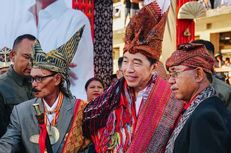
Jokowi once had a vast political stage.
However, that stage will not always belong to him.
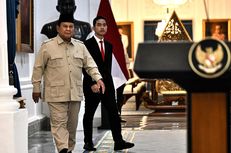
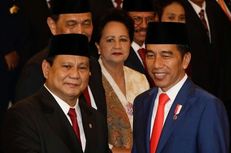
Prabowo now holds control of the government, coalition configurations continue to shift, and PSI faces the test of retaining its strategic cadres.
The resignations of Giring, Raja Juli, and Isyana may not signify the political demise of the Jokowi family.
However, this event might serve as an alarm that loyalty cannot be inherited merely through blood relations, a prominent name, or nostalgia for past glories.
There is a political saying that perhaps deserves reflection: when the sun of power begins to set in the West, those who once scrambled for shade beneath it start seeking different trees.
And here lies the relevance of the metaphor Sirna Ilang Kertaning Bhumi.
It does not mean that Jokowi and his family have lost all political power, but rather that past glory does not automatically guarantee future authority.
In politics, the most dangerous thing is not losing the throne but losing the people who once lifted that throne.
Perhaps this is the beginning of Jokowi’s Sandyakalaning: a political twilight that may not inevitably turn into night, but is sufficient to remind us that the sun never promised to shine continuously over the same yard.