

Challengers of UU LLAJ to the Constitutional Court: Budget Constraints Cannot Justify Neglecting Damaged Roads
-
News
-
21 minutes ago
This article was translated by AI. Read the original article on Kompas.com. See Original
THERE IS an intriguing lesson from the history of fallen great kingdoms: power rarely truly collapses when its leaders lose their positions.
Instead, power begins to lose its vitality when the individuals who have supported its throne start to distance themselves.
Although the palace may still stand and symbols of grandeur remain on display, the web of loyalty that lends it authority gradually frays.
In the annals of Javanese history, the phrase “Sirna Ilang Kertaning Bhumi” is often associated with the downfall of Majapahit.
This phrase carries a symbolic meaning of the loss of prosperity, dignity, and the power structures of a kingdom.
It is not just a tale of a king who loses his throne, but rather a narrative about a political system that fails to maintain the loyalty of its uphold supporters.
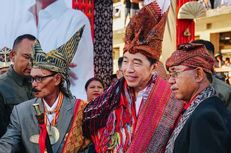
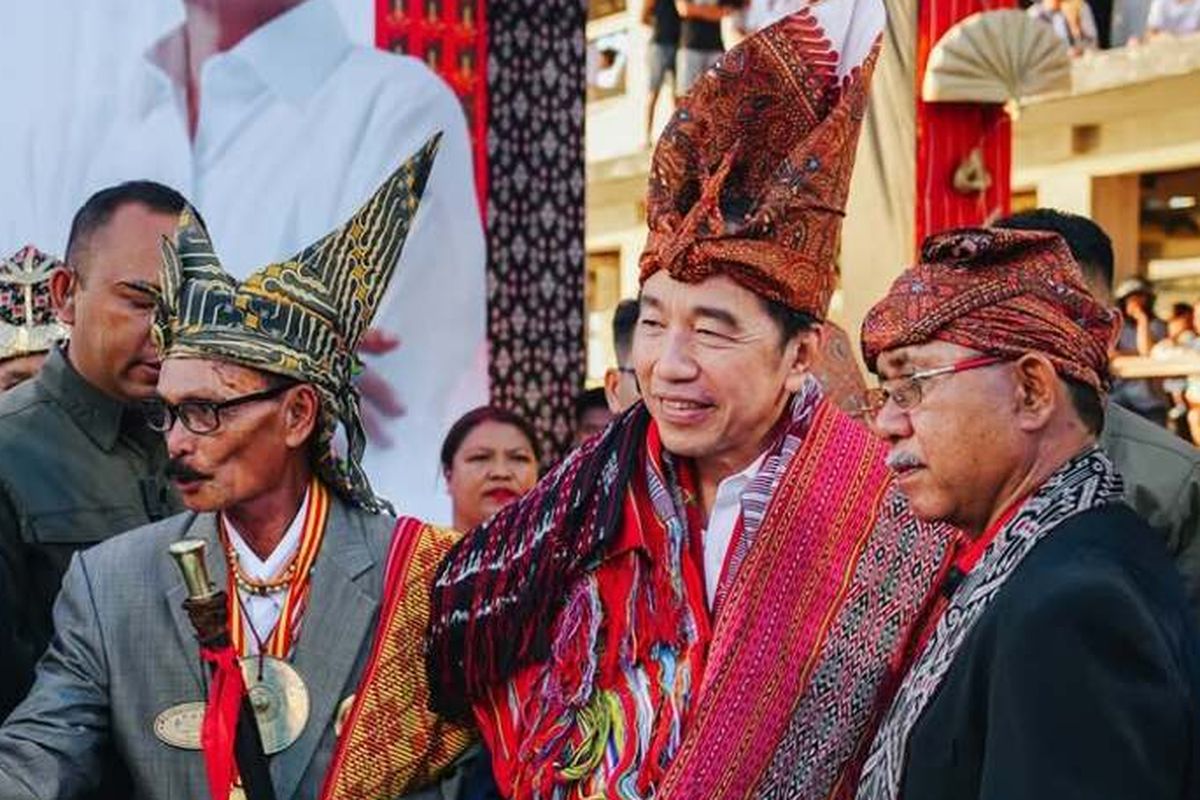
This historical metaphor is compelling when examining the political dynamics of Joko Widodo and his family ahead of the 2029 Presidential Elections.
However, one thing must be distinguished: the waning of political influence does not automatically imply the end of all political power.
The more critical question is not how much power Jokowi once held, but rather how resilient the political network he built can remain when strategic figures start losing their incentives to maintain loyalty.
Indonesian politics over the last decade cannot be divorced from the phenomenon of Jokowi.
He is not merely a president who has won two elections, but a political figure who has forged influence across party lines, bureaucracies, and state institutions.
This power relies on the ability to consolidate various interests into a single orbit of authority.
From a geopolitical perspective, a leader’s power is determined not only by the territory they control but also by their ability to manage strategic nodes.
This aligns with Joseph Nye’s thinking regarding soft power and power resources: influence does not always operate through commands and threats but also through attraction, legitimacy, and the capacity to foster dependency.
Jokowi possesses an interesting political characteristic within this context.
He is known for his ability to communicate with various groups that do not always share ideological commonalities.
From entrepreneurs to political parties, bureaucracies to civil society groups, everyone has found accommodation within his circle of power.
However, the issue remains: is this network a loyalty embedded in Jokowi’s persona, or merely a transactional relationship that persists as long as he has resources of power?
Here lies the distinction between deeply rooted power and power that merely relies on momentum.
The history of Majapahit provides an intriguing analogy, albeit not entirely identical to contemporary political dynamics.
During Hayam Wuruk's reign, Majapahit reached the pinnacle of its glory.
The role of Gajah Mada as the prime minister further strengthened the consolidation of the kingdom's territory and power network.
However, after Hayam Wuruk passed away in 1389, the kingdom faced succession intrigues, elite rivalries, and internal conflicts that gradually weakened its political cohesion.