

Challengers of UU LLAJ to the Constitutional Court: Budget Constraints Cannot Justify Neglecting Damaged Roads
-
News
-
21 minutes ago
This article was translated by AI. Read the original article on Kompas.com. See Original
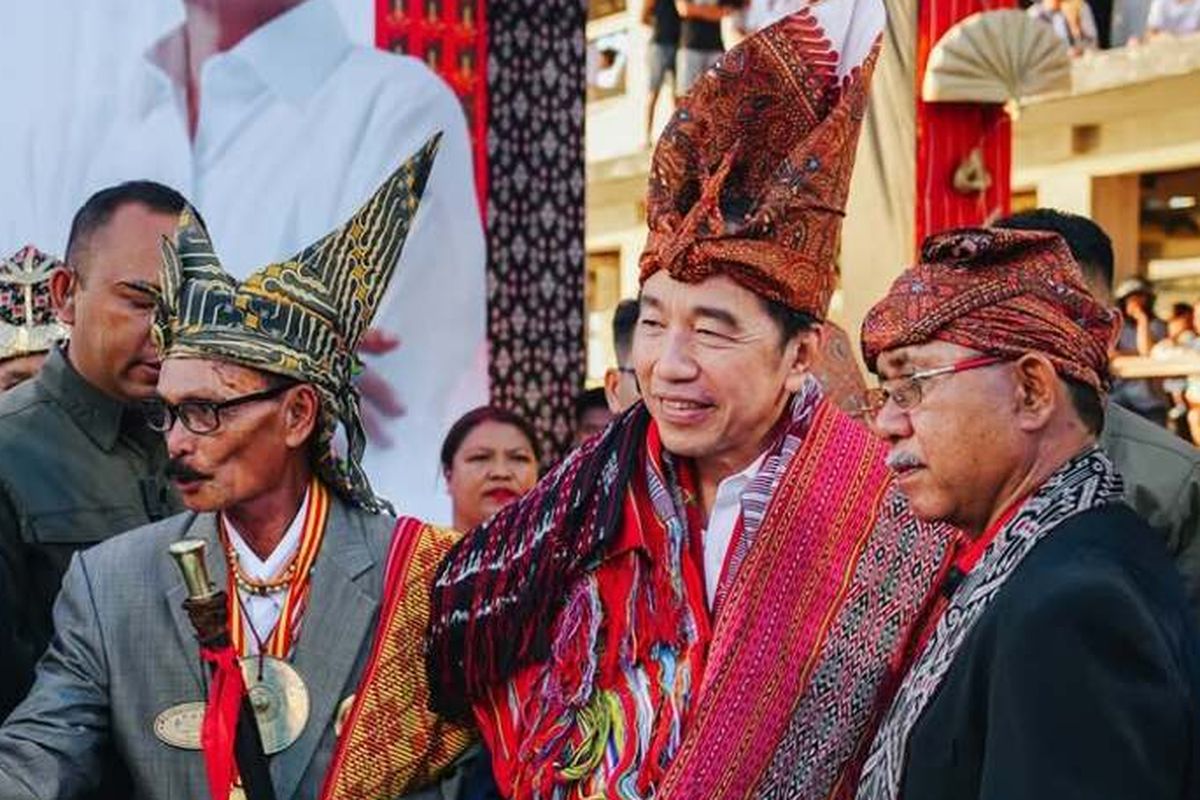
THERE IS an intriguing lesson from the history of fallen great kingdoms: power rarely truly collapses when its leaders lose their positions.
Instead, power begins to lose its vitality when the individuals who have supported its throne start to distance themselves.
Although the palace may still stand and symbols of grandeur remain on display, the web of loyalty that lends it authority gradually frays.
In the annals of Javanese history, the phrase “Sirna Ilang Kertaning Bhumi” is often associated with the downfall of Majapahit.
This phrase carries a symbolic meaning of the loss of prosperity, dignity, and the power structures of a kingdom.
It is not just a tale of a king who loses his throne, but rather a narrative about a political system that fails to maintain the loyalty of its uphold supporters.
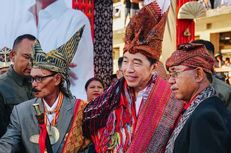
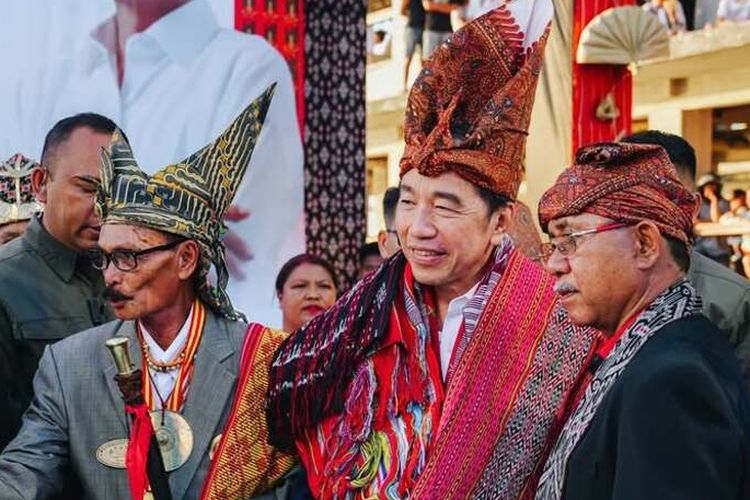
This historical metaphor is compelling when examining the political dynamics of Joko Widodo and his family ahead of the 2029 Presidential Elections.
However, one thing must be distinguished: the waning of political influence does not automatically imply the end of all political power.
The more critical question is not how much power Jokowi once held, but rather how resilient the political network he built can remain when strategic figures start losing their incentives to maintain loyalty.
Indonesian politics over the last decade cannot be divorced from the phenomenon of Jokowi.
He is not merely a president who has won two elections, but a political figure who has forged influence across party lines, bureaucracies, and state institutions.
This power relies on the ability to consolidate various interests into a single orbit of authority.
From a geopolitical perspective, a leader’s power is determined not only by the territory they control but also by their ability to manage strategic nodes.
This aligns with Joseph Nye’s thinking regarding soft power and power resources: influence does not always operate through commands and threats but also through attraction, legitimacy, and the capacity to foster dependency.
Jokowi possesses an interesting political characteristic within this context.
He is known for his ability to communicate with various groups that do not always share ideological commonalities.
From entrepreneurs to political parties, bureaucracies to civil society groups, everyone has found accommodation within his circle of power.
However, the issue remains: is this network a loyalty embedded in Jokowi’s persona, or merely a transactional relationship that persists as long as he has resources of power?
Here lies the distinction between deeply rooted power and power that merely relies on momentum.
The history of Majapahit provides an intriguing analogy, albeit not entirely identical to contemporary political dynamics.
During Hayam Wuruk's reign, Majapahit reached the pinnacle of its glory.
The role of Gajah Mada as the prime minister further strengthened the consolidation of the kingdom's territory and power network.
However, after Hayam Wuruk passed away in 1389, the kingdom faced succession intrigues, elite rivalries, and internal conflicts that gradually weakened its political cohesion.
The Paregreg War in the early 15th century marked a significant indicator of this fragmentation.
The geopolitical perspective is straightforward: the strength of a kingdom does not solely rest in the figure of the king but also in the capability of institutions and elites to maintain a unity of interests once the central figure is no longer present.
In the paradigm of organizational behavior, this phenomenon is recognized through the issues of leadership succession and organizational cohesion.
Organizations that rely too heavily on a charismatic leader tend to face difficulties during leadership transitions.
Loyalty that was previously concentrated on a particular figure may not necessarily be inherited by their successors.
Such conditions could pose risks for Jokowi’s political strength.
Throughout his presidency, formal positions, policy access, and coalition-building capacity were resources that enhanced his influence.
Once his term ends, those resources will no longer be available in the same configuration.
In other words, losing a position does not automatically mean losing influence.
However, maintaining influence without a title is a far more complex political endeavor.
The next issue relates to PSI. The party led by Kaesang Pangarep has a symbolic and strategic position in assessing the continuation of the Jokowi family's influence.
PSI is not merely a political vehicle for a president's child but has the potential to be an instrument for maintaining the family's political relevance after Jokowi departs from the palace.
However, a political house built around the family's prominent name may not automatically provide comfort for all its inhabitants.
The resignations of Giring Ganesha, Raja Juli Antoni, and Isyana Bagoes Oka on November 9, 2026, are developments worth monitoring.
None of them are ordinary party members. Giring was once the General Chair of PSI, Raja Juli served as the General Secretary, while Isyana held the position of Deputy Chair.
This means that the party is losing several figures who played significant roles within its organizational structure and decision-making processes.
Indeed, all three cited reasons related to prioritizing their service to the state and governance responsibilities.
Thus, it would be inaccurate to interpret their resignations directly as a rebellion against Jokowi or Kaesang.
However, organizationally, the simultaneous exit of these three figures remains a signal that should not be taken lightly.
In organizational behavior theory, there is a concept known as organizational commitment developed by Meyer and Allen.
A person’s commitment to an organization can be distinguished into three dimensions: affective commitment, continuance commitment, and normative commitment.
First, affective commitment means an individual stays because they feel an emotional bond with the organization.
Second, continuance commitment refers to an individual remaining due to weighing the benefits and costs of leaving the organization.
Third, normative commitment indicates an individual staying because they feel a moral obligation.
When all three dimensions weaken, the organization risks experiencing an exodus of strategic cadres.
They no longer see the organization as a promising space for actualization or believe that their professional interests and personal aspirations are more important than maintaining membership.
In the context of PSI, the resignations of these three senior officials raise questions regarding the organization’s attractiveness, the distribution of authority, and the sustainability of leadership regeneration.
There is an interesting irony here: a party that should serve as an instrument for strengthening political influence is facing challenges in retaining the individuals who have once been an important part of its organizational machinery.
Like a ship being prepared to sail towards 2029, some crew members who understand the navigational chart choose to disembark before the ship leaves the dock.
The ship may not necessarily sink, but its captain must explain why essential crew members chose their own lifeboats.
Ultimately, the greatest lesson from Majapahit is not that every kingdom must fall after its king passes away.
A more crucial lesson is that power requires institutions capable of outlasting the political lifespan of a leader.
Hayam Wuruk left behind a kingdom that once reached its zenith, but the issues of succession and elite struggles revealed how fragile power can be when political cohesion is no longer maintained.
Jokowi is certainly not Hayam Wuruk, Kaesang is not a Majapahit ruler, and PSI is not a kingdom that owns territorial power.
However, this historical analogy serves as a reminder that building power requires abilities different from those needed to maintain it.
Jokowi once had a vast political stage.
However, that stage will not always belong to him.
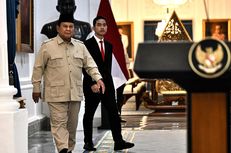
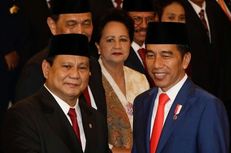
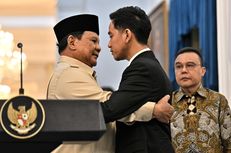
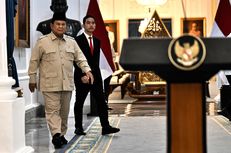
Prabowo now holds control of the government, coalition configurations continue to shift, and PSI faces the test of retaining its strategic cadres.
The resignations of Giring, Raja Juli, and Isyana may not signify the political demise of the Jokowi family.
However, this event might serve as an alarm that loyalty cannot be inherited merely through blood relations, a prominent name, or nostalgia for past glories.
There is a political saying that perhaps deserves reflection: when the sun of power begins to set in the West, those who once scrambled for shade beneath it start seeking different trees.
And here lies the relevance of the metaphor Sirna Ilang Kertaning Bhumi.
It does not mean that Jokowi and his family have lost all political power, but rather that past glory does not automatically guarantee future authority.
In politics, the most dangerous thing is not losing the throne but losing the people who once lifted that throne.
Perhaps this is the beginning of Jokowi’s Sandyakalaning: a political twilight that may not inevitably turn into night, but is sufficient to remind us that the sun never promised to shine continuously over the same yard.