

Prabowo Orders Minister to Provide Full Scholarships for Children of Fallen Karhutla Volunteers
-
News
-
14 minutes ago
This article was translated by AI. Read the original article on Kompas.com. See Original
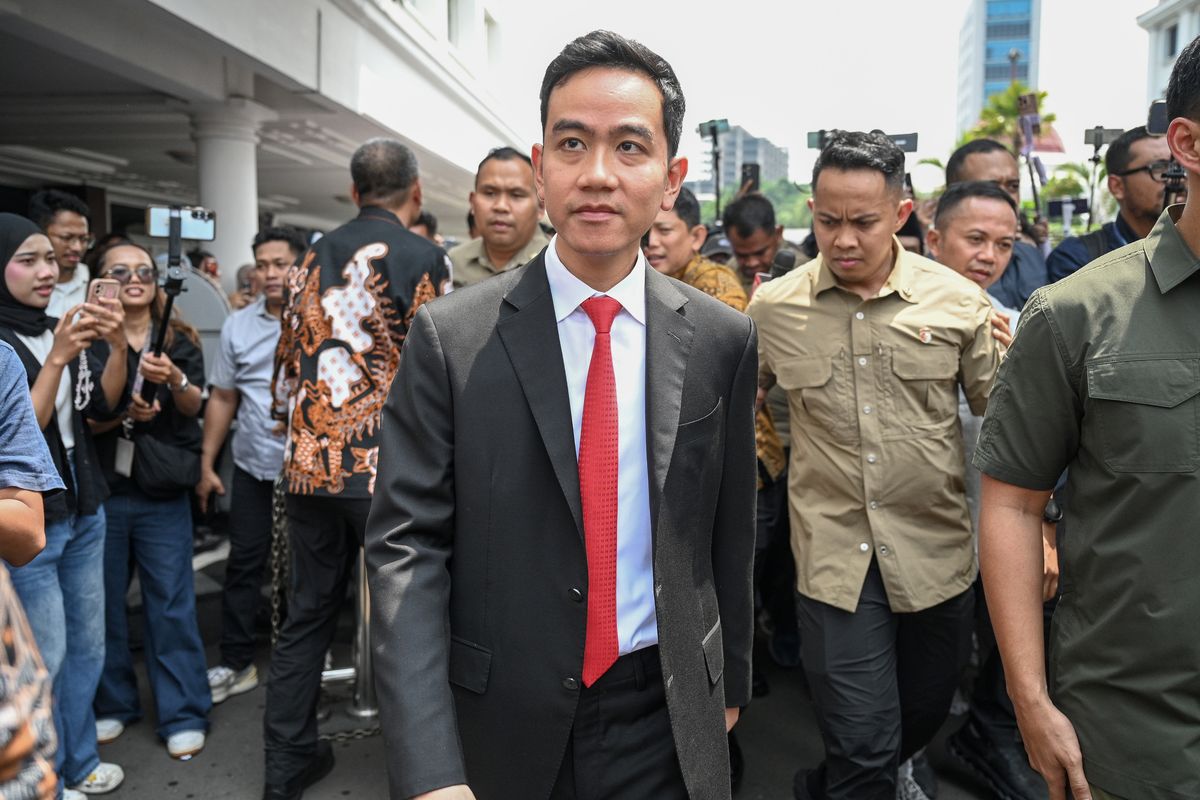
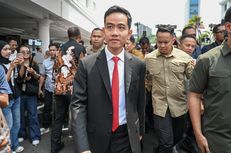
First, historical facts: did Gibran indeed complete an education at a certain level before registering as a vice presidential candidate in 2023?
Second, proof facts: are there authentic documents legally capable of proving that educational completion?
Third, administrative decisions: do those documents meet the requirements to obtain educational equivalency recognition under Indonesian law?
These three layers are related but not identical.
Someone may have completed their education but failed to present the required evidence. Conversely, the existence of an administrative statement does not replace the fact of graduation if the basis for its issuance is invalid.
Here lies the importance of the principle that state administration must recognize facts based on evidence, not create facts through authority.
Educational equivalency is a legal recognition action of qualifications already obtained, not an instrument to retroactively create graduation.
Consequently, graduation documents found or issued later must be distinguished from graduation that has only recently occurred.
New documents may prove past events. However, education completed after candidacy cannot be considered to have met the requirements at the time of registration.
Here, the most crucial point is that the assertion that all legal avenues for Gibran have closed needs to be understood restrictively.
The path to uphold the old decision that has been annulled is indeed bound by the finality of the MA's ruling. However, the possibility of submitting a new application based on different evidence constitutes a separate legal issue.
This possibility is not an unrestricted right. New applications should not serve as a legal loophole to disregard court rulings.
Regardless, a rule of law faces two equally important obligations: maintaining the authority of court decisions and ensuring that factual truth is examined through legitimate procedures.
The MA's ruling has determined the fate of the old equivalency letter. However, does this ruling simultaneously close off the possibility of proving actual graduation facts?
The answer must be found not through political statement battles, but through evidence examination, equal application of the law, and respect for the constitution.
In a rule of law, power must not create truth through administrative letters. Conversely, the law must not close the opportunity to prove legitimate facts merely because a letter has been annulled.
There is still a path for Gibran to uncover the educational truth that needs to be proven, the legality of administration must be upheld, and the legitimacy of power must be accountable to the people.