

Prabowo Orders Minister to Provide Full Scholarships for Children of Fallen Karhutla Volunteers
-
News
-
14 minutes ago
This article was translated by AI. Read the original article on Kompas.com. See Original
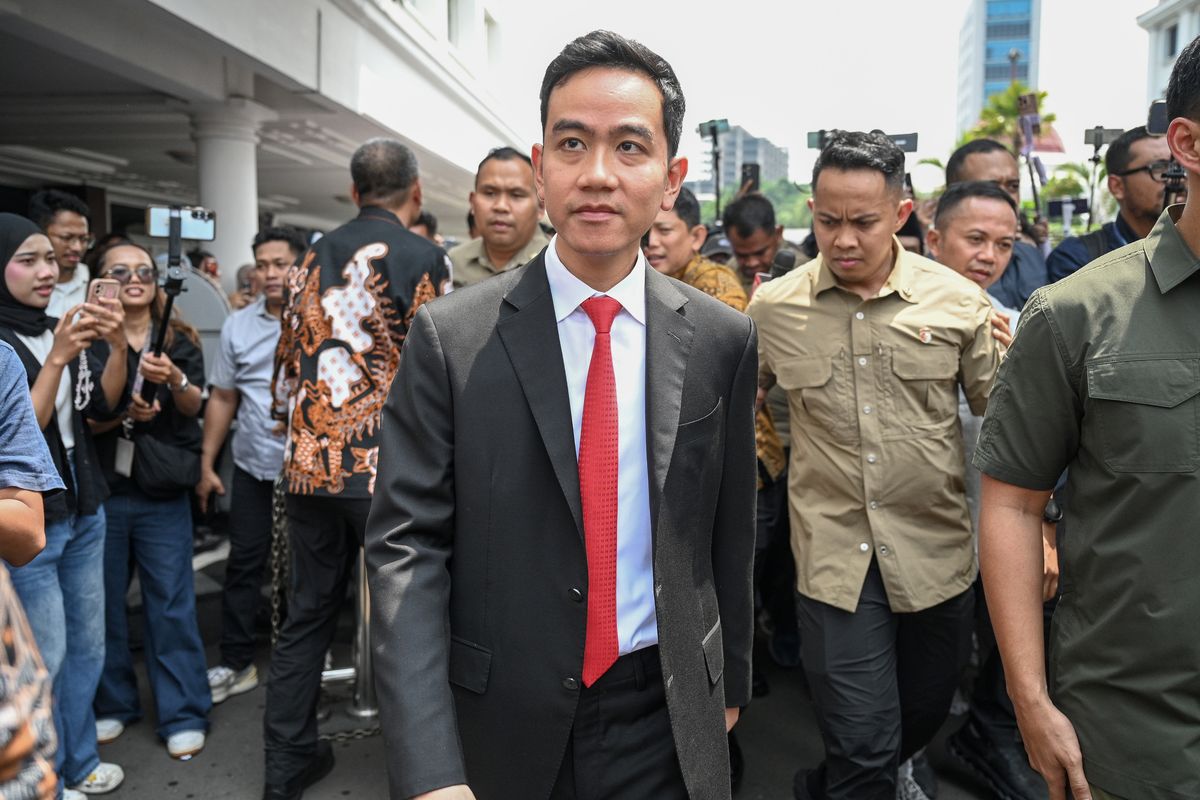
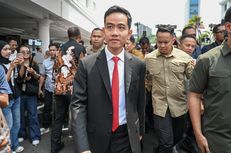
IS THERE still a way to prove Gibran's diploma? Although Gibran Rakabuming Raka has resigned as Vice President, the legality of the educational requirements during the registration for the 2024 presidential election still needs legal certainty.
Previously, Gibran expressed his desire to continue fighting to prove his educational documents through the courts.
The Supreme Court (MA), through its ruling Number 742 K/TUN/2026, has annulled Gibran's educational equivalency letter. The Coordinating Minister for Law, Human Rights, and Immigration, Yusril Ihza Mahendra, emphasized that the MA's ruling is final.
In my view, the MA's ruling presents a legal issue that extends beyond ordinary administrative disputes.
This ruling not only concerns the validity of documents but also the relationship between legal truth, educational facts, and the constitutional legitimacy of state officials.
There is a question that has not received enough attention: does a court ruling that annuls administrative evidence simultaneously negate a person's right to prove their actual educational facts?
This question is vital because a rule of law not only obliges the state to ensure the certainty of court decisions but also to provide a legitimate space for proof without disregarding the binding nature of those decisions.
The MA, in its ruling on October 30, 2026, annulled the Letter of the Director General of Primary and Secondary Education Number 9149/D.D1/KS/2019 dated August 6, 2019.
The MA's considerations highlighted that the documents certificate of attendance, academic records, and explanation of grades were insufficient to prove completion of education at a certain level.
The MA also assessed that issuing equivalency without adequate proof of graduation violates the principle of administrative diligence.
Doctrinally, this ruling should be respected based on the principle of res judicata pro veritate habetur. Disputes that have been adjudicated and have the force of law should not be reopened through the repetition of the same matter.
However, there is a fundamental difference between annulling an administrative decision and definitively determining that someone has never completed their education.
Annulment of the equivalency letter means that the administrative basis used does not meet legal requirements.
Nevertheless, this conclusion does not automatically negate the possibility of the existence of other graduation documents that have never been examined.
Here lies the relevance of Hans Kelsen's thoughts in Pure Theory of Law (1960). The validity of a legal act is determined by its conformity with a higher norm.
The equivalency letter gains validity not merely because it was issued by an authorized official, but because it meets the legal requirements underlying its issuance.
Thus, an annulled administrative decision loses its legal force. However, the educational fact as a historical event is conceptually different from the validity of the document explaining it.
The MA's ruling must be enforced. However, the finality regarding the old letter does not in itself become an absolute prohibition on examining a new administrative application that has a different evidential basis.
Philipus M. Hadjon in Legal Protection for the People in Indonesia (1987) emphasized the importance of legal protection against government actions. This protection includes the opportunity for citizens to defend their rights through available legal mechanisms.
In this framework, Gibran still retains his position as a citizen who can submit an administrative application as long as it meets the regulatory requirements.
However, the right to submit an application is not synonymous with the right to receive a favorable decision.
Law No. 30 of 2014 on Administrative Governance mandates officials to exercise their authority based on statutory regulations and general principles of good governance, including the principles of diligence, legal certainty, and impartiality.
Therefore, if Gibran possesses a high school diploma, diploma, certificate of completion, or other official documents proving his education abroad, in principle, he can request a new equivalency assessment according to the applicable regulations.
This request is not an attempt to revive the 2019 letter. The subject is a request for a new decision based on materially different evidence.
However, there is an important limit. The Ministry of Education and Culture should not issue a new decision that essentially only repeats the substance of the letter annulled by the MA.
New documents must be verified for authenticity, the status of their issuing institution checked, the level of education assessed, and it must be ensured that graduation indeed occurred.
If new evidence is unavailable or does not meet the requirements, the application must be dismissed for legally justifiable reasons.
Thus, a new administrative path is only possible if there is genuinely new factual and legal grounds, not merely a change in letter numbers and dates.
This issue can be clarified through theory of proof. Michele Taruffo in his journal Rethinking the Standards of Proof (2003) outlined the importance of the connection between proof and the discovery of factual truth in judicial processes.
In the context of Gibran's education, there are three layers that should not be mixed.
First, historical facts: did Gibran indeed complete an education at a certain level before registering as a vice presidential candidate in 2023?
Second, proof facts: are there authentic documents legally capable of proving that educational completion?
Third, administrative decisions: do those documents meet the requirements to obtain educational equivalency recognition under Indonesian law?
These three layers are related but not identical.
Someone may have completed their education but failed to present the required evidence. Conversely, the existence of an administrative statement does not replace the fact of graduation if the basis for its issuance is invalid.
Here lies the importance of the principle that state administration must recognize facts based on evidence, not create facts through authority.
Educational equivalency is a legal recognition action of qualifications already obtained, not an instrument to retroactively create graduation.
Consequently, graduation documents found or issued later must be distinguished from graduation that has only recently occurred.
New documents may prove past events. However, education completed after candidacy cannot be considered to have met the requirements at the time of registration.
Here, the most crucial point is that the assertion that all legal avenues for Gibran have closed needs to be understood restrictively.
The path to uphold the old decision that has been annulled is indeed bound by the finality of the MA's ruling. However, the possibility of submitting a new application based on different evidence constitutes a separate legal issue.
This possibility is not an unrestricted right. New applications should not serve as a legal loophole to disregard court rulings.
Regardless, a rule of law faces two equally important obligations: maintaining the authority of court decisions and ensuring that factual truth is examined through legitimate procedures.
The MA's ruling has determined the fate of the old equivalency letter. However, does this ruling simultaneously close off the possibility of proving actual graduation facts?
The answer must be found not through political statement battles, but through evidence examination, equal application of the law, and respect for the constitution.
In a rule of law, power must not create truth through administrative letters. Conversely, the law must not close the opportunity to prove legitimate facts merely because a letter has been annulled.
There is still a path for Gibran to uncover the educational truth that needs to be proven, the legality of administration must be upheld, and the legitimacy of power must be accountable to the people.