
MBG and Indonesia's Diplomacy Behind the UN Resolution
-
News
-
1 hour ago
This article was translated by AI. Read the original article on Kompas.com. See Original
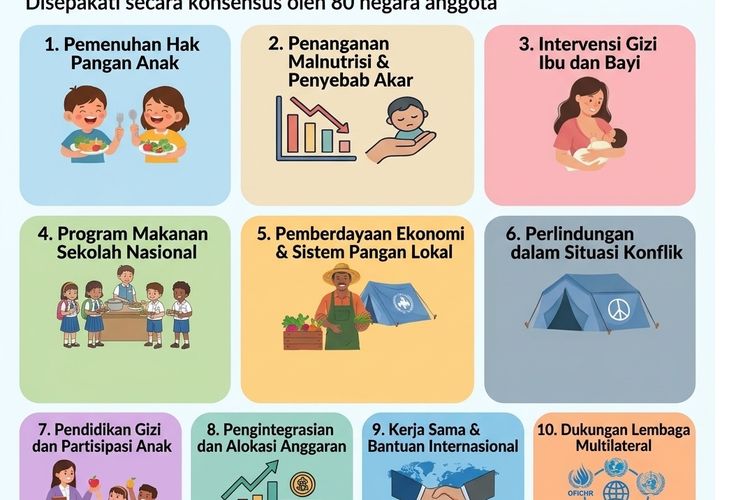
Therefore, raising child nutrition and food security issues in international diplomacy has a basis in real needs.
Didin reminded that the success of foreign diplomacy must be followed by credible policy implementation at home.
He mentioned that other countries' acceptance of the child nutrition fulfillment initiative is not enough to indicate the success of the program. The government must demonstrate that the policy is effective, targeted, and fiscally sustainable.
Domestically, the implementation of MBG still requires strengthening in various aspects to ensure its benefits can be optimally felt by the community.
Several issues of concern for the government include food poisoning incidents in various regions, allegations of corruption, and governance of services which require improvement.
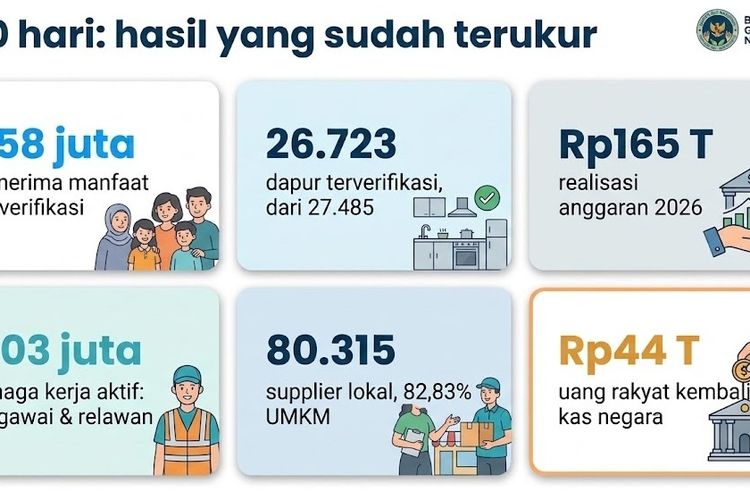
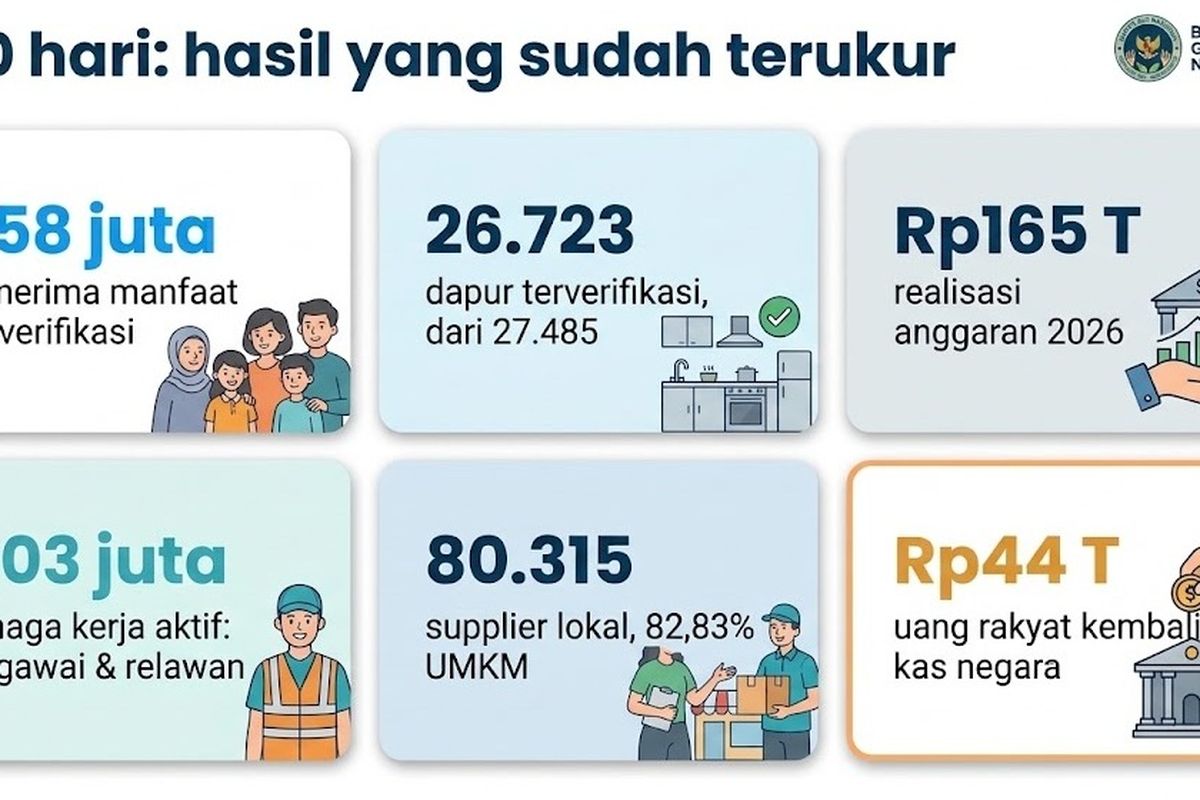
The National Nutrition Agency (BGN) has taken several steps for improvement, including changing its head, expanding target reach, and implementing innovative buffet-style food serving methods to reduce food waste and poisoning risks.
The government also implemented sanctions against Nutrition Fulfillment Service Units (SPPG) that fail to meet service standards.
These various steps are part of efforts to ensure the program runs according to standard, from food supply processes, food processing, to distribution to beneficiaries.
On the other hand, the extensive coverage of the program demands governance that can ensure food quality, food safety, and proper budget usage.
These issues are important because MBG is not merely a food distribution program. This program aims at broader goals, namely improving child nutrition quality and Indonesia's human resources.
Didin encourages the government to remain open to public criticism, market dynamics, and various economic indicators. Such inputs should be incorporated into evaluations to refine and improve policies.
Entering the second year of MBG implementation, he believes Indonesia can still learn from the experiences of other countries in implementing school meal programs.
One example is the United States through the National School Lunch Program (NSLP), which has been in place since 1946.
This program implements a tiered subsidy scheme based on family income. Children from families earning up to 130 percent of the federal poverty threshold are eligible for free meals. Meanwhile, families with incomes above this threshold but below 185 percent can receive meals at subsidized prices.
"In fiscal year 2024, NSLP managed a $17.7 billion budget to provide over 4.8 billion meals," Didin stated.
Indonesia can also study the education and food assistance schemes in Singapore through the MOE Financial Assistance Scheme (MOE FAS). Under this scheme, the Singapore government provides a subsidy of SGD 4.10 per portion for eligible students.
Meanwhile, non-subsidized students can still purchase nutritious meals in school cafeterias at affordable regular prices.
According to Didin, a targeted subsidy approach can save government spending without compromising support for those most in need.
"The success of Indonesia's diplomacy should not only be measured by the number of countries supporting the child nutrition fulfillment initiative. A much more meaningful achievement is when Indonesia can prove that developing countries can implement effective, equitable, targeted, and fiscally sustainable child nutrition programs," Didin emphasized.
Ultimately, bringing MBG to the international stage is one way for Indonesia to engage in discussions on food issues and children's rights at the global level.
However, these efforts must also be accompanied by strengthening program implementation at home. With good governance, adequate oversight, and sustainable financing, MBG is expected to provide real benefits for Indonesian children.