MBG and Indonesia's Diplomacy Behind the UN Resolution
-
News
-
1 hour ago
This article was translated by AI. Read the original article on Kompas.com. See Original

JAKARTA, KOMPAS.com - The Free Nutritious Meal Program (MBG), one of the priorities of President Prabowo Subianto's administration, is no longer just a domestic policy. This initiative to ensure children's nutrition is also becoming part of Indonesia's diplomatic narrative at various international forums.
From the United Nations General Assembly (UNGA), the BRICS Summit, to the UN Human Rights Council, issues surrounding child nutrition and food security have been repeatedly raised by the Indonesian government.
This move illustrates Prabowo's administration's effort to bring a national priority program into discussions on global issues. Moreover, Indonesia spearheaded a UN Human Rights Council resolution addressing equal access for children to nutritious food.
However, the effort to promote MBG globally is paralleled with strengthening its implementation at home. The government still needs to ensure food quality, enhance monitoring, improve governance, and maintain budget accountability so that this program can run optimally.
Thus, MBG diplomacy is not only an effort to introduce Indonesia's commitment to child nutrition at the global level but also a momentum to enhance the program's implementation domestically.
The idea of providing free meals for school children was proposed by Prabowo during the 2024 presidential campaign. At that time, the program was not yet familiar as MBG but referred to as free lunches.
The free lunch program became one of the top priorities in the Vision and 8 Missions document of Prabowo-Gibran, even placing first.
"Providing free lunches and milk in schools and Islamic boarding schools, along with nutritional assistance for toddlers and pregnant women," stated the document, downloaded from Gerindra.id on Tuesday (3/11/2026).
After Prabowo took office as President, the free lunch program was renamed Free Nutritious Meal (MBG) and began implementation by the government.
Entering the second year of its implementation, Prabowo reaffirmed the government’s commitment to continue the program. During the Pancasila Birth Day Ceremony at the Pancasila Building, Ministry of Foreign Affairs of the Republic of Indonesia, Jakarta, Monday (1/6/2026), Prabowo referred to MBG as an effort to build a healthy, superior, and intelligent generation of Indonesians.
"We will continue to provide Free Nutritious Meals to build a healthy, superior, and intelligent generation of Indonesians," Prabowo stated.
The commitment to fulfilling child nutrition is not only a part of the government agenda at home. This issue is also brought into various international forums, intersecting discussions of food security, poverty, and human rights fulfillment.
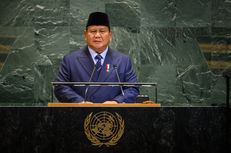
One platform utilized by Prabowo to raise food security issues was the 80th UN General Assembly in New York, USA, in September 2025.
In his speech, Prabowo highlighted the threats of food, energy, and water crises facing many countries.
"Food, energy and water insecurity haunt many nations. We choose to answer these challenges directly at home and to help abroad wherever we can," Prabowo said in his speech on Tuesday (23/9/2025).
Before world leaders, Prabowo outlined Indonesia's achievements in increasing rice production and food reserves. He also conveyed government efforts to strengthen food security through enhanced agricultural productivity and supply chain improvements.
Prabowo also mentioned Indonesia's food aid to countries in need, including Palestine.
The food security issue has also become part of discussions on Indonesia's international cooperation, particularly in addressing disruptions in global food supply chains.
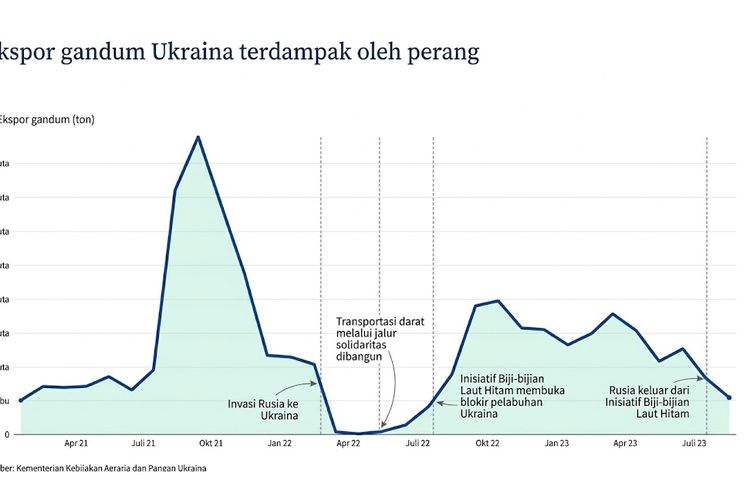
Tri cited discussions on the BRICS Grain Initiative during the BRICS Summit in India. This initiative is aimed at securing and anticipating disruptions to food supply chains among BRICS member countries following the food crisis due to the Russia-Ukraine war.
"Certainly, within the context of BRICS, it is quite interesting to see discussions regarding the BRICS Grain Initiative," Tri Tharyat stated in Jakarta on Thursday (17/9/2026).
He added that Prabowo's presentation of the MBG program at that forum received a positive reception from BRICS member countries. According to Tri, there were no rejections or differing opinions regarding that presentation.
Besides Prabowo, Minister of Foreign Affairs Sugiono also brought up the issue of fulfilling basic needs in international forums.
In the High-Level Segment (HLS) Session of the 61st UN Human Rights Council in Geneva, Sugiono stated that the fulfillment of human rights must be realized through actions that impact people's lives.
"When children can learn without hunger, families can access healthcare, communities feel safe, and when opportunities are within everyone's reach. This is the realization of fundamental rights," Sugiono said on Monday (23/2/2026).
Efforts to bring child nutrition issues to international forums do not stop at delivering speeches or introducing government programs.
Indonesia also initiated a UN Human Rights Council resolution titled "Enhancing Equal Access of Children to Adequate Nutritious Food" at the 63rd Session of the UN Human Rights Council.
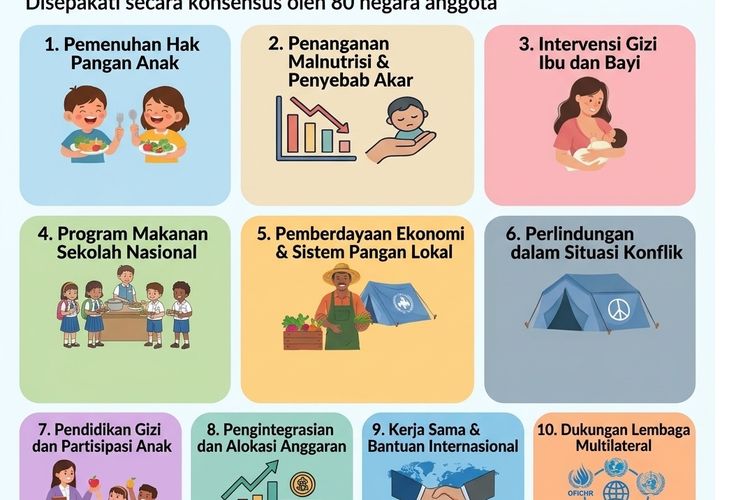
The resolution numbered A/HRC/RES/63/18 affirms every child’s right to equitable access to safe, sufficient, nutritious, and culturally acceptable food.
This resolution encourages countries to strengthen efforts to address child malnutrition, including tackling food insecurity and eliminating discrimination that hinders access to nutritious food.
It includes special attention to children with disabilities and protection for children affected by armed conflicts or humanitarian emergencies.
Passed on October 6, 2026, the resolution also emphasizes the importance of early nutritional intervention, including nutrition fulfillment for pregnant and breastfeeding mothers, exclusive breastfeeding, and providing nutritious complementary foods.
Additionally, member countries are urged to maintain and expand national school meal programs to ensure more children have access to nutritious food.
Many substantive aspects of the resolution align with MBG's goals, especially expanding children’s access to nutritious food through school meal programs.
The resolution also calls for linking school food procurement with local food systems, such as small farmers, fishermen, cooperatives, and micro, small, and medium enterprises (MSMEs)—thereby strengthening local supply chains and empowering rural economies.
To support the implementation of this policy, the resolution calls for integrating child nutrition targets into national development strategies, adequate budget allocation, promoting nutrition education, active children's participation, and mobilizing international cooperation and technical support from UN agencies like OHCHR, UNICEF, WHO, FAO, and WFP.
Indonesian Ministry of Foreign Affairs Spokesperson Yvonne Mawengkang explained that Indonesia initiated this resolution in its capacity as a member of the UN Human Rights Council for the 2024-2026 term and as President of the UN Human Rights Council in 2026.
"The selection of the resolution's theme aligns with Indonesia's priority program, namely the Free Nutritious Meal program, aimed at improving nutritional status and quality of human resources, particularly for children," Yvonne emphasized in Jakarta on Saturday (10/10/2026).
Yvonne stated that this resolution also reflects Indonesia's commitment to the Convention on the Rights of the Child (CRC), International Covenant on Economic, Social and Cultural Rights (ICESCR), and the achievement of the Sustainable Development Goals (SDGs).
The successful adoption of the resolution by consensus among 80 member states was achieved through active diplomacy and intensive coordination among stakeholders domestically.
The elevation of child nutrition issues in international forums is considered relevant to the global agenda. Food, poverty, and nutrition fulfillment challenges are not only faced by Indonesia but also by many countries.
Political researcher and PhD candidate in political communication diplomacy from Sahid University, Didin Nasirudin, stated that Indonesia has a reason to bring child nutrition issues to international forums.
"Indonesia's efforts to raise child nutrition issues in international forums are actually not inconsistent with the global agenda, as food security, poverty, and child nutrition are real global issues," Didin stated via text message on Monday (21/10/2026).
According to Didin, geopolitical crises, particularly armed conflicts in Europe and the Middle East, have disrupted global food supply chains. This situation has worsened conditions for vulnerable groups like children and women.
Therefore, raising child nutrition and food security issues in international diplomacy has a basis in real needs.
Didin reminded that the success of foreign diplomacy must be followed by credible policy implementation at home.
He mentioned that other countries' acceptance of the child nutrition fulfillment initiative is not enough to indicate the success of the program. The government must demonstrate that the policy is effective, targeted, and fiscally sustainable.
Domestically, the implementation of MBG still requires strengthening in various aspects to ensure its benefits can be optimally felt by the community.
Several issues of concern for the government include food poisoning incidents in various regions, allegations of corruption, and governance of services which require improvement.
The National Nutrition Agency (BGN) has taken several steps for improvement, including changing its head, expanding target reach, and implementing innovative buffet-style food serving methods to reduce food waste and poisoning risks.
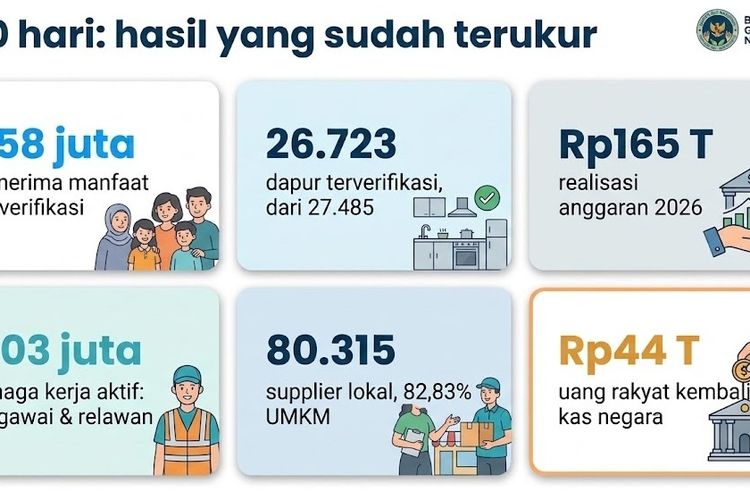
The government also implemented sanctions against Nutrition Fulfillment Service Units (SPPG) that fail to meet service standards.
These various steps are part of efforts to ensure the program runs according to standard, from food supply processes, food processing, to distribution to beneficiaries.
On the other hand, the extensive coverage of the program demands governance that can ensure food quality, food safety, and proper budget usage.
These issues are important because MBG is not merely a food distribution program. This program aims at broader goals, namely improving child nutrition quality and Indonesia's human resources.
Didin encourages the government to remain open to public criticism, market dynamics, and various economic indicators. Such inputs should be incorporated into evaluations to refine and improve policies.
Entering the second year of MBG implementation, he believes Indonesia can still learn from the experiences of other countries in implementing school meal programs.
One example is the United States through the National School Lunch Program (NSLP), which has been in place since 1946.
This program implements a tiered subsidy scheme based on family income. Children from families earning up to 130 percent of the federal poverty threshold are eligible for free meals. Meanwhile, families with incomes above this threshold but below 185 percent can receive meals at subsidized prices.
"In fiscal year 2024, NSLP managed a $17.7 billion budget to provide over 4.8 billion meals," Didin stated.
Indonesia can also study the education and food assistance schemes in Singapore through the MOE Financial Assistance Scheme (MOE FAS). Under this scheme, the Singapore government provides a subsidy of SGD 4.10 per portion for eligible students.
Meanwhile, non-subsidized students can still purchase nutritious meals in school cafeterias at affordable regular prices.
According to Didin, a targeted subsidy approach can save government spending without compromising support for those most in need.
"The success of Indonesia's diplomacy should not only be measured by the number of countries supporting the child nutrition fulfillment initiative. A much more meaningful achievement is when Indonesia can prove that developing countries can implement effective, equitable, targeted, and fiscally sustainable child nutrition programs," Didin emphasized.
Ultimately, bringing MBG to the international stage is one way for Indonesia to engage in discussions on food issues and children's rights at the global level.
However, these efforts must also be accompanied by strengthening program implementation at home. With good governance, adequate oversight, and sustainable financing, MBG is expected to provide real benefits for Indonesian children.