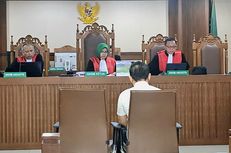


PTUN Judges to Decide Whether to Continue or Halt Gibran's Certificate Lawsuit
-
News
-
Just now
This article was translated by AI. Read the original article on Kompas.com. See Original
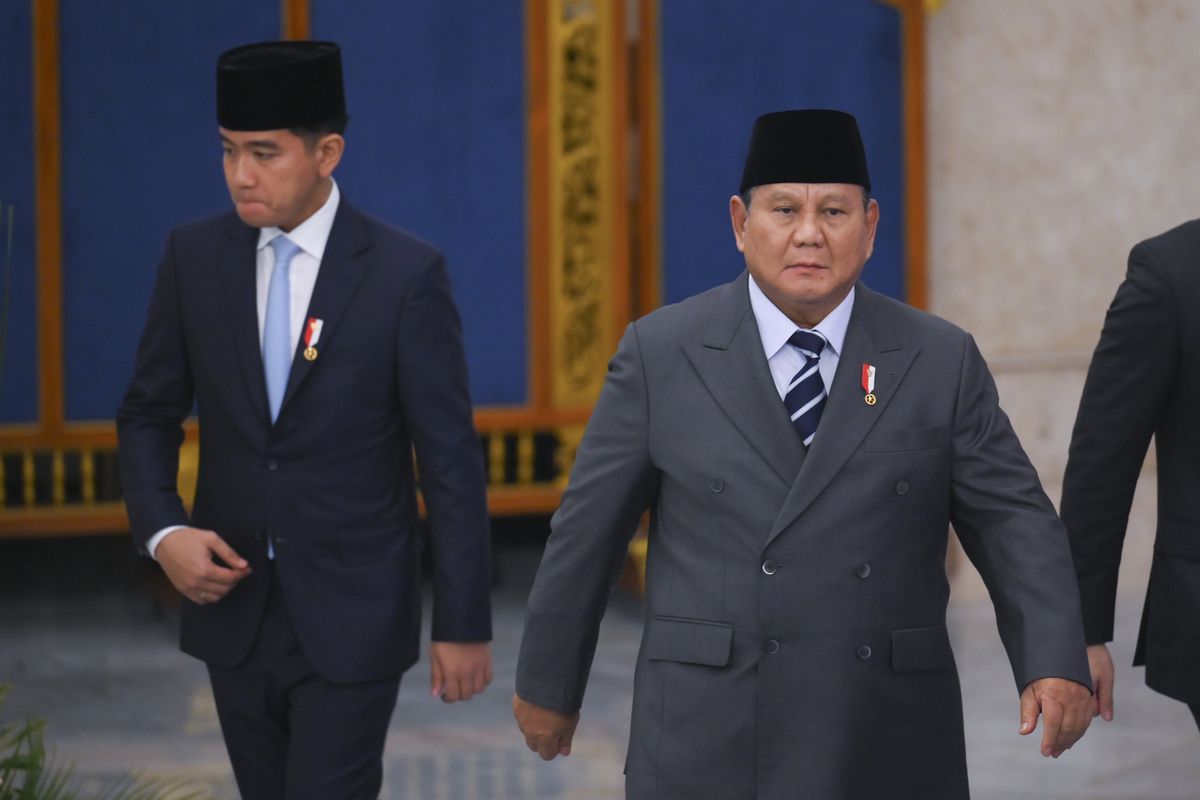
WAVE of public pressure for Vice President Gibran Rakabuming Raka to resign has transformed from mere noise on social media into a serious test of the ethical legitimacy of national leadership.
A wide range of discourses has emerged, from the verification of the validity of nomination administrative documents to fundamental debates concerning state ethics, reigniting sharp discussions in the public sphere.
Behind the complex and technical constitutional debates lies a stark political reality felt acutely by voters: Indonesia's presidential and vice-presidential election system is tightly bound in a joint ticket.
Sociologically and politically, this ticket's binding nature is at the heart of the mandate granted by the public.
According to Article 6A paragraph (1) of the 1945 Constitution, the public is not given the freedom to vote for the president and vice president separately.
Voters enter the polling place and mark a single ballot that combines both figures.
In the 2024 presidential contest, many voters determined their support based on the presence of the vice-presidential candidate—whether due to the representation of the younger generation, a symbol of continuity with previous government programs, or personal electoral appeal.
When this vice-presidential figure is subsequently engulfed in a storm of ethical doubts and legal challenges that undermine their legitimacy, public disappointment becomes unavoidable.
A feeling of entrapment arises among voters: how can a leadership package chosen as a cohesive unit continue to function normally when one part of it suffers from severe legitimacy issues?
Is there anyone willing to defend them fiercely or to even kick them out?
This fundamental irony exposes a significant clash between sociopolitical logic and constitutional legal design in Indonesia.
From a constitutional law perspective, the structure of executive accountability is designed with an individual approach, not collective responsibility.
Article 7A of the 1945 Constitution emphasizes that the impeachment mechanism requires proof of specific legal violations committed by an individual official, such as treason, corruption, bribery, serious crimes, or disgraceful conduct.
Our constitution deliberately does not recognize the principle of collective responsibility that could automatically void a leadership pair simply because one official is proven to have legal defects or ethical violations.
This constitutional design did not arise without deep historical context.