
70 Years Ago, Mohammad Hatta Resigned from the Vice Presidency
-
News
-
6 minutes ago
This article was translated by AI. Read the original article on Kompas.com. See Original
The framers of the 1945 Constitutional amendments prioritized the principles of stability and continuity of governance.
In a presidential system, the President holds the primary executive power, as stated in Article 4 paragraph (1), while the Vice President assists the President.
Therefore, if the Vice President resigns or is impeached by the People’s Consultative Assembly (MPR), the 1945 Constitution provides a safety valve for the President to propose two replacement vice-presidential candidates for selection by the MPR.
From this perspective, the legal collapse of the vice president's position should not entangle or annul the mandate of the President who holds the primary executive power.
A national leadership pair is only deemed void in its entirety when both the President and Vice President are unable to function, resign, or are impeached simultaneously, as regulated in Article 8 paragraph (3).
However, a rigid separation between the logic of constitutional law and sociopolitical realities does not necessarily resolve issues on the ground.
This is where the greatest leadership dilemma currently facing the nation lies.
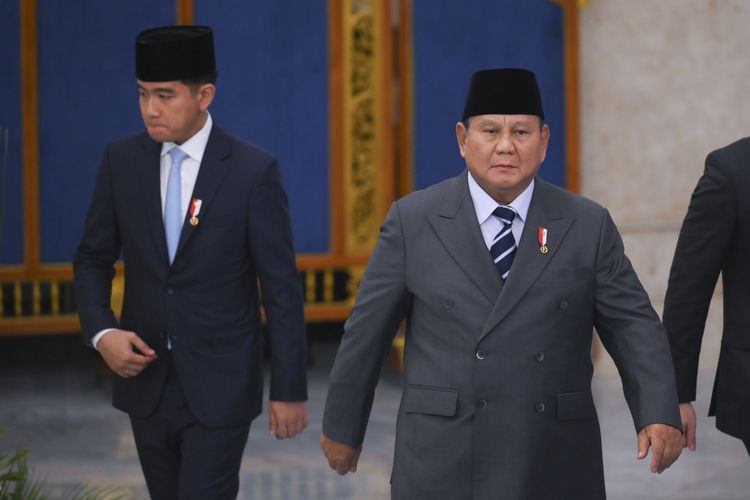
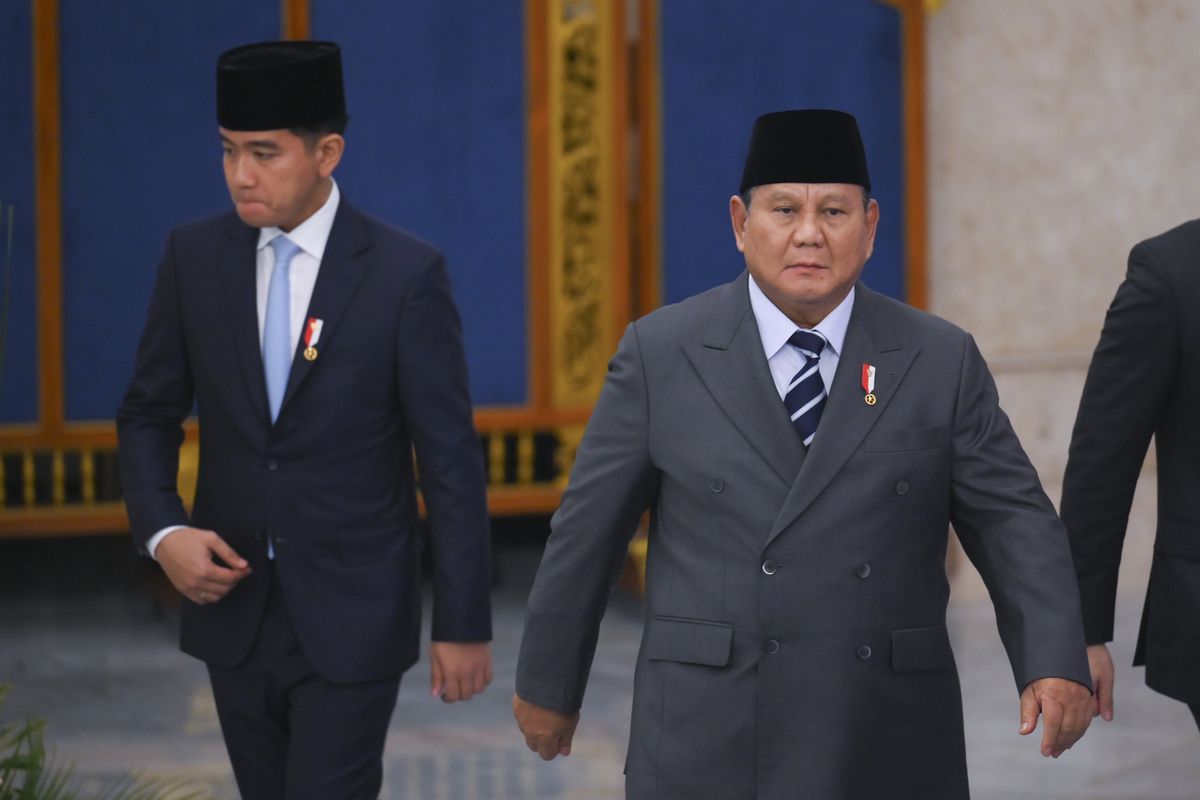
If political and legal processes allow the vice president to remain in office amid intense public pressure and doubts about their ethical legitimacy, the government led by President Prabowo Subianto risks enduring a prolonged trust deficit.
Every national strategic policy issued by the government is potentially overshadowed by critical questions regarding its legitimacy.
Conversely, if the Vice President is impeached or resigns, the public that elected that pair must accept the reality that the "package" they chose on voting day has transformed midway without re-approval from the voters.
To untangle this knot, handling the issues transparently within formal legal corridors becomes an absolute prerequisite.
Problem-solving must no longer be left hanging in daily political uncertainties or obscured by national stability rhetoric.
Testing the validity of every document and legal accusation in the appropriate judicial bodies, such as Administrative Courts (PTUN) or review processes in the Supreme Court, is a dignified constitutional step.
Only clear, open, and highly-integrity-driven legal proof can provide final certainty about whether the public demands possess a solid legal basis or are merely a fleeting political competition dynamic post-election.
Ultimately, the current political dynamics teach a valuable lesson that healthy democracy requires a harmonious balance between adherence to constitutional text and sensitivity to public morality.
The constitution has indeed crafted a robust fortress to safeguard the stability of executive power, making it resilient against practical political shocks.
However, this legal fortress should not be an escape route to disregard the demands for ethical integrity and moral legitimacy of its leaders.
This nation does not merely need a formally legitimate government on a piece of legal paper, but also yearns for a national leadership that is reputable, free from doubts, and sincerely respected in the hearts of its people.