

DPR Members Demand Polri to Uncover Key Actors in Scam Syndicate in the Philippines Involving 141 Indonesians
-
News
-
58 minutes ago
This article was translated by AI. Read the original article on Kompas.com. See Original
Regarding these conditions, Lucius expressed concern that the fast-track path could be used as a “shield” under the guise of urgency.
He highlighted the sixth condition, which states “certain situations that ensure urgency for rapid law formation.” Urgency, he notes, could be interpreted differently if no further explanation is provided.
“If this certain situation is not detailed, it will open the door for the DPR to justify quick processes based on their needs or interests,” Lucius remarked.
Moreover, Lucius pointed out that the law-making mechanism has often been criticized for failing to ensure meaningful public participation.
Through the fast-track proposal, the People's Representatives seem to confirm that the law-making process has been far from perfect.
“This fast-track proposal seems to validate a flawed process that the DPR has practiced all along. It would be a serious danger if the Expertise Agency is used as a stamp by the DPR regarding deviant practices in discussing draft laws,” Lucius asserted.
Previously, DPR RI Legislative Body member Reni Astuti also called for transparency regarding law discussions, following the proposal for a fast track.
She believes that speed should not mean discussing matters in a closed environment, abandoning the principle of transparency.
“We should not disregard the principles of openness and meaningful participation in this process,” said Reni in the same meeting.
Reni acknowledged that the fast track mechanism in law formation is an innovation in legislation.
However, she reminded that this mechanism should not compromise the quality of legislation and input from the community.
“We want the legislative products to be not just procedural, but also substantive, addressing and resolving real problems in society,” Reni clarified.
Meanwhile, Bayu emphasized that the fast-track mechanism does not mean eliminating stages in the law formation process.
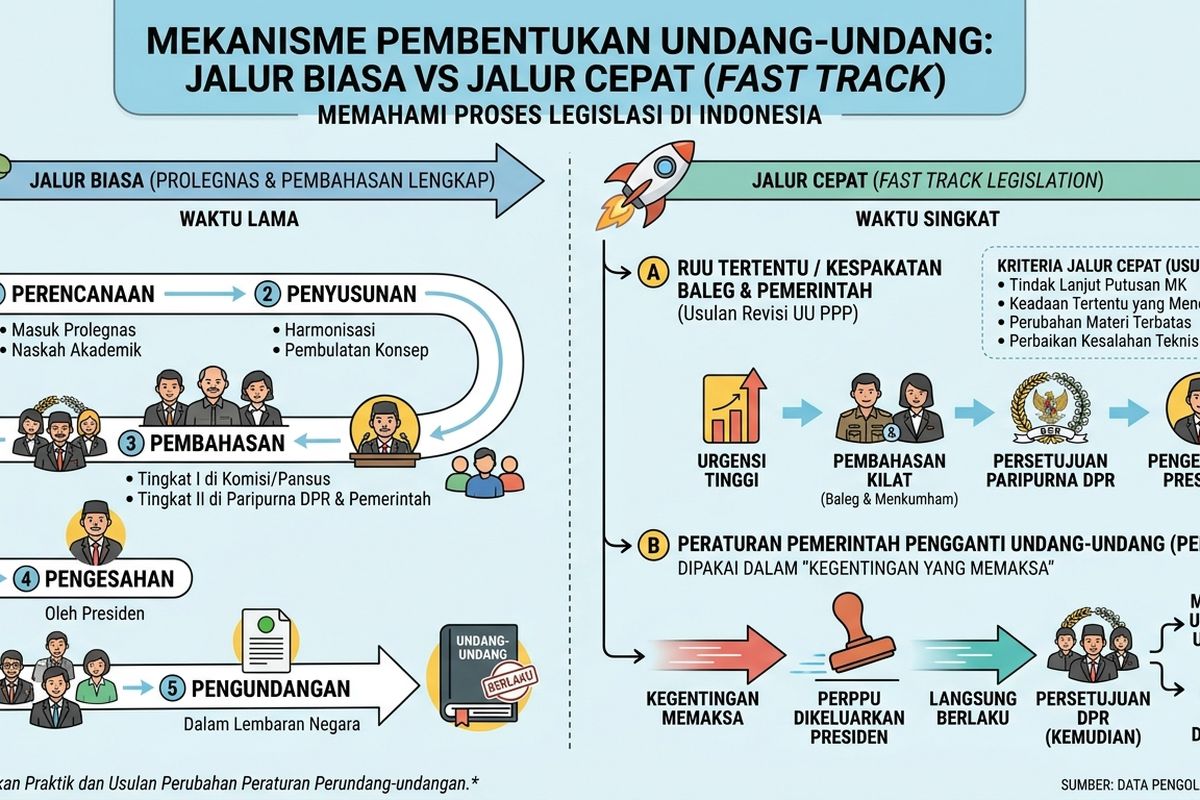
The formation of laws, whether through standard or fast procedures, must go through all stages. These stages include planning, drafting, discussing, ratifying, and enacting.
The difference between the two procedures lies only in the time frame for completion. In fast-track procedures, certain stages have a shorter time limit compared to standard procedures.